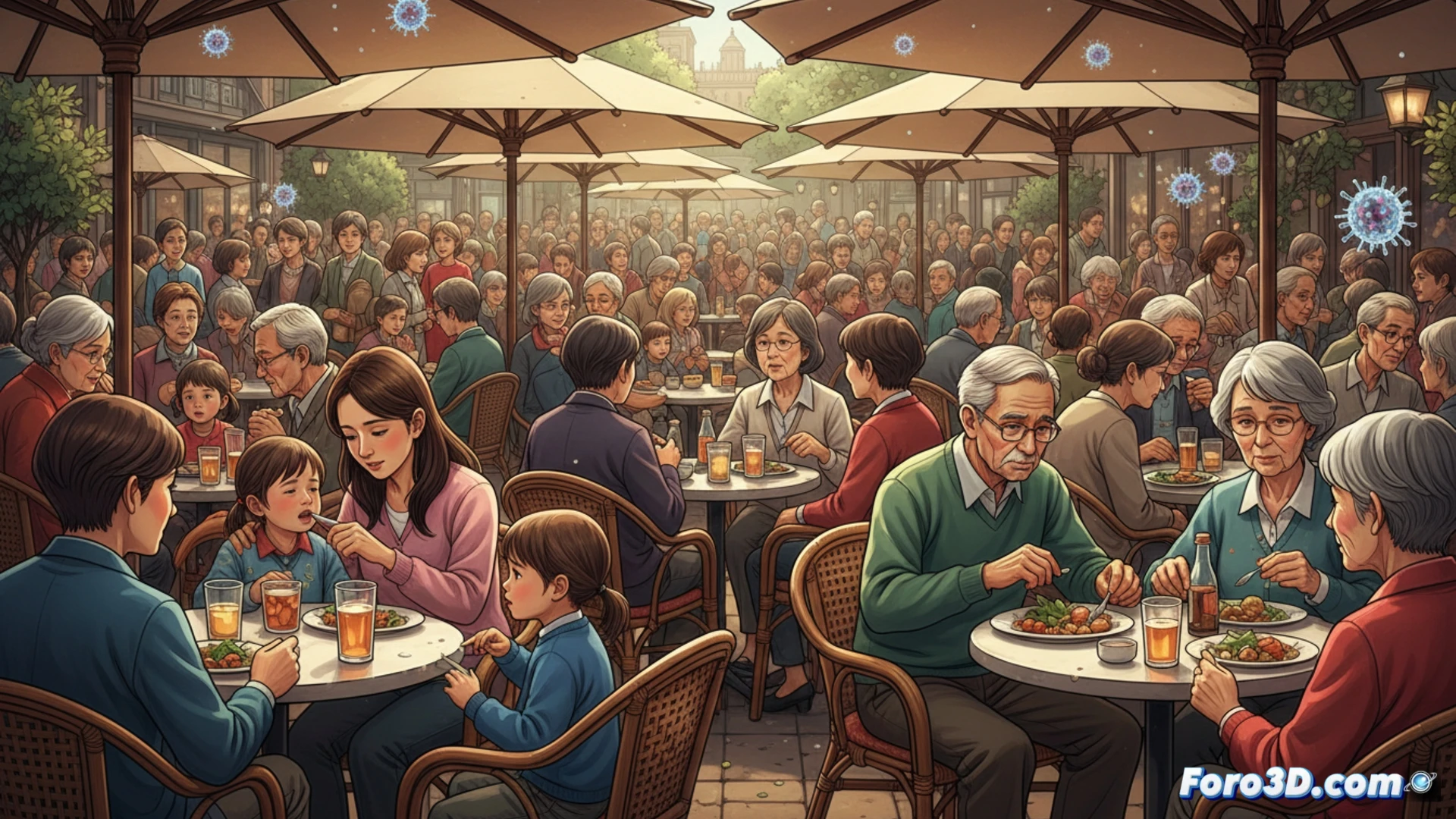
Crowded terraces are the perfect setting for sharing laughs, tapas, and, without an invitation, the respiratory syncytial virus. Although it sounds like a robot's name, RSV is a well-known acquaintance of pediatricians and geriatricians. In enclosed or semi-enclosed spaces with poor ventilation, its transmission skyrockets. It's not just a cold; it can complicate life for the youngest and oldest.
How forced ventilation and CO2 alter RSV spread 🫁
Fluid dynamics explains that RSV travels in aerosols. On a terrace with low awnings and little air renewal, the viral concentration rises. Measuring CO2 with sensors provides clues: levels above 800 ppm indicate poor ventilation. Extraction systems and HEPA purifiers reduce the viral load but do not eliminate it. Social distancing and the occasional use of FFP2 masks during peak crowds are effective measures. There is no app that can prevent a sneeze from 50 cm away.
RSV: that virus that arrives unannounced and leaves no tip 🦠
You invite some friends to your favorite terrace, and without paying an entry fee, RSV sneaks into the table. It doesn't ask for permission, doesn't leave a tip, and on top of that, takes your health as a souvenir. It's like that buddy who always shows up when the bill is being split. The solution: ventilation, distance, and if you see a child coughing, cross the street. Or ask for the check and leave.