Rongorongo, the enigmatic glyph system of Easter Island, remains one of the last undeciphered codes of antiquity. Its fragility and remote location have complicated its study. Today, digital archaeology offers new tools. Techniques such as 3D laser scanning and photogrammetry allow these symbols to be captured with millimeter precision, creating immortal digital replicas that are key to preserving and, ultimately, understanding the secrets of the Rapa Nui civilization.
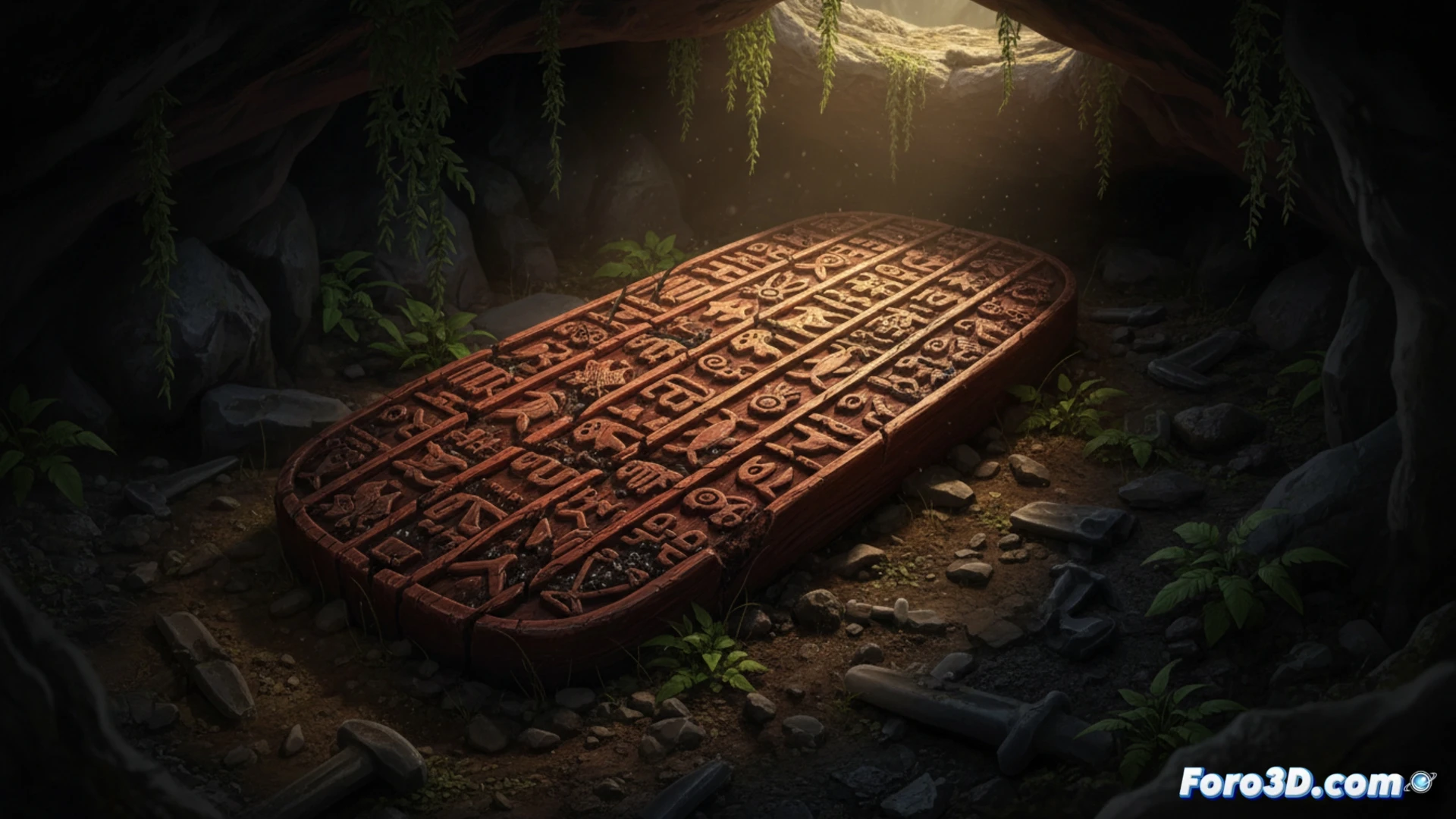
Digital Capture: Photogrammetry and Laser Scanning for Eternity 🔍
The traditional documentation of the glyphs, often through tracings, carries risks of deterioration. Photogrammetry, which generates 3D models from hundreds of photographs, and high-resolution laser scanning overcome these limitations. These technologies capture not only the shape but also the depth and wear of each incision, data impossible to appreciate with the naked eye. The resulting models are permanent scientific archives, accessible to researchers worldwide, facilitating collaborative study without the need to touch the fragile original tablets.
Beyond Preservation: Interactive Analysis and Outreach 🚀
These 3D models are not just copies. They allow for virtual manipulation of light to enhance hidden details, perform exact measurements, and systematically compare glyphs from different artifacts. Furthermore, they are the foundation for creating interactive visualizations, 3D-printed replicas for museums, or virtual reality environments. Thus, technology not only protects Rongorongo but actively builds new paths for its analysis and brings its mystery to a global audience, keeping the heritage of Easter Island alive.
How can 3D digitization and computational analysis of the texture and depth of rongorongo glyphs offer new clues for their decipherment?
(PS: If you excavate a site and find a USB drive, don't plug it in: it could be malware from the Romans.)