Rolls-Royce has launched an additive manufacturing cell at its Bristol plant, funded by the UK Ministry of Defence. The 350-square-meter space houses German machinery and precision environmental controls. The goal is to produce aerospace components by melting superalloy powders with a laser, layer by layer, to reduce lead times, costs, and material waste.
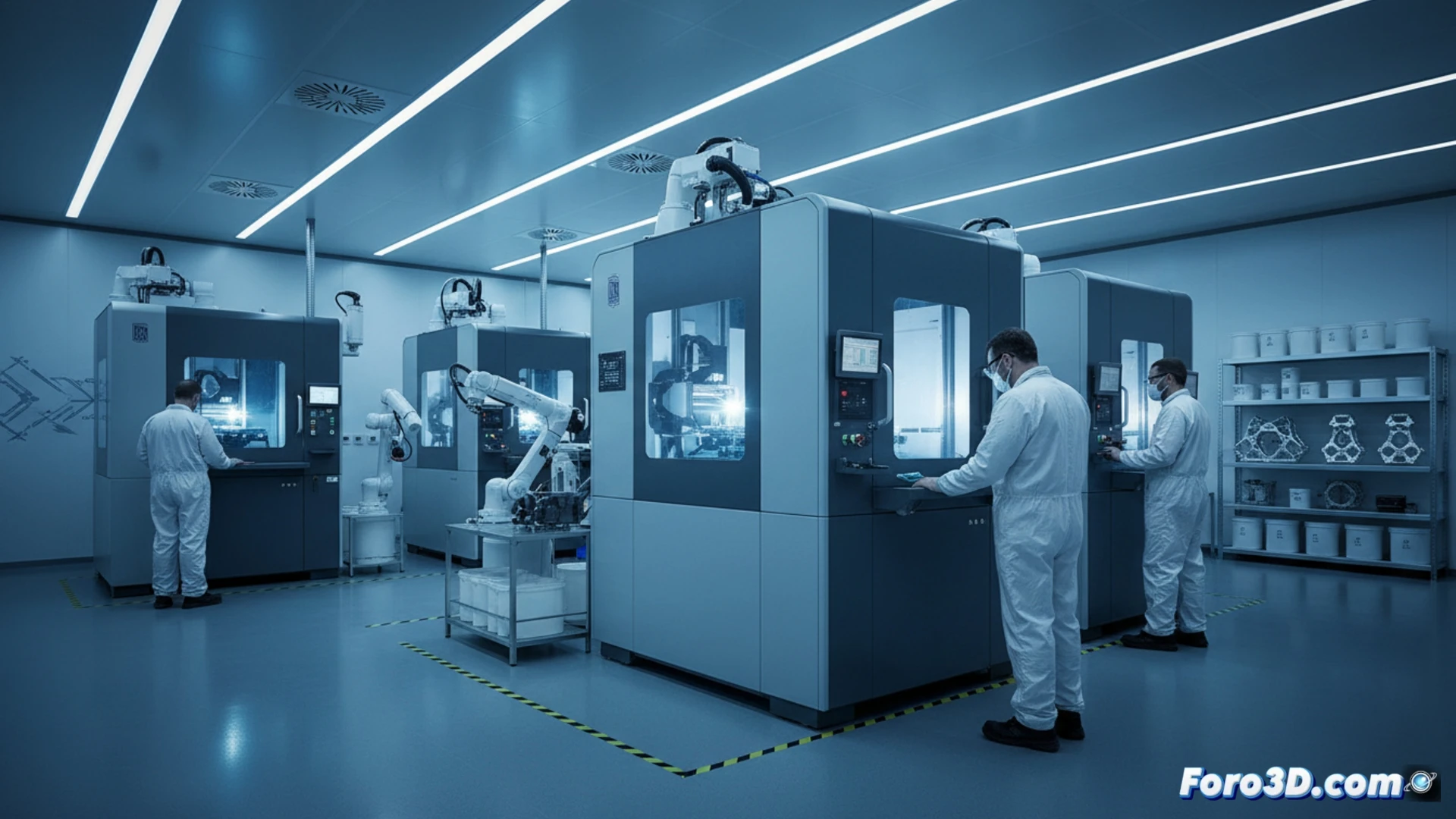
Laser-melted powders in an environment of absolute precision 🔬
The cell uses metallic superalloy powders that are selectively melted with a laser, building complex parts without the need for molds or subsequent machining. The environment controls humidity, temperature, and pressure to prevent contamination. This method allows for manufacturing geometries impossible with traditional techniques, shortens delivery times, and reduces raw material waste, a key factor in materials as costly as those used in defense.
The 3D printer that no longer fits on your office desk 🏭
While some are still printing plastic keychains that break on first use, Rolls-Royce is printing titanium parts for combat engines. The new cell, with its controlled atmosphere as if it were an operating room for robots, promises to reduce costs and times. But beware, if your home printer fails, you just restart it. If this one fails, you might have to call the Ministry of Defence to borrow another.