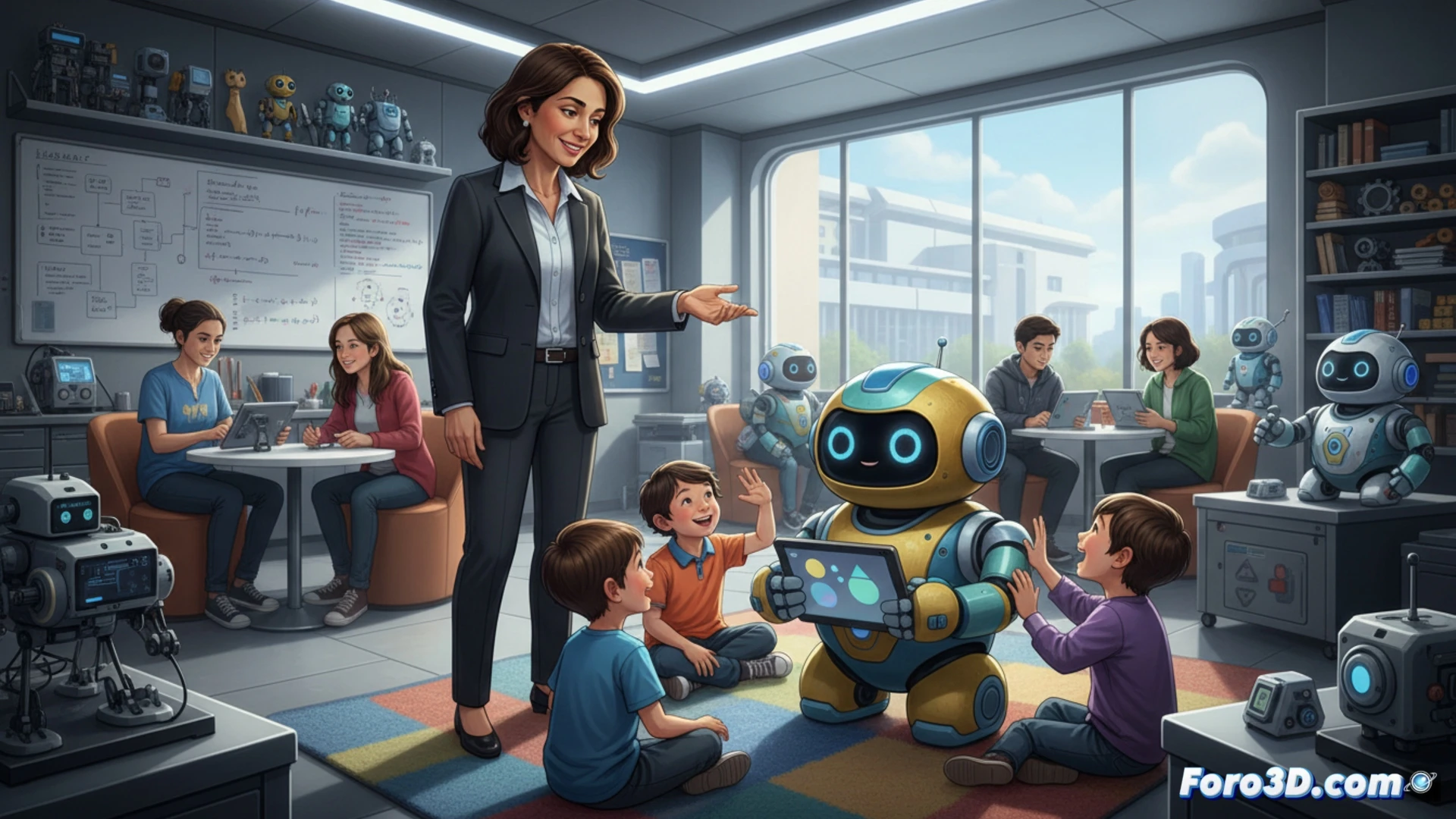
Social robotics is advancing into more compassionate territory with the work of Maja Matarić. Her research at the University of Southern California focuses on creating robots that offer emotional support and motivation. These systems interact with humans in areas such as mental health and special education, aiming to be accessible and beneficial for everyone.
From Bandit to University Mental Health: Technical Evolution 🤖
A concrete example is Bandit, a robot designed to interact with children on the autism spectrum. It uses games and words of affirmation to encourage social interaction. Matarić's current research explores similar applications to support the psychological well-being of university students. The technical development focuses on robotic behaviors that generate positive social responses and tangible support.
Your Next Confidant Might Need a Firmware Update 😅
It's a curious landscape. While some avoid talking about their problems, others might end up venting to a machine whose greatest trauma is a full buffer. Imagine your robotic therapist gives you profound advice and then asks you to recharge it. At least it won't judge you for crying, only for crashing its emotional recognition system with too much drama.