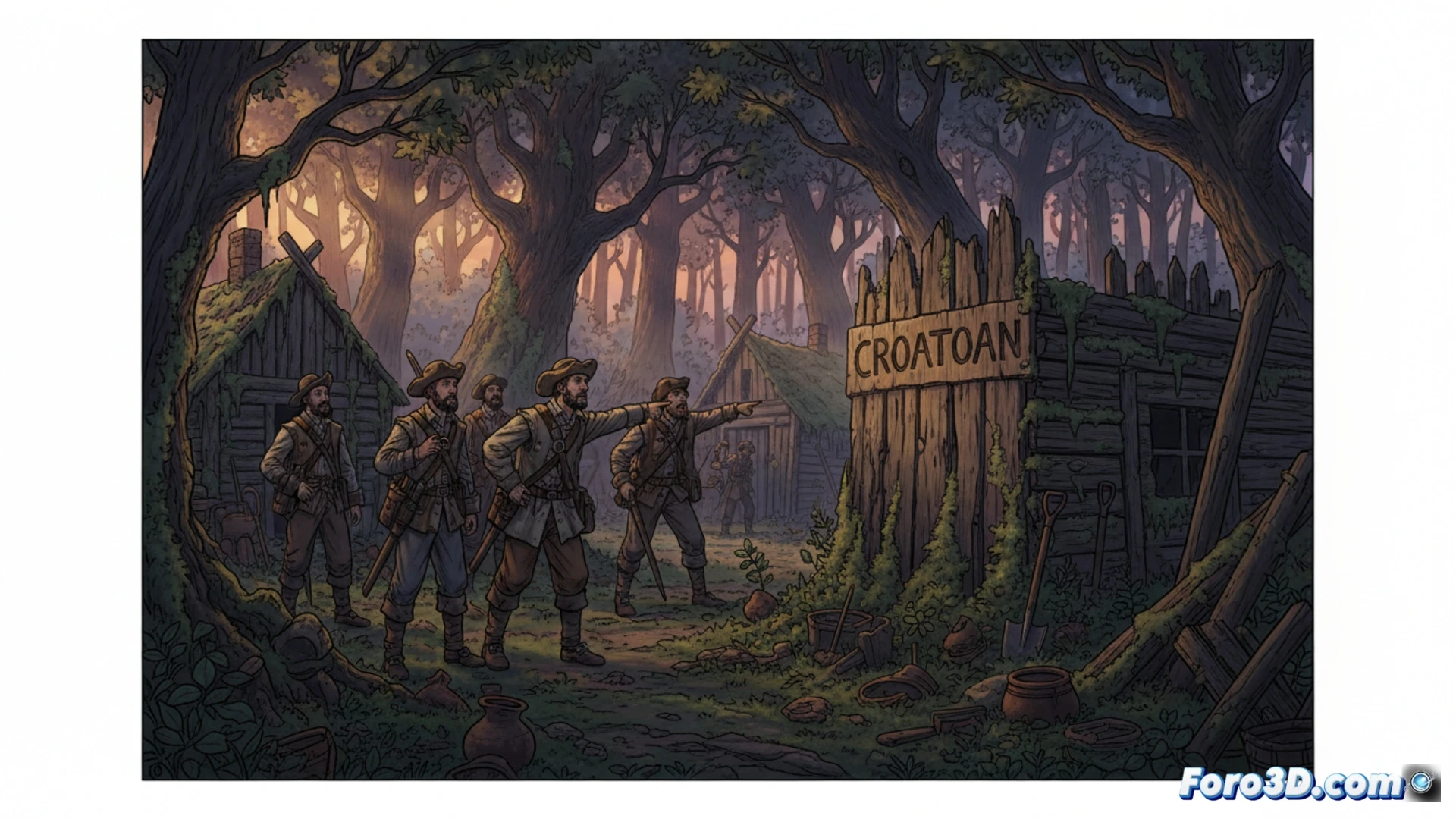
The centuries-old mystery of the lost colony of Roanoke, where over a hundred English colonists vanished leaving only the word Croatoan carved, enters a new era. Recent archaeological discoveries in North Carolina have identified the settlement. Here, digital archaeology is not a supplement, but the primary tool for deciphering the enigma without altering a single gram of earth, preserving the site forever in a digital twin.
Photogrammetry and LIDAR: mapping the invisible 🗺️
The process begins with a massive data capture. Drones equipped with high-resolution cameras fly over the area, taking thousands of overlapping photographs. Through photogrammetry, these images are converted into a point cloud and a textured 3D model of extreme precision. Simultaneously, terrestrial and airborne LIDAR scanners emit laser pulses that penetrate the dense vegetation, revealing micro-elevations of the terrain and hidden structures. This convergent data allows for the creation of a comprehensive digital map where ditches, postholes, and other vestiges imperceptible to the naked eye are identified, precisely delimiting the perimeter of the lost settlement.
A digital twin for history and outreach 🧩
The resulting 3D model is more than a file; it is an interactive research space. Archaeologists can take measurements, perform virtual sections, and test spatial distribution hypotheses without excavating. Furthermore, this digital twin becomes the basis for narrative virtual reconstructions, allowing the public to explore the colony as it might have been, bringing fragile heritage closer to society and keeping the research into the fate of the Roanoke colonists alive.
How can 3D reconstruction and digital spatial analysis of the archaeological remains on Roanoke Island contribute new hypotheses about the fate of the lost colony?
(PS: and remember: if you can't find a bone, you can always model it yourself)