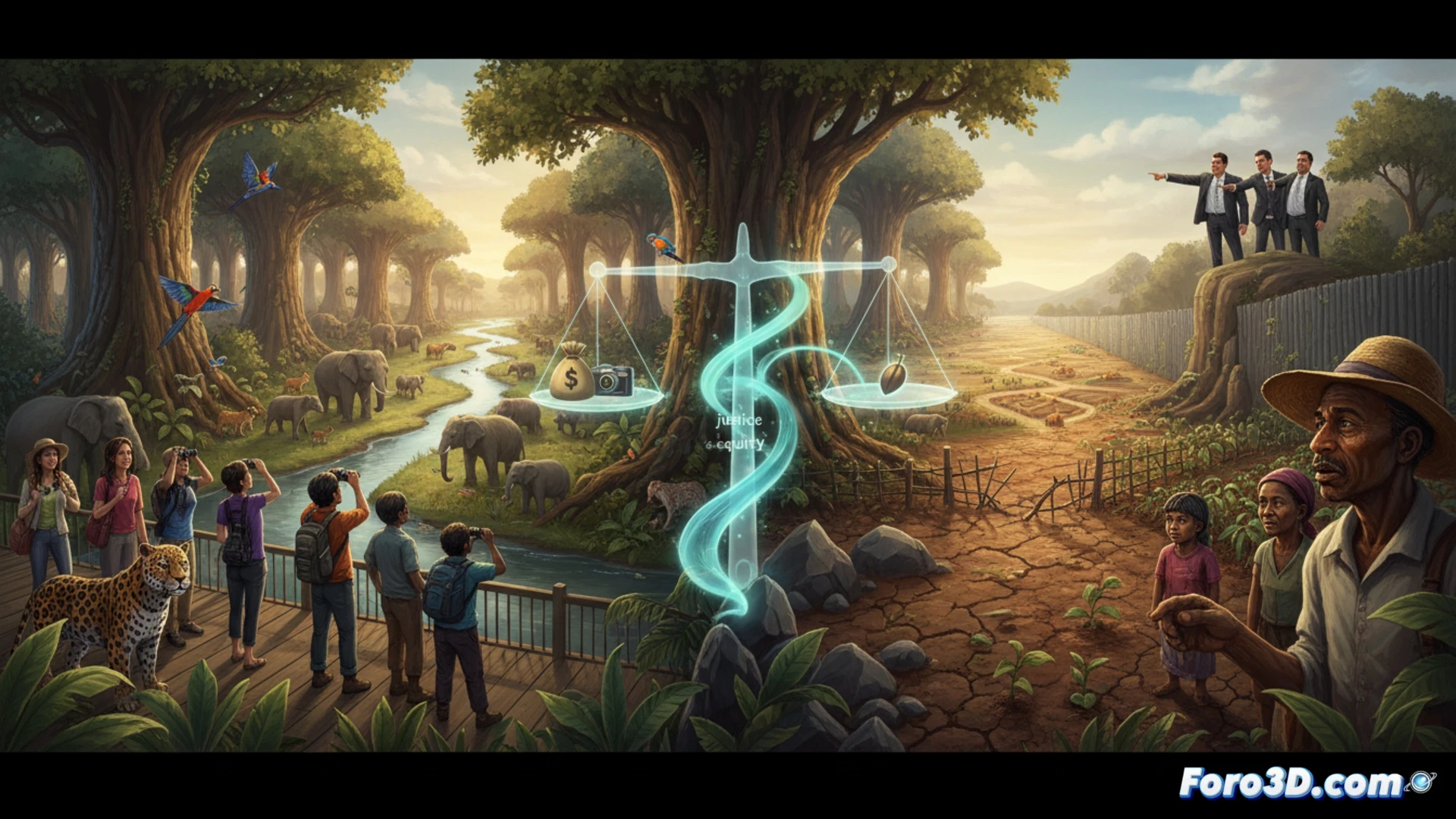
Jaboury Ghazoul, Professor of Ecosystem Management at ETH Zurich, argues that justice and equity are pillars for rewilding projects to succeed. These processes restore lands to natural states, but are often imposed without consulting local communities, generating conflicts. Ghazoul highlights that distributive justice is a key problem: ecotourism benefits from reintroduced species, while farmers suffer livestock losses and floods.
Technology to measure impact and compensate losses 🌿
The technological solution is not magical, but it helps. Monitoring systems with drones and sensors allow tracking the movement of eagles and beavers in real time. This data is integrated into GIS platforms to map risk zones for agriculture. Thus, compensations can be calculated based on actual crop or livestock losses, not vague estimates. Ghazoul criticizes that current compensation is insufficient, ignoring emotional costs and the loss of future land value. Blockchain tools could guarantee automatic and transparent payments to those affected.
Happy ecotourists, drowned farmers (literally) 💧
While tourists pay to see a beaver building its dam, the neighboring farmer watches his field flood. Rewilding is great for eagle selfies, but not so much for someone who loses a sheep. Ghazoul suggests that compensation should cover even the trauma of seeing your land turned into a theme park. Perhaps the next step is to install toll barriers: if you want wild nature, pay the flood bill. Or better yet, give the farmer a VIP pass to watch the show from his rooftop.