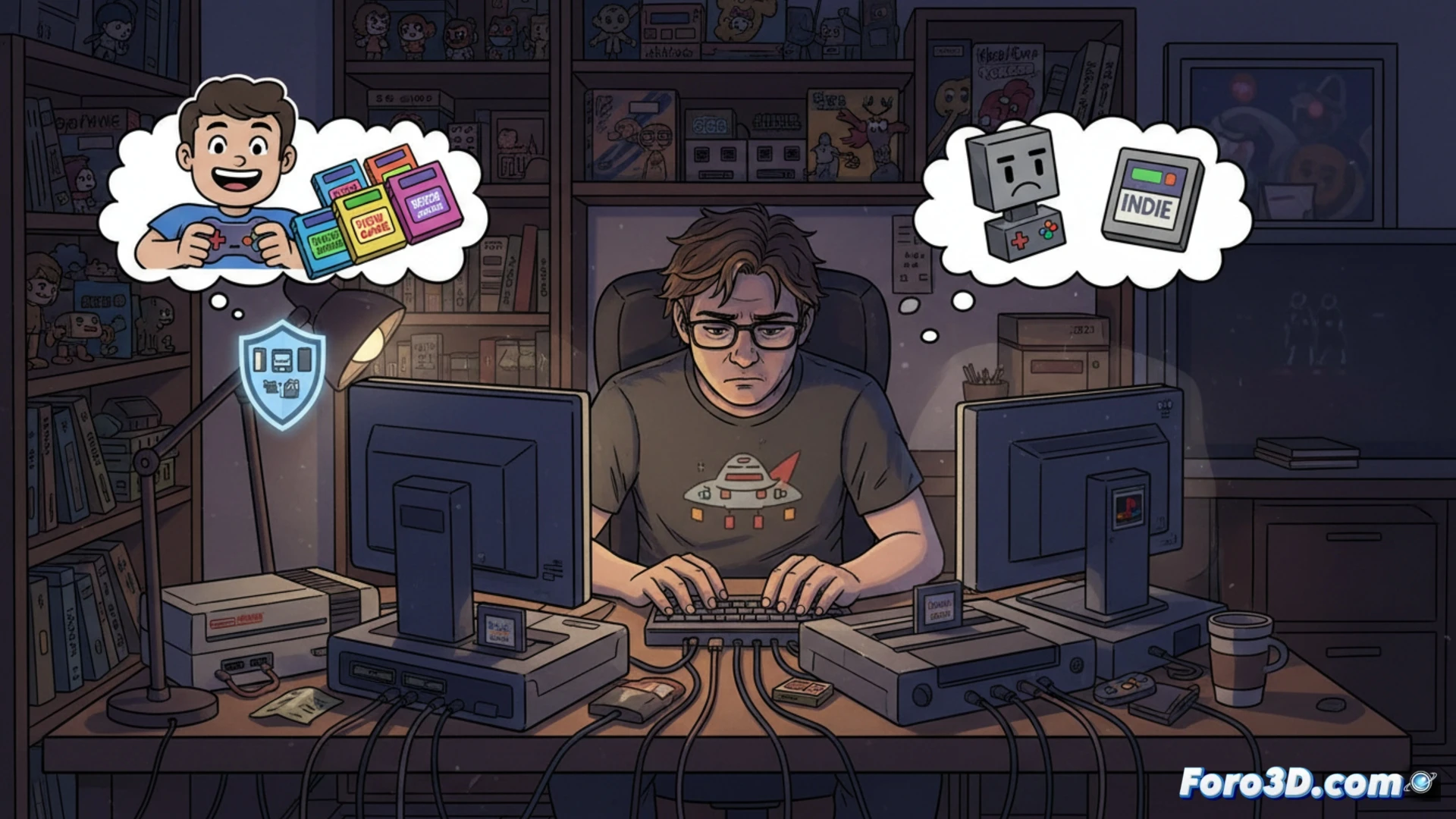
In the indie development scene, some programmers undertake peculiar projects: creating the same game for multiple retro consoles simultaneously. This task involves adapting code and resources to hardware with very distinct architectures, such as the SNES, the Mega Drive, or the Game Boy. For the enthusiast, this means new titles for forgotten platforms, fostering their preservation and offering nostalgic gaming experiences. However, the result is often modest due to technical limitations and the scope is, typically, a very specific niche.
The Complexity of Unifying Disparate Architectures 🧩
The main obstacle is the lack of a common engine or tools. Each console has its own processor, set of sound and video chips, and memory limits. The developer must write specific assembly code for each platform or create a very abstract common core. Managing sprites, the color palette, and audio channels so that the game looks and sounds acceptable on all of them is a task of reverse engineering and constant tweaking, far from the comfort of modern development.
A Dream of Optimal Performance... in 256 Colors 🎮
It's the paradise of consistent performance: where your biggest worry isn't shaders or 4K, but whether the Sega Master System will be able to display that final boss without flickering. You spend months optimizing a loop to gain one clock cycle on the NES, while your PC game could calculate the physics of an entire universe. In the end, your audience thanks you for that port to the Game Gear that lasts 20 minutes on battery, a true luxury for the time. The ironies of progress.