In 2025, the world of biology was shaken by the rediscovery of the long-fingered pygmy possum, a species believed to have been extinct for over 10,000 years. Found in the impenetrable forested peaks of New Guinea, this mouse-sized marsupial challenges our understanding of extinction. For the scientific visualization community, this finding represents an ideal case study: the opportunity to digitally recreate a creature that is a living fossil.
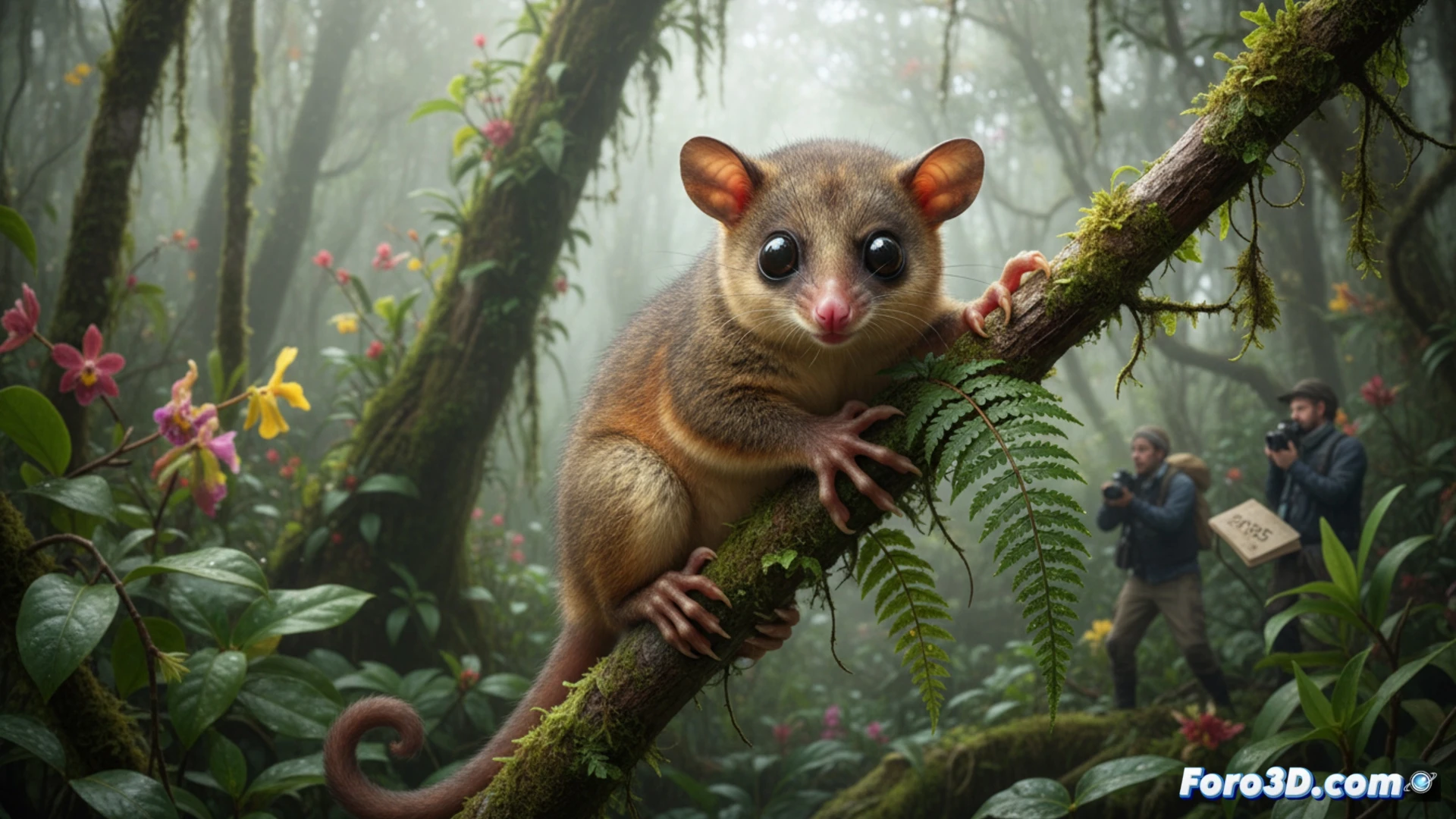
Photogrammetry and Modeling of a Living Fossil 🐾
The biggest technical challenge for documenting this possum is its tiny size and its habitat in perpetual fog. Field teams have already used high-resolution photogrammetry with drones and macro cameras to capture hundreds of images of the living specimen. With this data, it is possible to generate detailed 3D meshes of its anatomy, highlighting its characteristic elongated fingers and prehensile tail. The next step is to integrate these models into rendering engines like Unreal Engine or Blender to simulate its nocturnal behavior and movement among the high mountain mosses, creating a perfect digital twin for study without disturbing the ecosystem.
The Role of Technical Art in Conservation 🎨
Beyond documentation, 3D visualization becomes a conservation tool. By modeling its exact habitat and interactions, we can predict its ecological niche and the threats of climate change. For the technical writer, this case demonstrates that the boundary between paleontology and modern biology is blurred thanks to digital art. We are not just preserving an animal on a hard drive; we are bringing back to life a species that history had erased, allowing anyone to explore its anatomy through an interactive web viewer.
What 3D reconstruction techniques from limited field data were key to validating the identity of the long-fingered pygmy possum in its rediscovery in New Guinea?
(PS: modeling manta rays is easy, the hard part is making them not look like floating plastic bags)