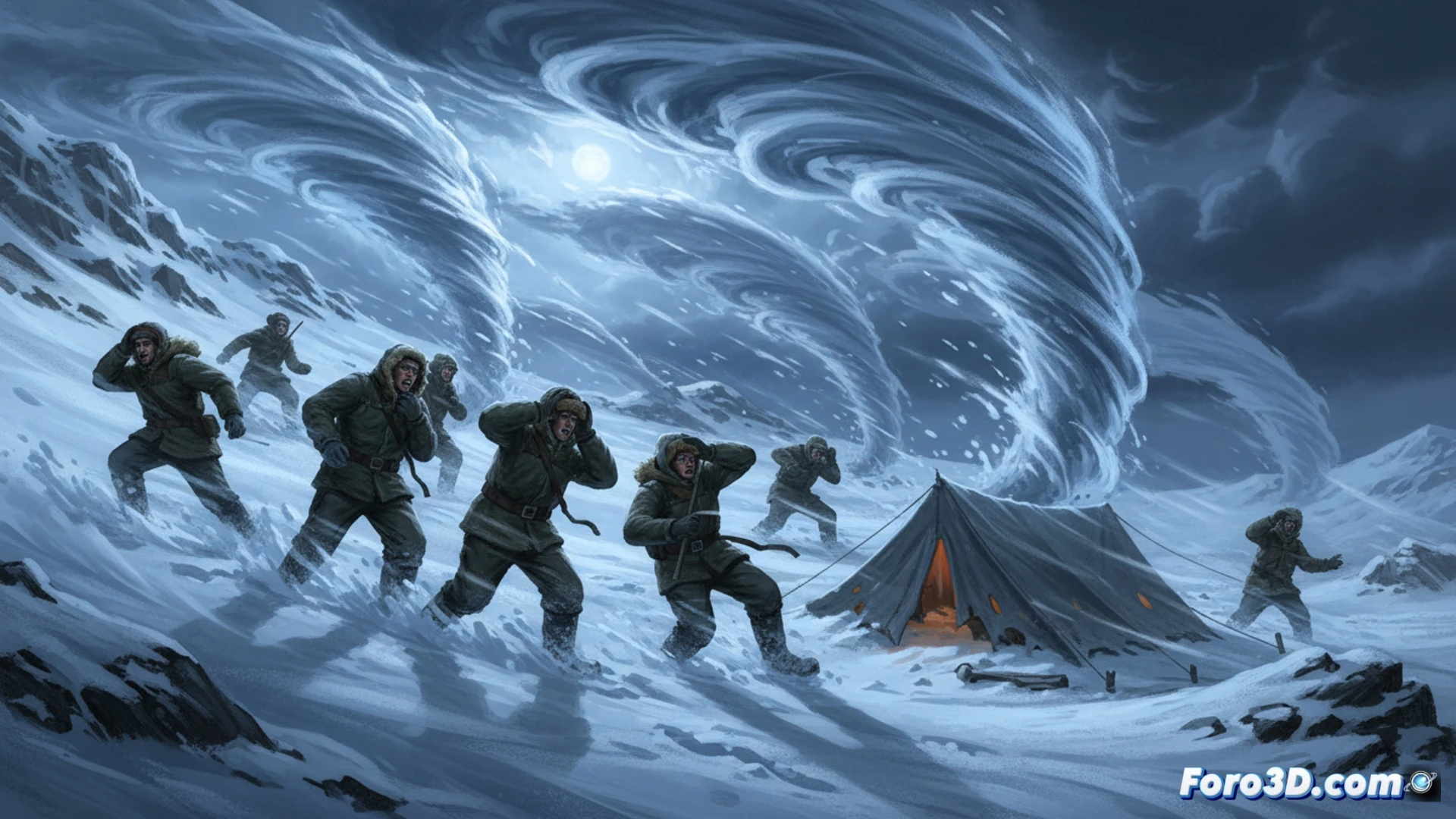
The recent hypothesis attributing the Dyatlov Pass tragedy to a rare phenomenon of extreme katabatic winds reopens the case from a modern forensic perspective. This scientific approach demands rigorous validation, beyond speculation. This is where current 3D scene analysis tools can be decisive in reconstructing, simulating, and objectively evaluating the feasibility of this new theory against the known physical evidence.
Photogrammetry and CFD: Digitizing the Scene and the Hypothesis 🔬
The first step would be to create an exact digital twin of the terrain and the campsite. Using drone photogrammetry over the current area, complemented with topographic data and the expedition's original photographs, we could generate a high-precision, georeferenced 3D model. On this model, using computational fluid dynamics (CFD) simulation, the conditions of an extreme katabatic wind or mini-tornado could be reproduced. The simulation would analyze pressures, velocities, and flow patterns over the tents and the immediate environment, assessing whether such forces explain the observed structural damage and the scattering of objects.
Beyond the Model: Forensic Validation and Limits ⚖️
The simulation would provide quantitative data, such as the force needed to cause the damage, which could be cross-referenced with pathological and engineering reports. However, a 3D model, no matter how precise, works with assumptions. The uncertainty about the exact atmospheric conditions of that night is a critical limit. The conclusion would not be an absolute truth, but a probabilistic analysis weighing the theory's coherence with the recreated scene, providing a key technical piece to a historical puzzle.
Would you place scale targets before scanning?