Last April 26, a quick intervention in Zaragoza prevented a death after a self-inflicted stab wound. A citizen applied an improvised tourniquet, allowing the National Police to contain a severe hemorrhage. This event provides a perfect case study for the forensic pipeline, where three-dimensional documentation of the scene can reveal the exact sequence of events and the effectiveness of first aid in urban environments.
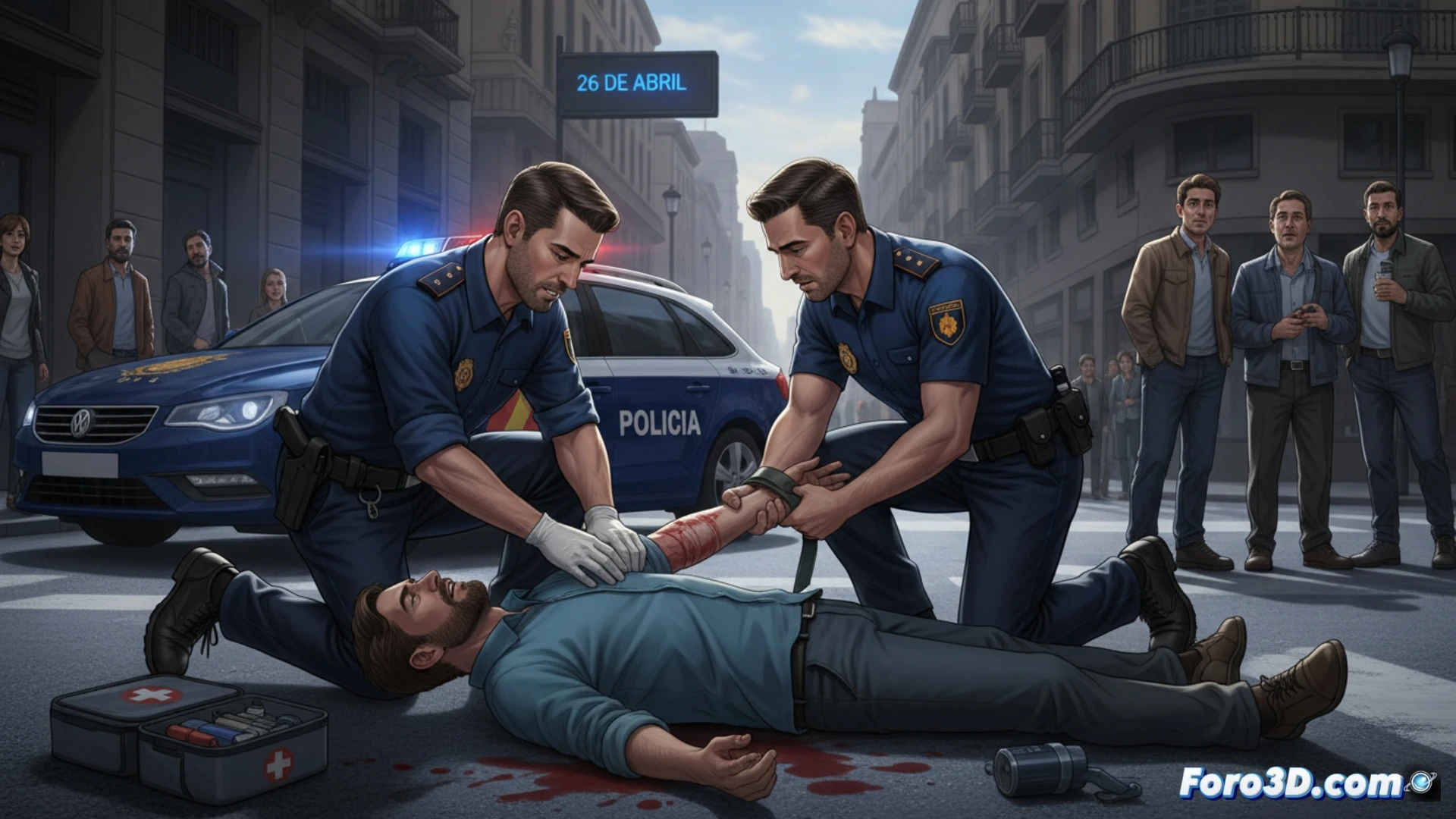
Photogrammetry and simulation of the incident scene 🖥️
The implementation of technologies such as photogrammetry and LiDAR scanning allows for the digital reconstruction of the exact point where the incident occurred. By capturing point clouds and 3D models, analysts can virtually position the responders (the citizen and the officers) and evaluate the trajectory of the weapon, the blood flow, and the placement of the improvised tourniquet. This recreation facilitates the simulation of the response, allowing law enforcement to study variations in reaction times and the location of resources in public space, thereby optimizing emergency protocols.
Forensic lessons for urban emergency protocols 🚑
Citizen collaboration, though vital, introduces unpredictable variables into the chain of survival. The 3D analysis of this case allows for validating the effectiveness of the homemade tourniquet compared to a standard one, and studying how the body position and urban furniture affected the maneuver. This approach not only improves the judicial documentation of the incident but transforms a tragic event into a training model to improve coordination between civilians and police in future emergencies.
Would you use laser scanning or photogrammetry to document this case? 🧐