The Ray-Ban Meta Gen 2 have established themselves as the most relevant consumer augmented reality device. With a discreet design and notable technical improvements, they promise to integrate digital information into our daily lives. But for the Foro3D community, the key question arises: are these glasses useful for working with 3D content? The answer is not a simple yes or no, but an analysis of their role as a contextual viewer versus their limitations as a creation tool. 👓
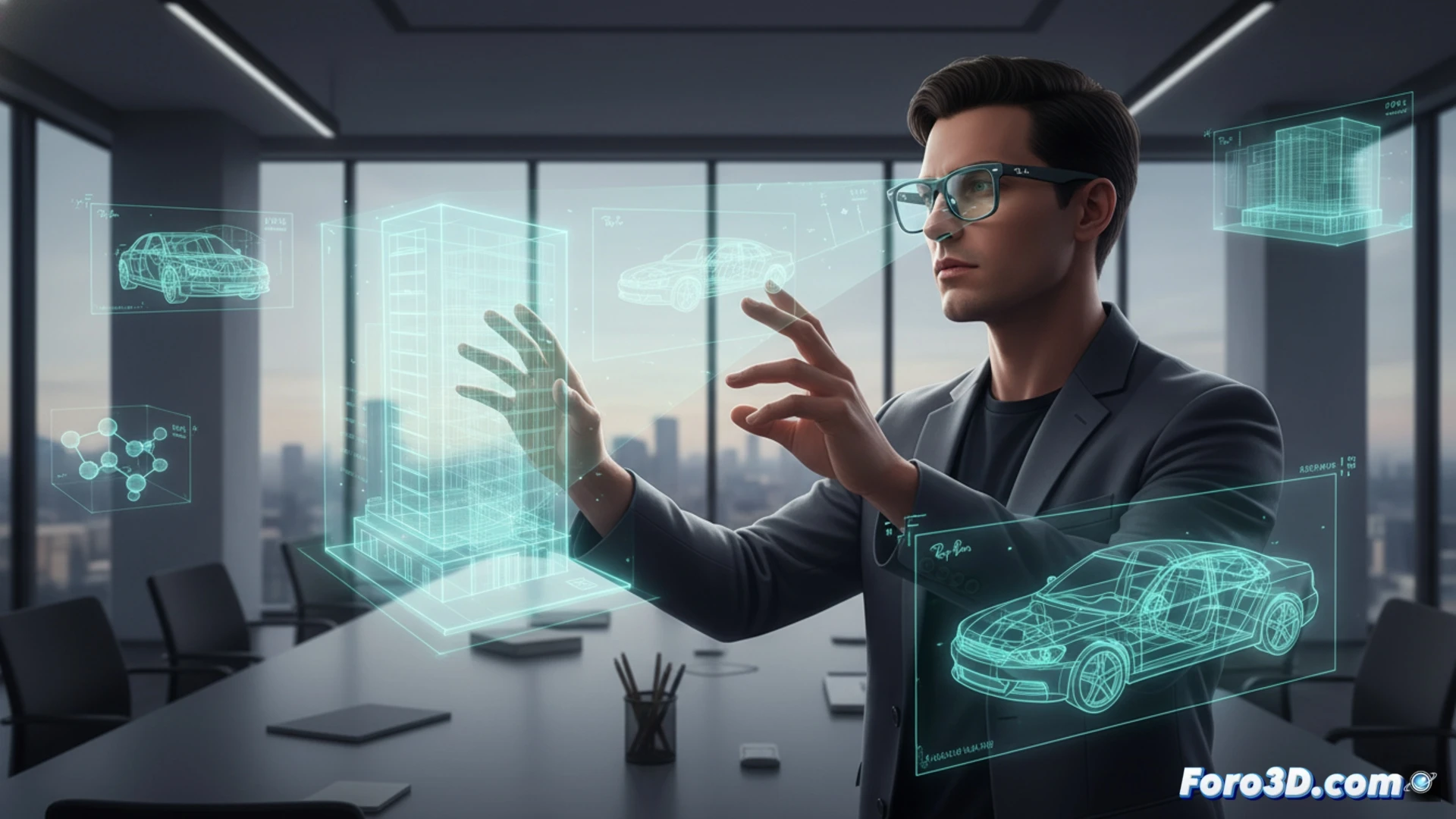
Technical Specifications and Potential for 3D Visualization 🔍
Technically, these glasses are not a mixed reality headset. They lack a transparent screen that overlays solid 3D models in your field of vision. Their value for 3D lies in the 12 MP camera and the Meta AI assistant. Imagine pointing at an empty space and, through the mobile app, a 3D model of a piece of furniture being displayed there. Or using real-time text translation on labels of a physical model. They are ideal for visualizing prototypes in context, education, or retail, where the where is as important as the what. However, the limited battery and dependence on a smartphone restrict long sessions.
Conclusion: a complement, not a workstation ⚖️
In short, the Ray-Ban Meta Gen 2 are not for modeling, sculpting, or rendering. They are a device for the passive viewing and consultation of contextual 3D content. Their strength is adding a layer of practical information to the real world, not replacing it with a virtual one. For 3D professionals, they can be an interesting complement for presentations or on-site reviews, but never the main creation tool. Consumer AR is advancing, but professional creation still requires specialized equipment.
Can the Ray-Ban Meta Gen 2 become the ultimate tool for visualizing and reviewing 3D models in augmented reality work environments?
(PS: AR applied to maintenance lets you see where the fault is... before the machine explodes.)