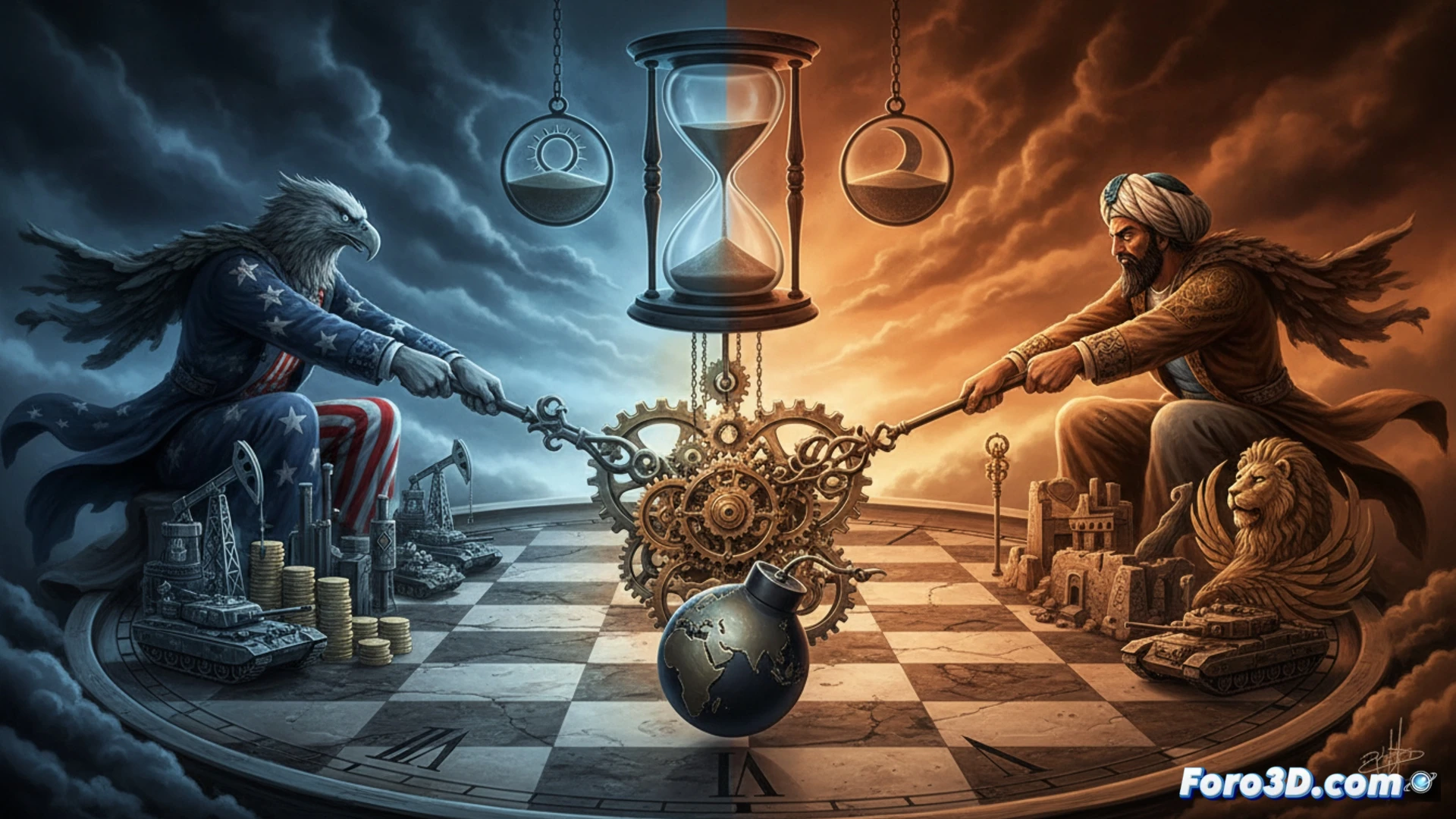
On the geopolitical chessboard of the Middle East, two pieces face off with the certainty that time is on their side. The United States and Iran are locked in a duel of strategic perceptions. While Tehran believes that Trump needs a deal to secure his legacy, Washington maintains that the Islamic Republic cannot withstand without easing the sanctions that weigh it down. A poker game where each player thinks the other is in more of a hurry.
Pressure technology: the factor of asymmetric warfare and digital espionage 🛰️
In this duel, technology plays a central role. Iran has developed cyberattack systems against its rivals' critical infrastructure, while the United States deploys satellite surveillance networks and reconnaissance drones to map nuclear facilities. The asymmetry is evident: Washington dominates digital intelligence, but Tehran employs hybrid warfare tactics with low-cost missiles and drones. The capacity for technical escalation defines the pace of negotiations.
The hourglass both want to turn ⏳
The situation recalls two chess players who, after moving the same piece ten times, discover the board is tilted. While Trump seeks a peace photo op with fanfare, the ayatollahs calculate how many months of rice they can buy without foreign currency. In the end, time is not an impartial judge: it is a resource both believe they control, but which often slips through their fingers like a poorly spliced fiber optic cable.