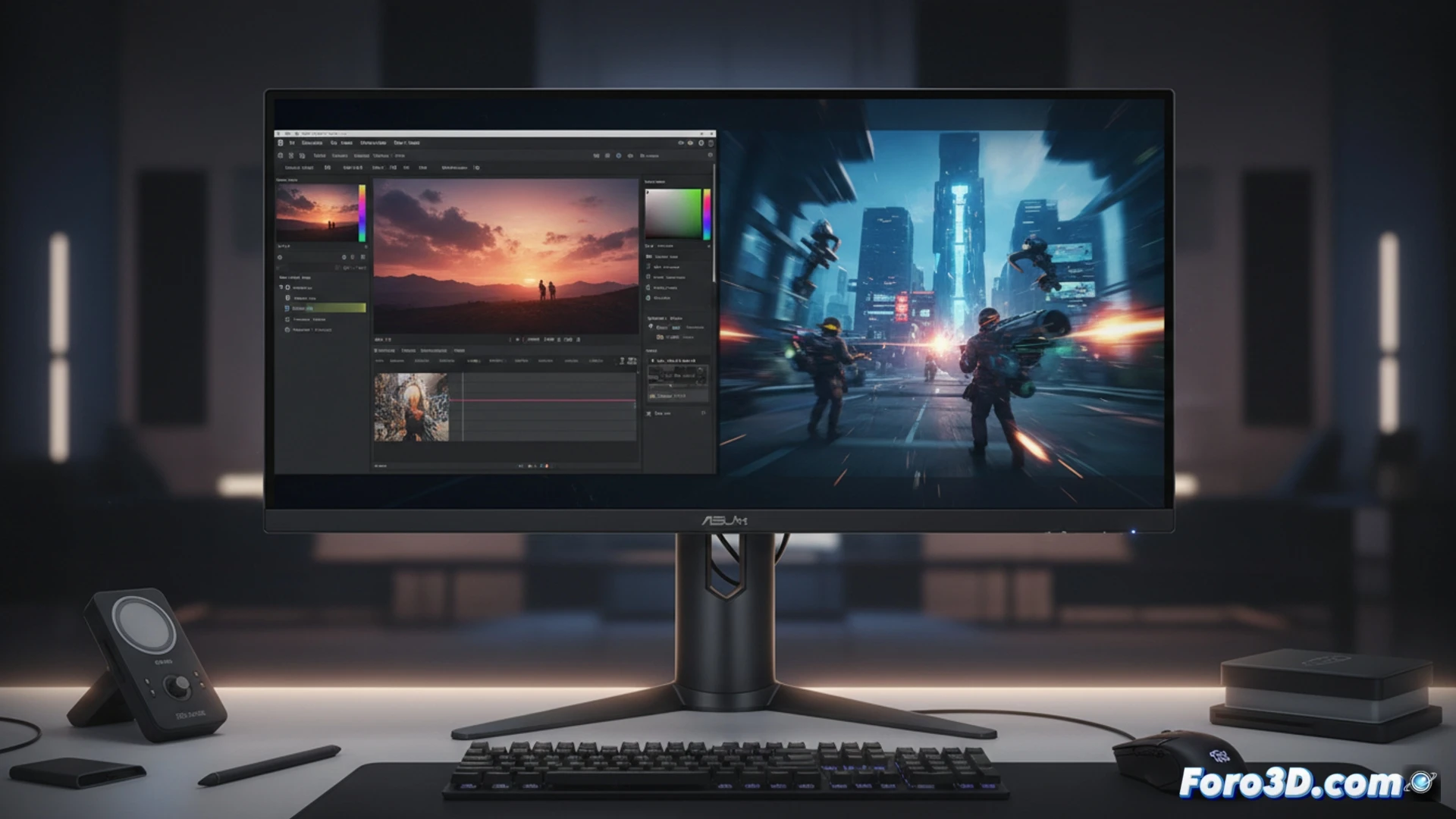
ASUS has launched the ProArt Display OLED PA32USD, a 31.5-inch monitor with a QD-OLED panel that promises to end the dilemma between color accuracy and fluidity. With 4K resolution, a 1,500,000:1 contrast ratio, and a 1,000 nits peak brightness certified VESA DisplayHDR True Black 400, this device positions itself as a key tool for those working in 3D modeling, PBR texturing, and color correction in renders.
Technical Analysis: QD-OLED Panel and Color Fidelity for PBR Workflows 🎨
For a 3D professional, the difference between an IPS monitor and the QD-OLED of the PA32USD is critical when editing PBR materials. The panel offers absolute blacks without blooming, allowing for precise evaluation of specular reflections and roughness on metallic or glass surfaces. The 1,000 nits peak facilitates the visualization of HDR maps and exposure correction in renders, something traditional IPS panels, limited to 400-600 nits, cannot achieve without losing detail in shadows. Furthermore, color coverage exceeding 99% DCI-P3 and a Delta E < 2 guarantees that the color you see on screen matches the final render, reducing iterations in post-production.
Is This the End of IPS Monitors in 3D Studios? 🖥️
The ProArt PA32USD not only competes but surpasses IPS in contrast and brightness, two key factors for simulating realistic lighting. However, its price and the risk of burn-in on OLED panels remain barriers for small studios. Still, for tasks like HDR color correction or viewing high dynamic range textures, this monitor represents a generational leap. The question is no longer whether you need a QD-OLED, but whether your workflow can afford to ignore the precision it offers.
How does the QD-OLED technology of the ProArt PA32USD affect color accuracy and real-time rendering workflow compared to a traditional professional IPS monitor?
(PS: remember that a powerful GPU won't make you a better modeler, but at least you'll render your mistakes faster)