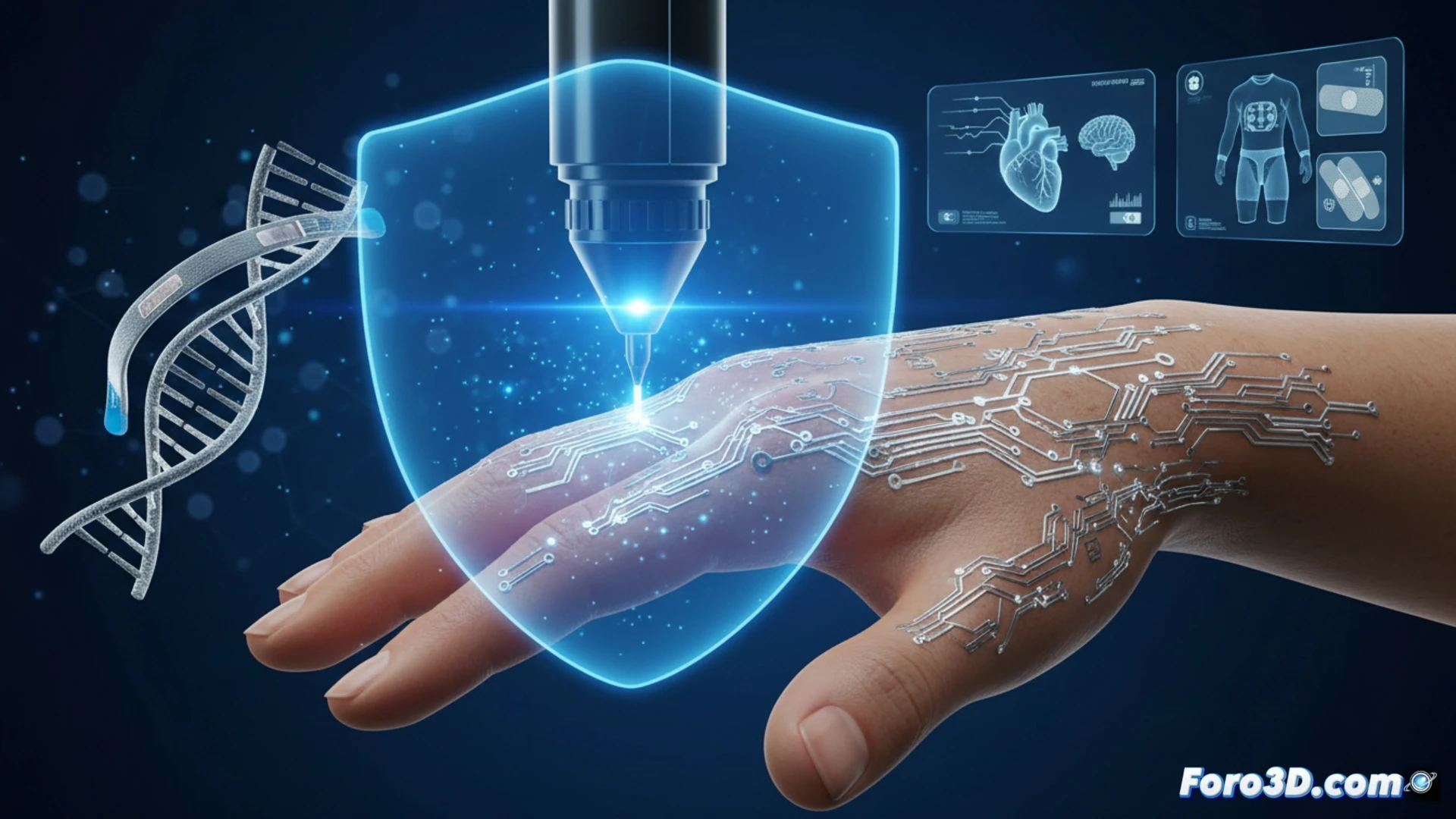
A new additive manufacturing method uses focused microwaves to activate conductive materials. This technique allows for depositing electronic circuits directly onto delicate and heat-sensitive substrates, such as biological polymers or even living tissue. The advancement opens a pathway to create integrated medical devices in a more organic way.
The Trick Lies in Focusing the Energy 🔬
The key lies in precisely controlling the electromagnetic field of the microwaves. The energy is directed only to specific points where a metallic precursor ink has been deposited, sintering it without heating the surrounding material. This prevents damage to biological materials or low-melting-point plastics, enabling the fabrication of sensors and electrodes directly onto them.
Your Next Graphics Card Could Come with a Nervous System 🧠
Imagine a future where, after a calibration error, your monitoring implant not only alerts you about cholesterol but also starts searching for WiFi networks or playing ads. Jokes aside, the direct integration of circuits into biology poses serious challenges regarding long-term security and compatibility. It remains to be seen if the communication protocols are more stable than the usual beta drivers.