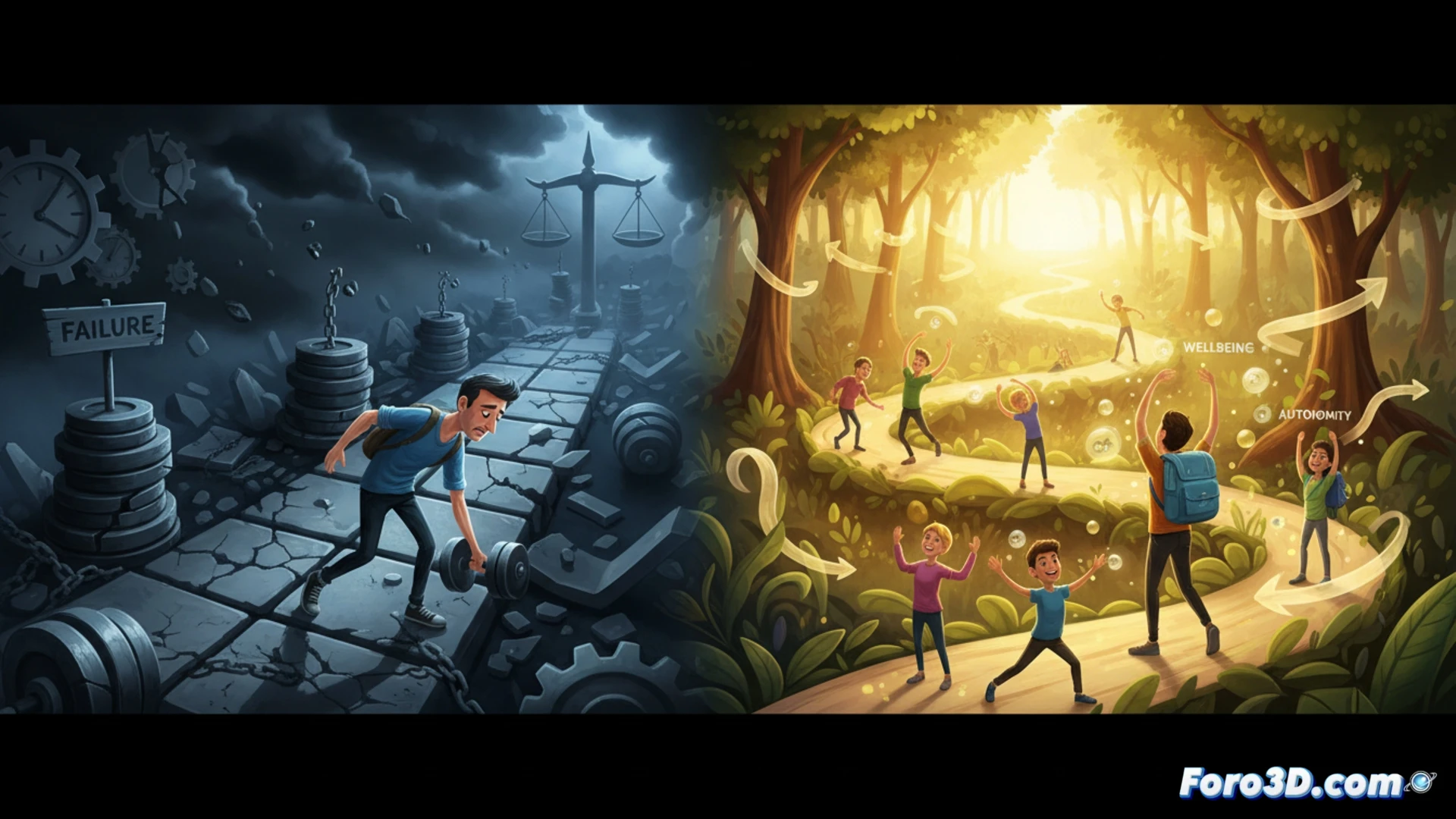
A recent study in sports psychology has uncovered the true cause of gym dropout: it's not laziness, but the rigidity of our goals. When we set objectives like training four hours a week, any unforeseen event triggers an all-or-nothing mindset that leads to frustration. This same pattern repeats in nutrition, where strict diets often last less than an expired yogurt. The key lies in shifting the focus from the outcome to the process.
3D Modeling to Visualize Flexible Metabolism 🧬
Applying the principles of the study, we can design 3D educational experiences that transform the user's relationship with food. Instead of showing calorie charts or weight tables, we create interactive models that represent how a colorful salad impacts cellular energy or how a short walk after dinner speeds up digestion. Self-determination theory tells us that adherence grows when exercise is associated with enjoyment; therefore, these visualizations should be attractive, with smooth animations and vibrant colors, avoiding any tone of punishment or obligation. Flexibility is represented through scenarios where the user drags food onto a virtual plate and sees how their metabolism adapts, demonstrating that there are no forbidden foods, only choices that add up.
From Guilt to Food Autonomy 🌱
The biggest mistake in nutritional education is imposing rigid goals like losing five kilos in a month. Science recommends focusing on the process: celebrating that today you ate one more piece of fruit than yesterday. Our 3D models can gamify this progress, showing a virtual plant that grows with each daily success, without punishments for failures. Autonomy is the final pillar: when the user chooses their visual route, personalizes their plate, or decides which habit to explore, the learning becomes their own. The WHO supports progressive adaptation; we make it visible, layer by layer, in a three-dimensional environment that turns nutrition into a game of discovery, not a sentence.
How can the three-dimensional visualization of the nutritional composition of foods reprogram our brain to eliminate anxiety about gym failure and sustain training adherence?
(PS: 3D calories are like polygons: you never know how many you've consumed until it's too late)