The Plast 2026 fair, an unmissable event for the plastics industry, has decided to give greater prominence to additive manufacturing. This move reflects a real change: 3D printing is no longer just a laboratory promise, but a consolidated tool. In the next edition, we will see how this technology is strongly integrated, showcasing its ability to produce final parts, molds, and components that once seemed impossible.
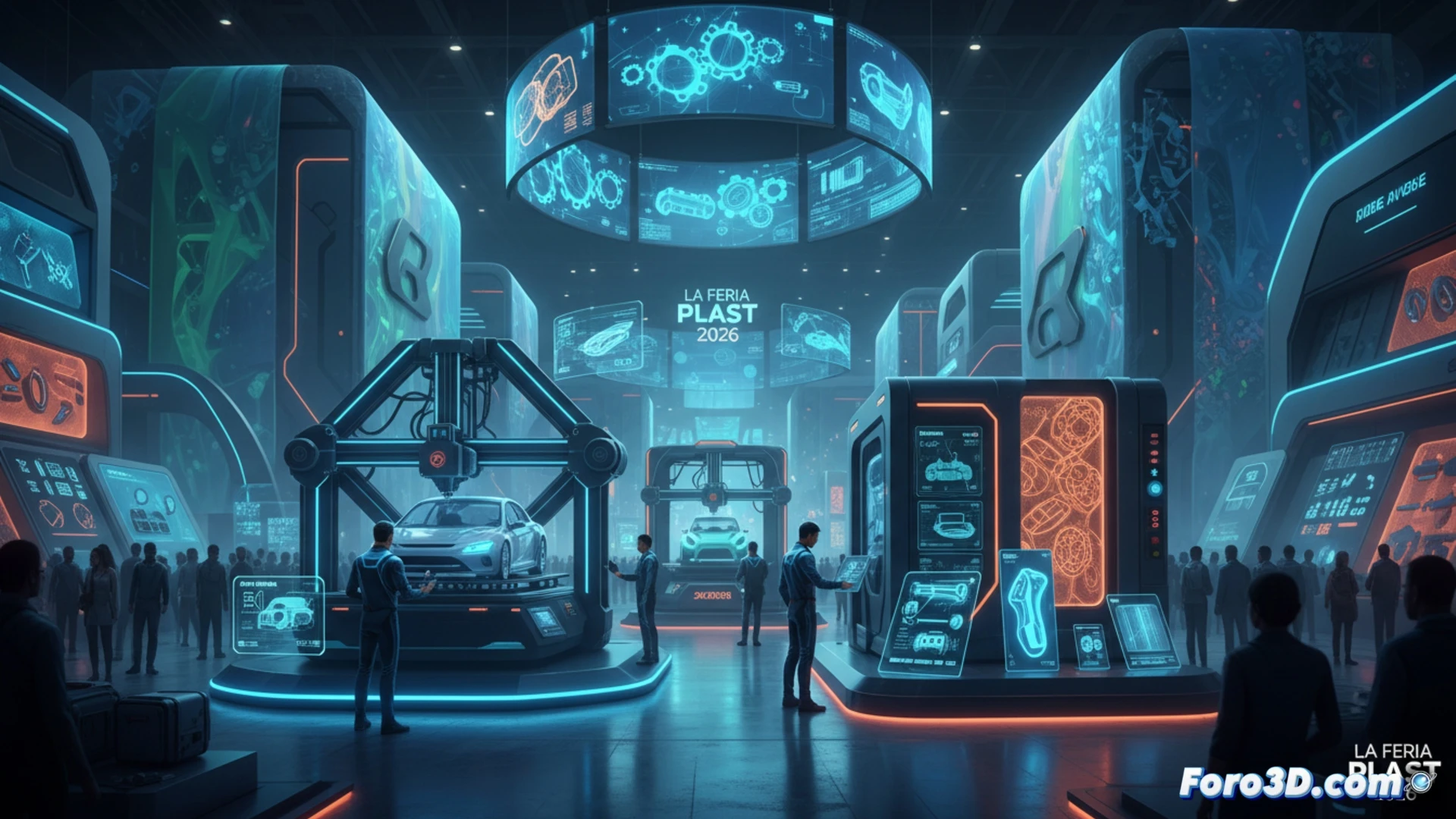
Additive manufacturing: from prototype to series production 🏭
The technical evolution of 3D printing has been key to its inclusion in Plast 2026. Today, high-precision systems allow working with technical materials such as polyamides, PEKK, or composites. Selective laser sintering (SLS) technology and advanced fused deposition modeling (FDM) are no longer strangers on production lines. Attendees will be able to see how these machines generate parts with mechanical properties comparable to injection molding, reducing lead times and tooling costs.
When plastic is no longer just a prototyping toy 🚀
Not everything is serious at Plast 2026. It seems that engineers have finally stopped printing only keychains and dragon figures for their desks. Now, 3D printing dares to tackle injection molds and parts that withstand real temperatures. Of course, some nostalgic visitor will surely still ask if that machine can make a phone stand. The answer will be: yes, but also a gear for a rocket. Just the way evolution goes.