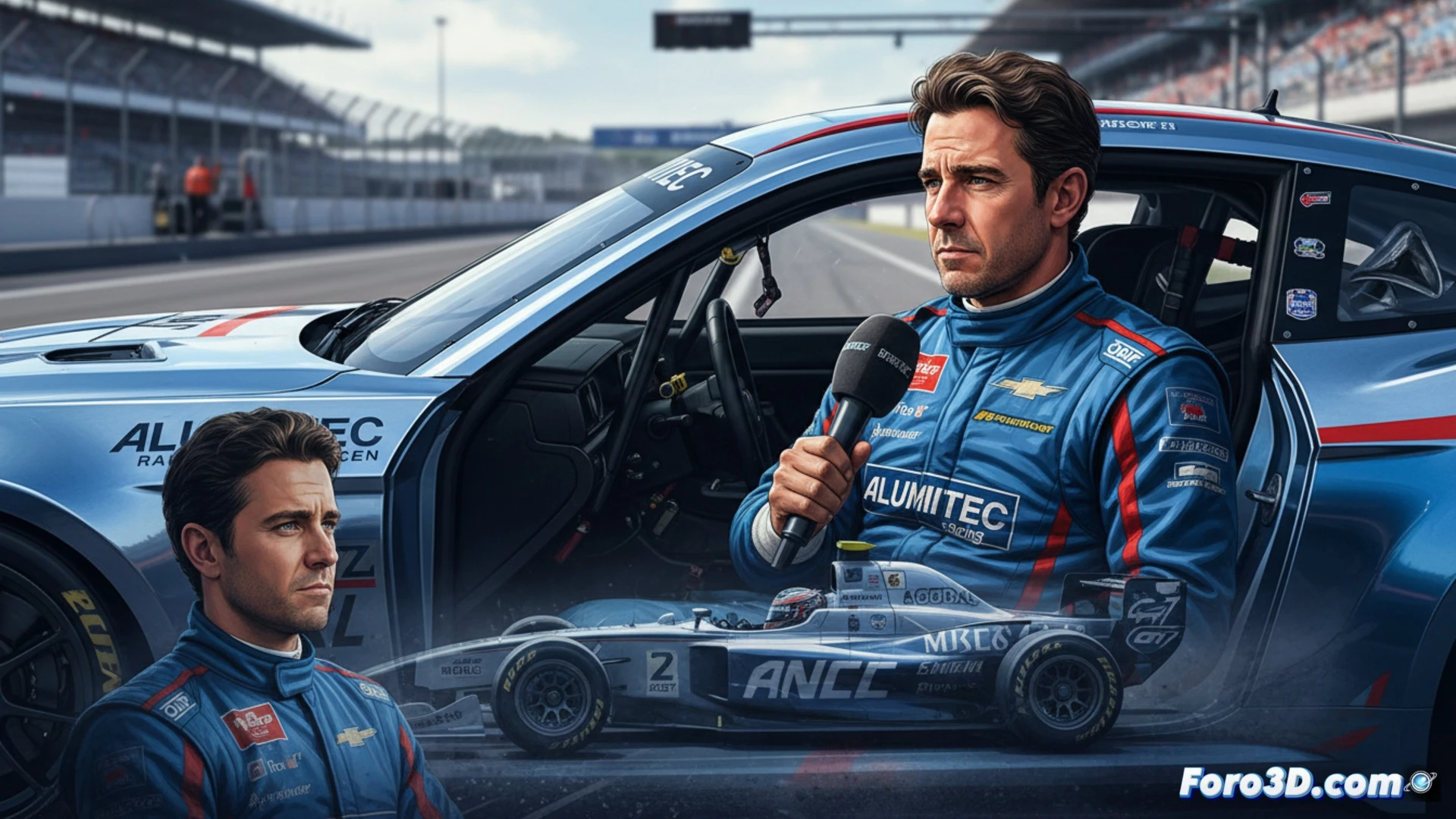
Nelson Piquet Jr.'s return to the Cheste Circuit, the scene of his GP2 successes, is not just a matter of muscle memory. His adaptation to the NASCAR Euro Series Ford Mustang highlights a modern technical process where 3D simulation is crucial. Veteran drivers and teams use digital twins and faithful circuit recreations to shorten the learning curve, transforming prior experience into actionable data for a completely different vehicle.
Digital Twins and Simulation: The Invisible Training 🧠
Before setting foot on the asphalt, Piquet Jr. and his team, Alumitec Racing, have likely analyzed the track layout using a precise 3D reconstruction of Cheste. These simulations allow for studying the Mustang's virtual behavior, adjusting suspensions, aerodynamics, and braking strategy. 3D technology turns a technical and complicated circuit, as the driver describes it, into a parameterizable laboratory. Thus, adaptation to the car, which Piquet prioritizes over the track, is accelerated through infinite virtual tests that replicate real conditions.
From Experience to Data: The Value of Technical Analysis 📊
Piquet's reflection on the value of each experience, like his battle in GP2, finds an ally today in 3D analysis. Ideal racing lines, telemetry, and tire wear modeling are visualized in three-dimensional environments, creating a bridge between the driver's instinct and pure physics. This synergy between human experience and simulation technology is what defines current high performance, where every corner of Cheste is first designed and redesigned in the digital domain.
How do drivers like Nelson Piquet Jr. use 3D technology to recreate and adapt to historic circuits like Cheste in their current preparation?
(PS: Reconstructing a goal in 3D is easy, the hard part is making it not look like it was scored with a Lego man's leg)