Painting spring foliage can be a challenge when you want branches and leaves to look like a single body, as when looking toward the light. The technique of dry brush on rough or semi-rough paper achieves that diffuse and natural effect. It's not about detailing each leaf, but capturing the essence of the forms from their outer edges, using the paper's texture to your advantage.
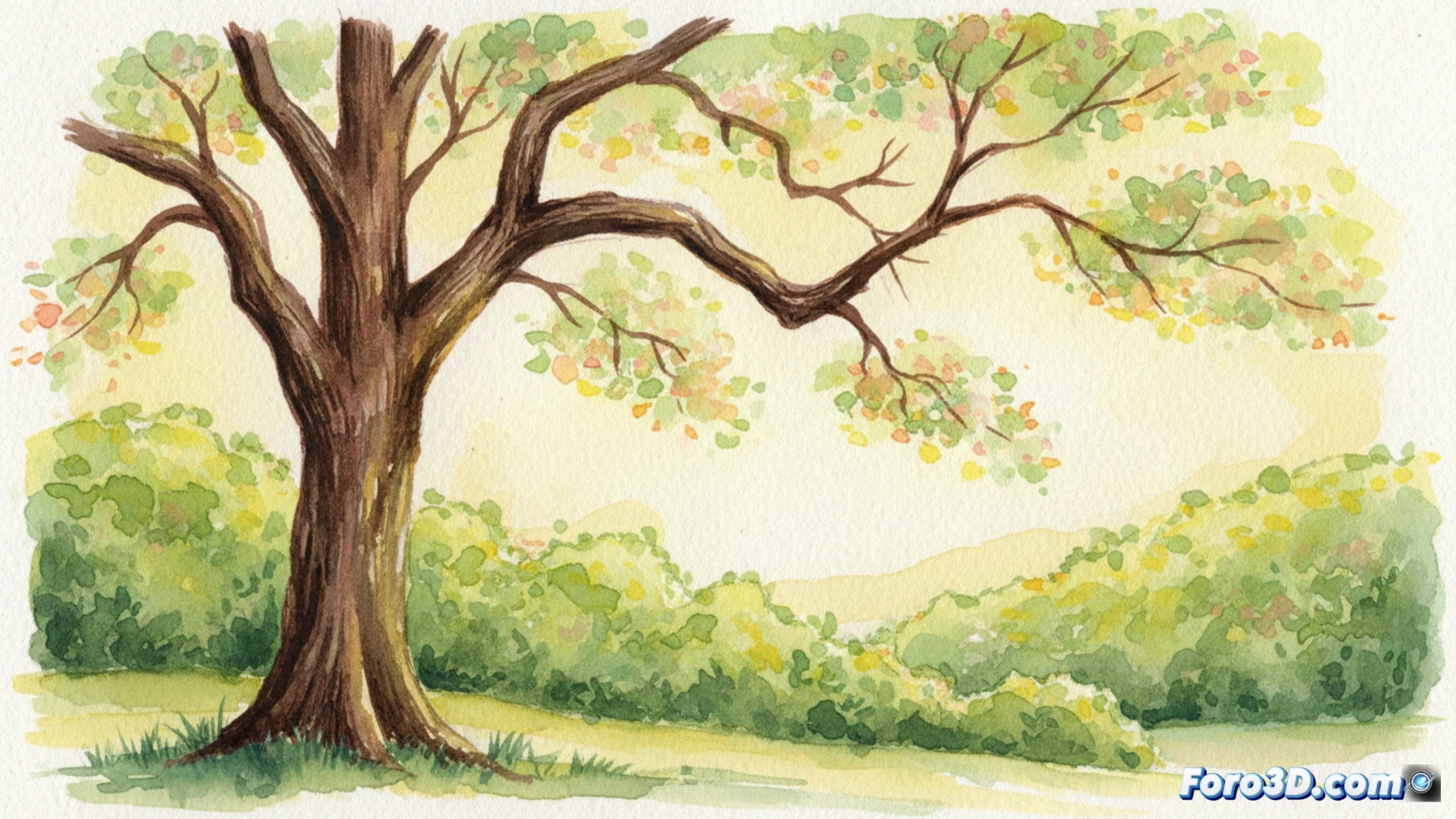
Controlled drag: the technical method for hedges and branches 🌿
To start, load a medium brush with thick paint and drag from the base upward, leaving broken marks due to the paper's roughness. Then, with the tip of the brush, draw only the main branches; avoid saturating. For the foliage, without reloading the brush, drag the side from the outside inward, like shading with a crayon. Repeat on hedges alternating side and tip to vary textures. Dampen the brush at the end to create a clean edge at the base of the hedge, contrasting with the rough top edge.
The hedge that went partying and forgot to comb its hair 🎉
This technique is perfect for those days when your brush feels more like a wire brush than a precision tool. If when dragging the side over the paper the hedge looks like a hedgehog with a hangover, you're on the right track. The fun part is that the mistake becomes a success: the broken marks simulate windblown, disheveled leaves. Of course, don't tell anyone that the clean bottom edge was an accident with the damp brush.