Counterfeit banknotes have reached a new level of sophistication with the emergence of a high-quality batch that fooled basic optical verification systems. However, ink topography, or forensic calcography, exposed the fraud. An analysis with a high-resolution 3D profilometer revealed that the characteristic intaglio relief was not due to the pressure of a metal plate, but to a 3D resin print replicating the surface texture.
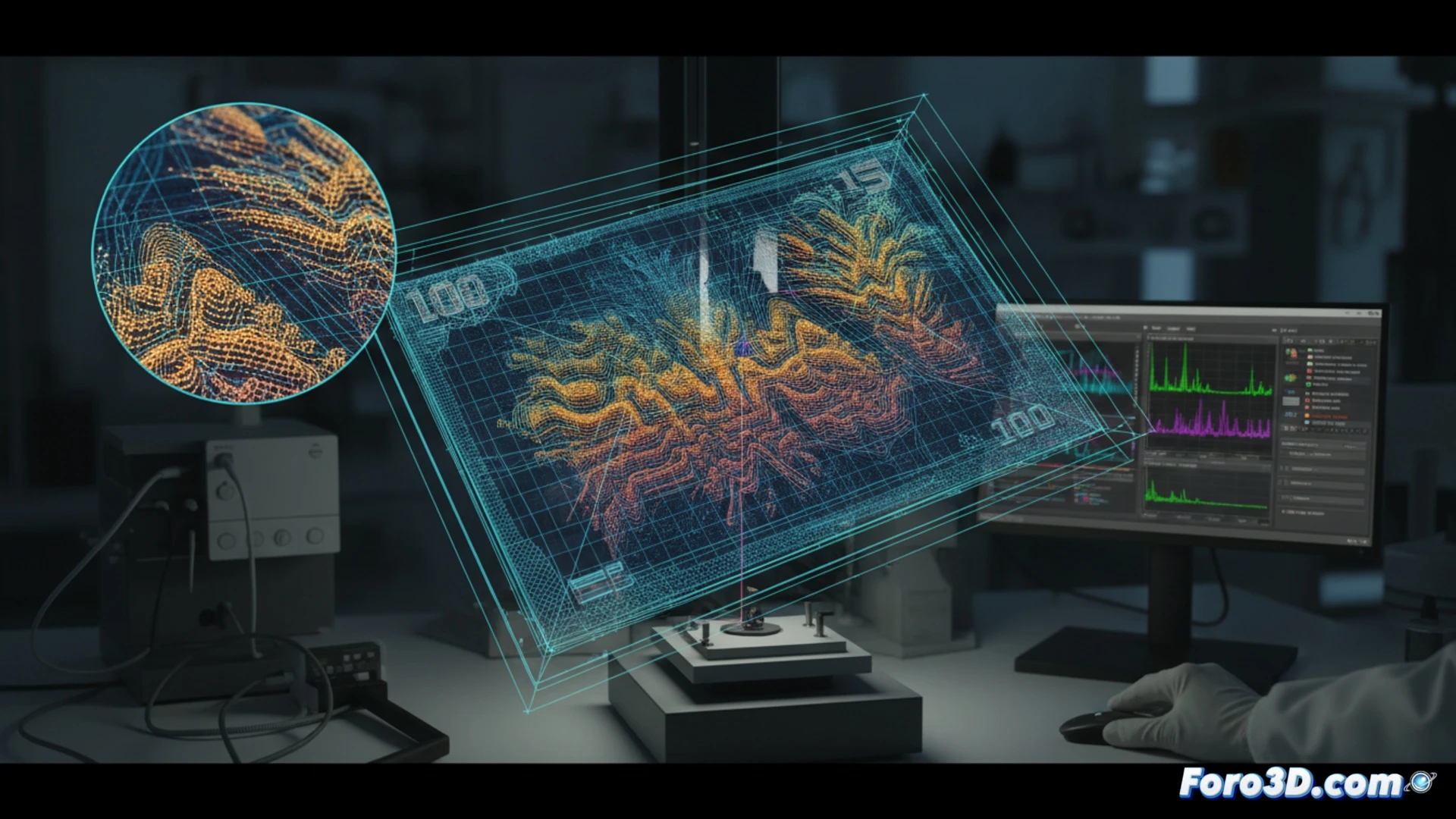
Forensic pipeline: from micrometric profiling to 3D evidence 🕵️
The workflow began with capturing the banknote's surface using a 3D profilometer, generating a point cloud with sub-micrometric precision. This data was processed in MATLAB, where cross-sectional profile analysis was performed to measure ink height. Periodic irregularities and excessive uniformity in the relief were detected, incompatible with the random wear of a steel die. The final step was visualization in Blender, where normal maps and specular shading were applied to the 3D mesh. This revealed parallel micro-striations and overlapping layer patterns, the unmistakable fingerprint of a UV-curing resin 3D printer, which deposits material in layers rather than deforming the paper through pressure.
When the perfect copy exposes the counterfeiter 🔍
This case demonstrates that 3D technology is not only for creation but also for unmasking. While the human eye and visible light sensors can be fooled by an exact chromatic replica, topographical analysis reveals the physics of the manufacturing process. Digital counterfeiting, no matter how precise, leaves a geometric signature that distinguishes it from the analog craftsmanship of engraving. In the future, 3D profilometry will become a standard tool in any forensic laboratory dedicated to document authentication.
As a 3D reconstruction expert, what surface profiling technique would you recommend to differentiate an authentic banknote from one counterfeited using resin printing, considering both could share similar visual characteristics to the naked eye?
(PS: In the forensic pipeline, the most important thing is not to mix the evidence with the reference models... or you'll end up with a ghost at the scene.)