For leadership, a high MTTR is not just a metric, it is time of operational risk and potential damage. The root of the problem is rarely a shortage of analysts, but rather structural failures in threat intelligence management. This is where digital twin technology emerges as a key accelerator. A digital twin of the SOC allows for modeling and optimizing the critical processes that determine response effectiveness, transforming repair time management.
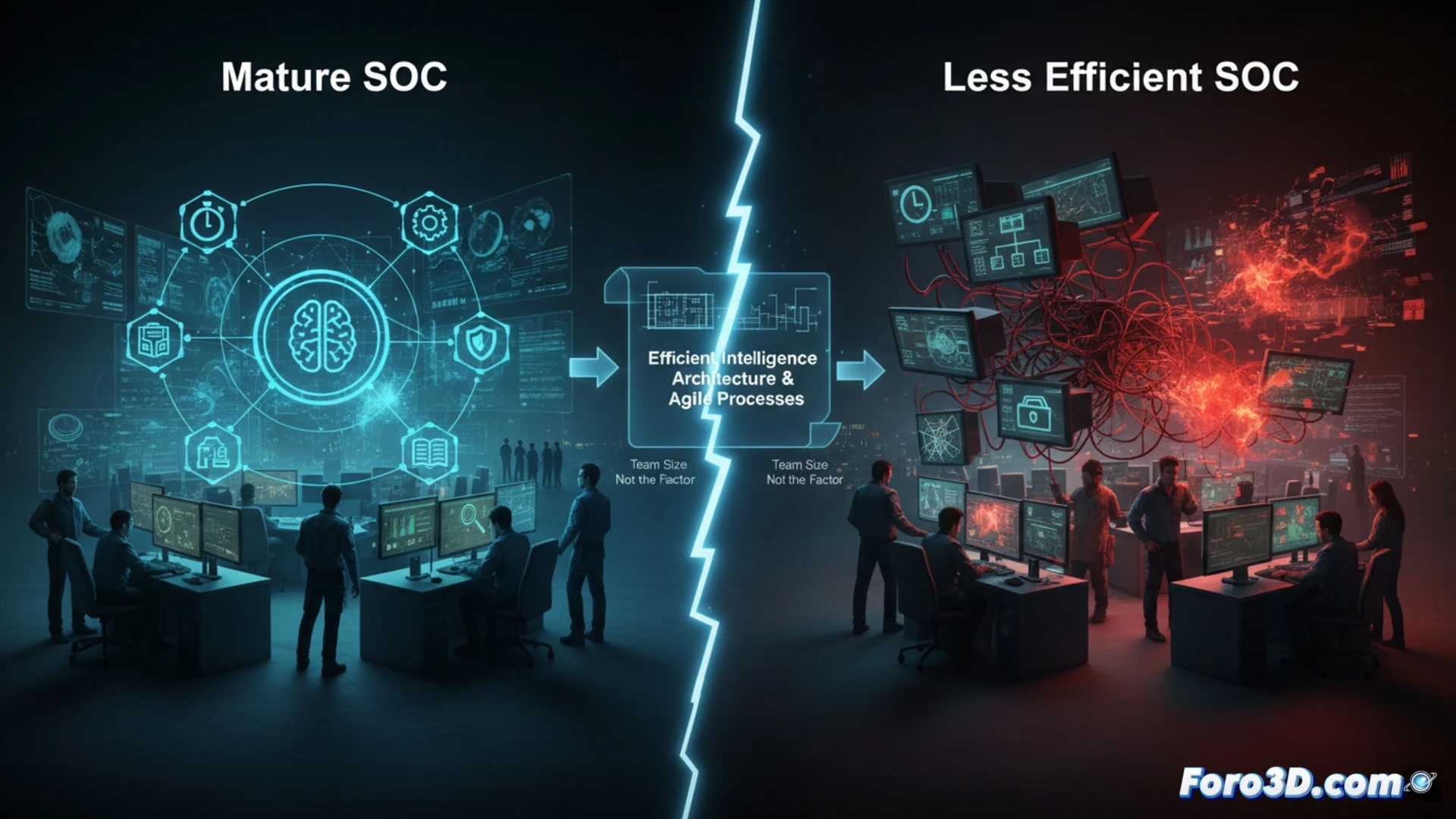
Modeling the five pillars of an efficient SOC in a virtual environment 🧱
A digital twin dynamically replicates the SOC's entire workflow: intelligence sources, security tools and their integrations, playbooks, and human resources. This virtual model allows for simulating and measuring the impact of optimizing the five key areas. You can test how prioritizing actionable intelligence reduces noise, or how deeper integration between tools accelerates correlation. It is possible to automate and validate responses for common incidents in a safe environment, refine playbooks before deployment, and simulate post-mortem sessions to quantify improvements. This way, bottlenecks are identified without disrupting real operations.
From internal metric to predictive risk model 🔮
The true advantage of the digital twin is its predictive capability. Instead of measuring MTTR after a real incident, it can be forecast under different attack scenarios and process configurations. This shifts the conversation from mere retrospective metrics to proactive operational risk management. The difference between a slow SOC and an agile one is not in its size, but in its intelligence and process architecture, elements that a digital twin helps design, test, and refine continuously and safely.
How can a SOC digital twin transform incident response by reducing diagnosis time and simulating countermeasures in real-time?
(PS: My digital twin is in a meeting right now, while I'm here modeling. So technically, I'm in two places at once.)