In November 1942, Allied forces initiated Operation Torch, an amphibious landing in Morocco and Algeria. This action, led primarily by the United States, opened a new front in the North African theater of war. The strategic move caught the Axis powers by surprise and weakened their position in the Mediterranean, altering the course of the conflict in the region.
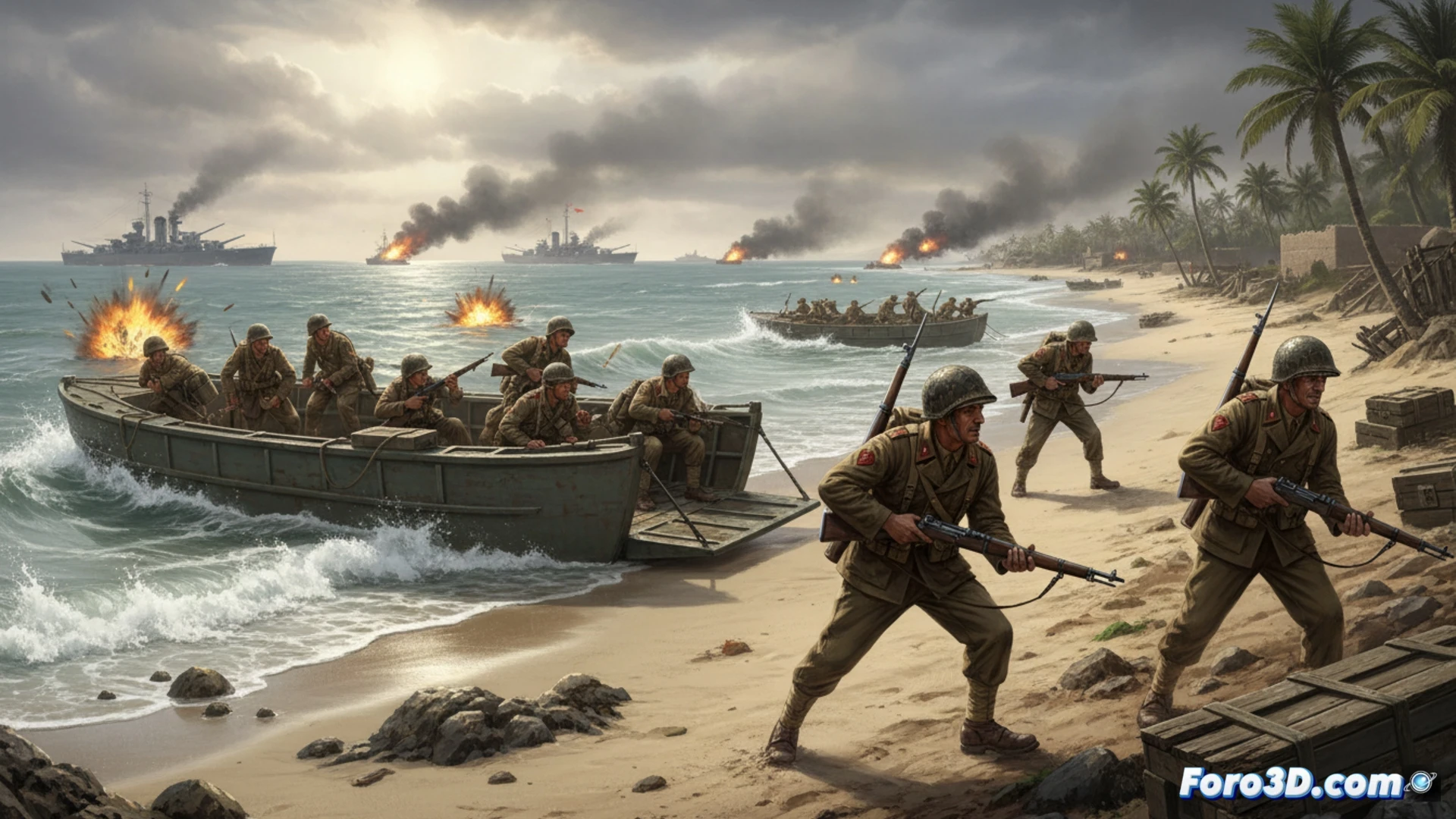
Logistics and Amphibious Technology in a Complex Scenario ⚙️
The execution of Torch represented a considerable logistical and technical challenge. The transport of thousands of men and tons of material from the United States and the United Kingdom was coordinated. Success depended on the use of landing craft, improved tide maps, and communication systems to coordinate dispersed fleets. The initial lack of experience in large-scale amphibious operations was a factor that had to be overcome on the fly, setting a precedent for future landings.
When the Instruction Manual Didn't Include Vichy Mode 🤔
The political situation added a layer of absurd complexity. Allied forces landed in territories controlled by Vichy France, theoretically neutral but collaborative. Thus, soldiers found themselves in the peculiar situation of having to fight, or not, against French troops who days later could be their allies. A true exercise in diplomacy under enemy fire, where identifying a comrade was as crucial as aiming well.