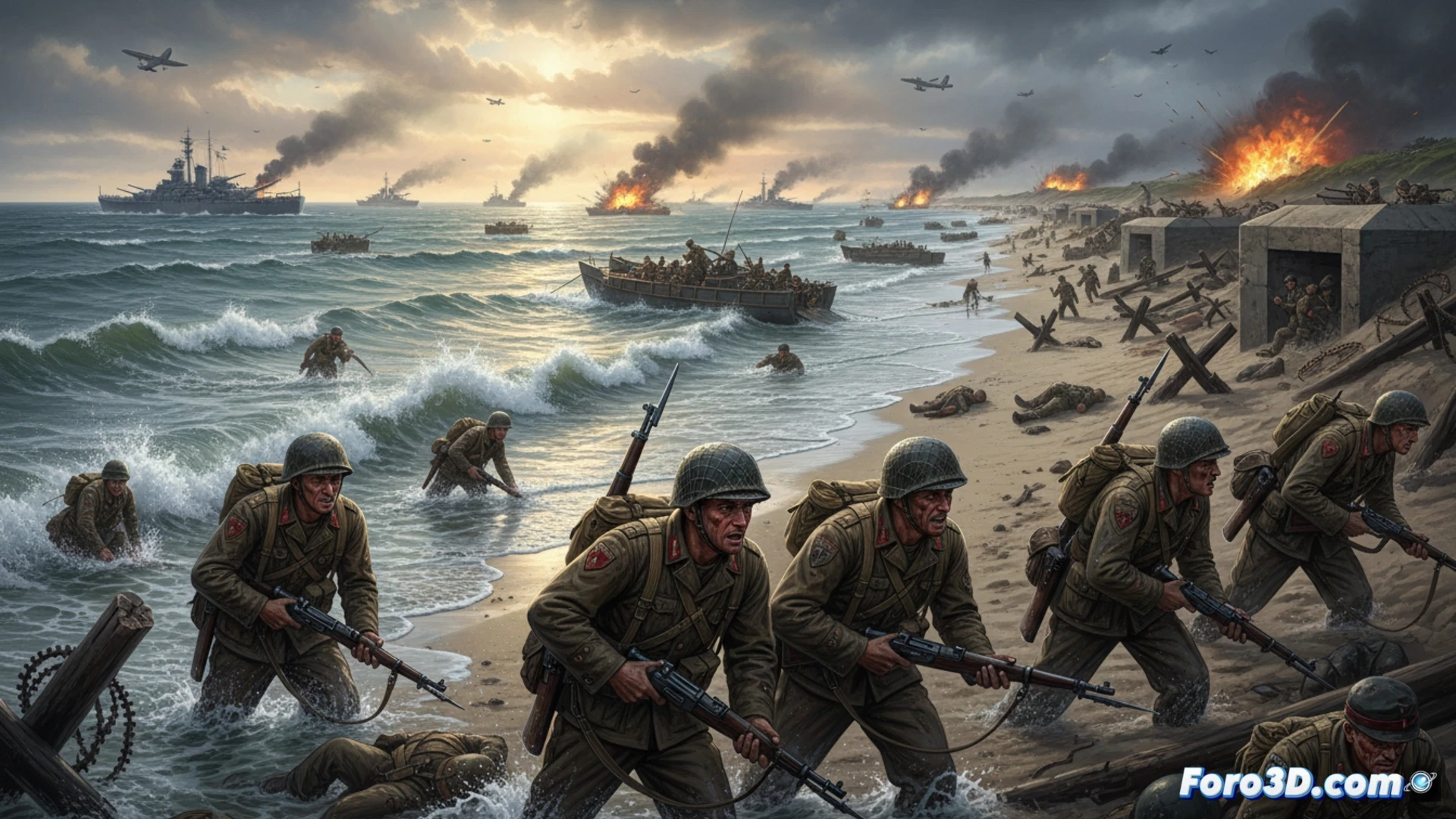
June 6, 1944, known as D-Day, marked the beginning of Operation Overlord. It was the largest amphibious landing in history, with primarily American, British, and Canadian Allied troops storming the beaches of Normandy. This crucial event opened a second front in Western Europe, putting pressure on Nazi Germany and accelerating the end of the conflict on the continent.
Engineering and Innovation Behind the Landing ⚙️
The success of the operation depended on remarkable technical developments. Artificial Mulberry harbors were built to unload supplies without needing to capture a deep-water port. DD Sherman amphibious tanks and specialized vehicles were used to clear the beaches. Furthermore, a complex network of logistics and communications, along with deception operations like Operation Fortitude, were key to maintaining the element of surprise and coordination.
When Your Plan B is a Harbor You Carry in Your Trunk 🧳
Imagine the planning meeting: with no ports available, they decided to bring their own. It's the military equivalent of arriving at a campsite and setting up your own town with a generator and an inflatable pool. They also deployed tanks that floated, an idea that only seems good until you remember that iron isn't known for its buoyancy. It was a day where the solution to every problem was, basically, more extravagant engineering.