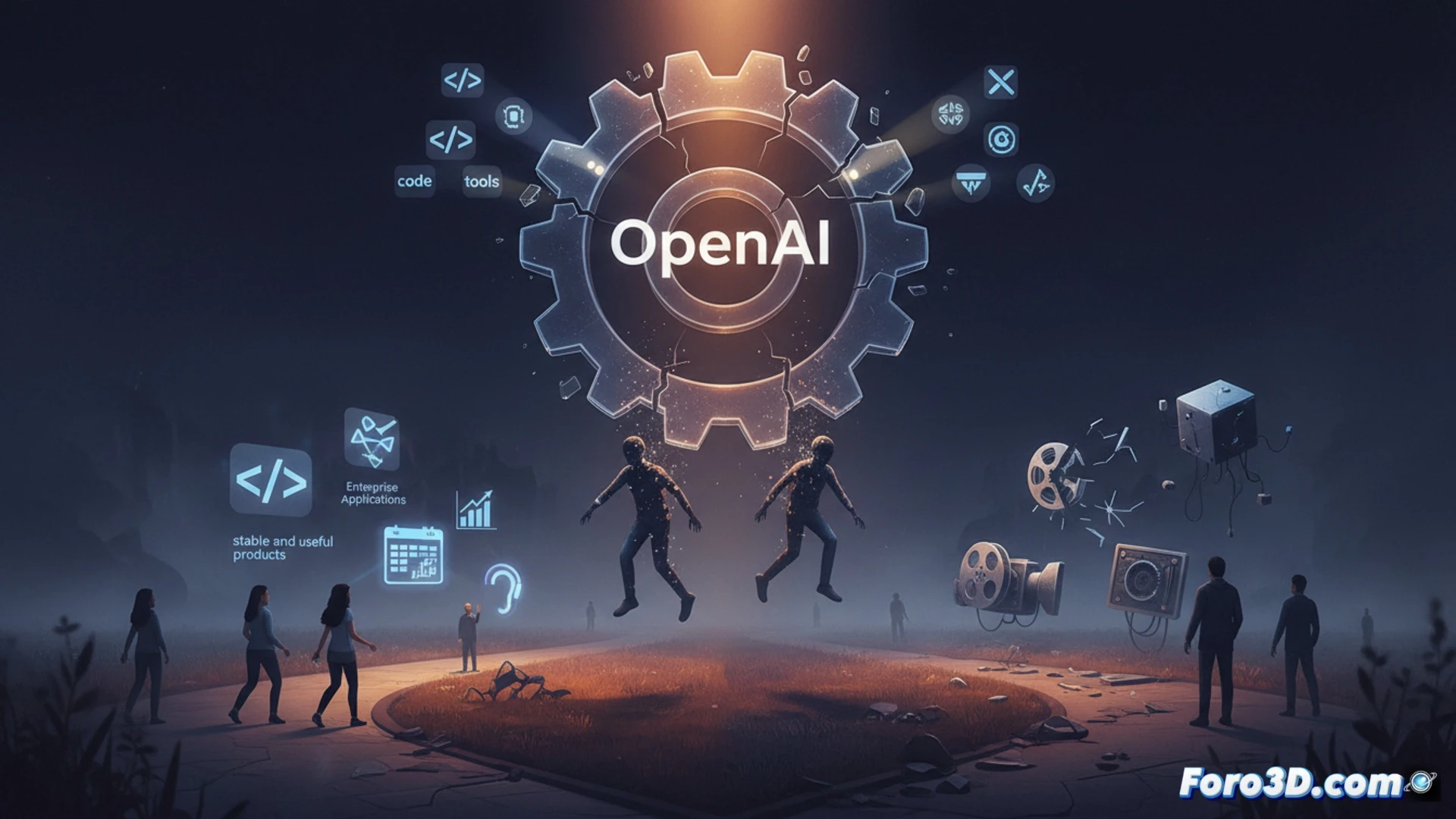
OpenAI is undergoing an internal restructuring process. The departure of executives like Bill Peebles and Kevin Weil marks a strategic shift. The company is scaling back experimental projects, such as the Sora video model, to prioritize code tools and applications for businesses. For the end user, this may bring more stable and useful products for daily use, but it also means a slowdown in innovation in more visionary areas of AI.
The Shift Towards Robust APIs and Development Environments 🤖
The technical change involves a consolidation of resources into enterprise APIs and AI-assisted development environments. Instead of allocating massive computing power to training generative video models or pure research, the focus is on optimizing models like GPT-4 for programming tasks, data analysis, and workflow automation. This aims to provide a more stable and predictable integration for developers and businesses, although it limits exploration into novel architectures for creative modalities.
Goodbye to Video Dreams, Hello to Code Bugs 🐛
So, in summary, we're trading dreaming of directing AI-generated movies from the couch, for dreaming that the code assistant will fix that legacy bug at three in the morning. AI is leaving its bohemian artist phase to become a super-powered, always-available IT intern. Of course, an intern that sometimes hallucinates functions and suggests solutions that break everything else. Progress, they call it.