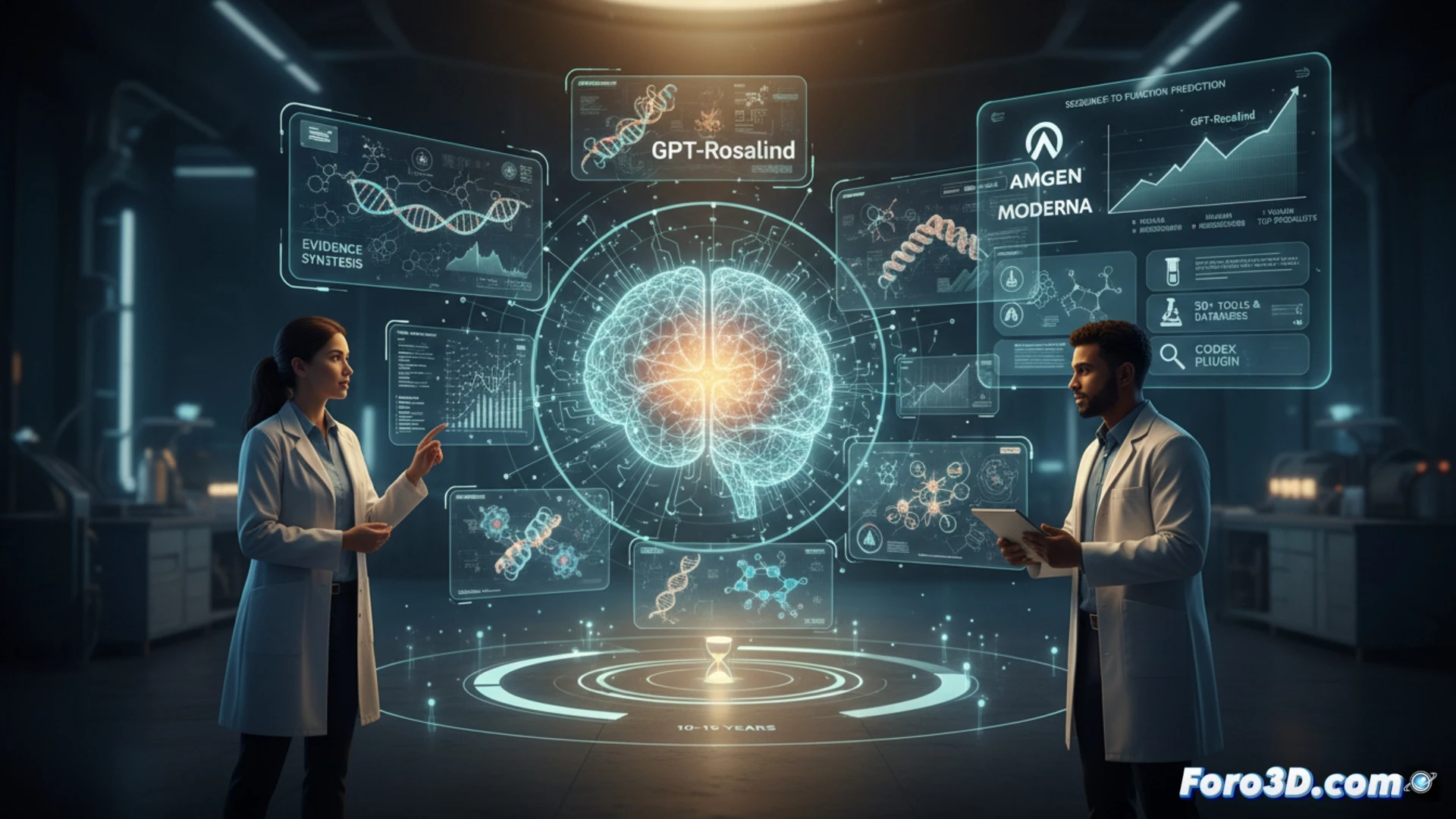
OpenAI has introduced GPT-Rosalind, an artificial intelligence model specialized in scientific domains such as biochemistry, genomics, and protein engineering. Its primary goal is to accelerate early-stage pharmaceutical research, a process that can currently take between 10 and 15 years. Access is restricted to verified companies in the United States, with partners like Amgen and Moderna already involved.
Integration with Tools and Technical Capabilities 🔧
The model is accompanied by a plugin for Codex that allows it to connect with over 50 specialized scientific tools and databases. This integration consolidates queries and analysis into a single interface, optimizing tasks such as evidence synthesis, hypothesis generation, and experimental design. In internal evaluations, GPT-Rosalind outperformed most human researchers in sequence-to-function predictions, although it did not manage to surpass the top specialists in the field.
And the lab interns, what will they do now? 🤔
With a model that summarizes literature, generates hypotheses, and designs experiments, one wonders what the new crucial task assigned to trainees will be. Perhaps their role will evolve into supervising that the AI doesn't decide, out of boredom, to design a protein that turns coffee into beet juice. Or maybe they will specialize in pressing the server's power button that runs Rosalind, a position of undeniable responsibility.