A team of physicists has successfully measured the gravitational constant G with a precision that significantly reduces discrepancies between previous experiments. Gravity, the weakest of the fundamental forces, has been elusive for scientists due to its subtle nature and the difficulty of isolating it from external interference. This new method brings the community closer to a more universal and reliable value.
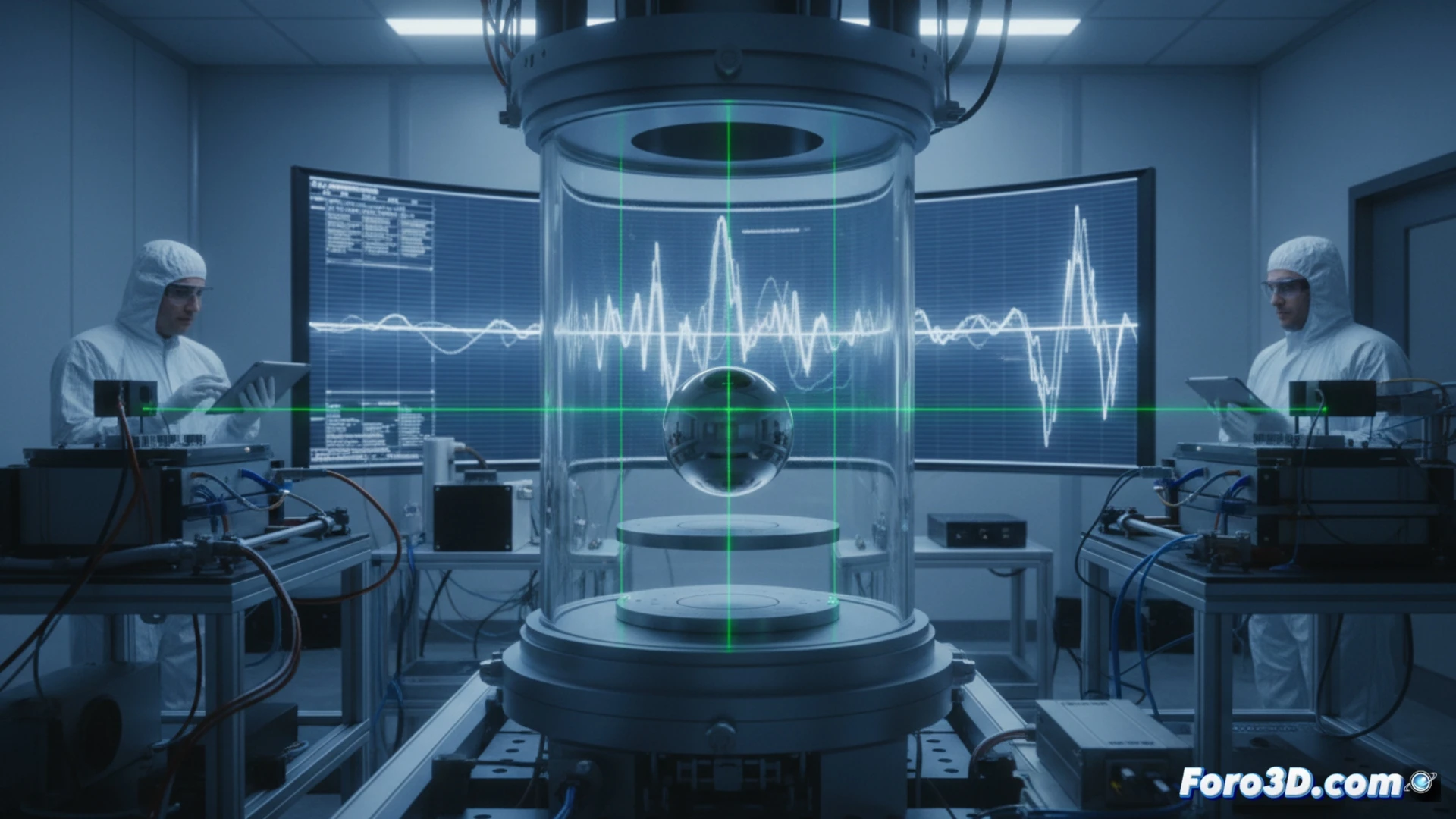
The method that fine-tunes universal attraction 🧪
The experiment employs a sophisticated system of pendulums and torsion in a controlled vacuum environment, minimizing vibrations and stray magnetic fields. The researchers used test masses with precise geometric shapes and high-resolution optical sensors to record the slightest deviations. The result is a measurement of G with an uncertainty of less than 10 parts per million, a technical advance that allows discarding several previous values now considered less accurate.
Gravity, that force that always pulls us down 😅
Finally, scientists have gotten gravity to get serious and cooperate a bit. After years of measurements that contradicted each other like neighbors arguing over the TV volume, we now have a cleaner number. Of course, even though we know how much the Earth pulls on us, we still won't be able to blame the constant G when we drop our phone on the floor.