Noctilucent clouds, those faint glowing veils visible in the deep twilight, are more than just a celestial spectacle. They form about 80 km high, in the cold mesosphere, and their recent increase in frequency is an intriguing climate indicator. For the scientific visualization community, this phenomenon represents a perfect challenge: translating complex and abstract atmospheric data into interactive 3D models that allow us to understand their formation, location, and possible link to global changes.
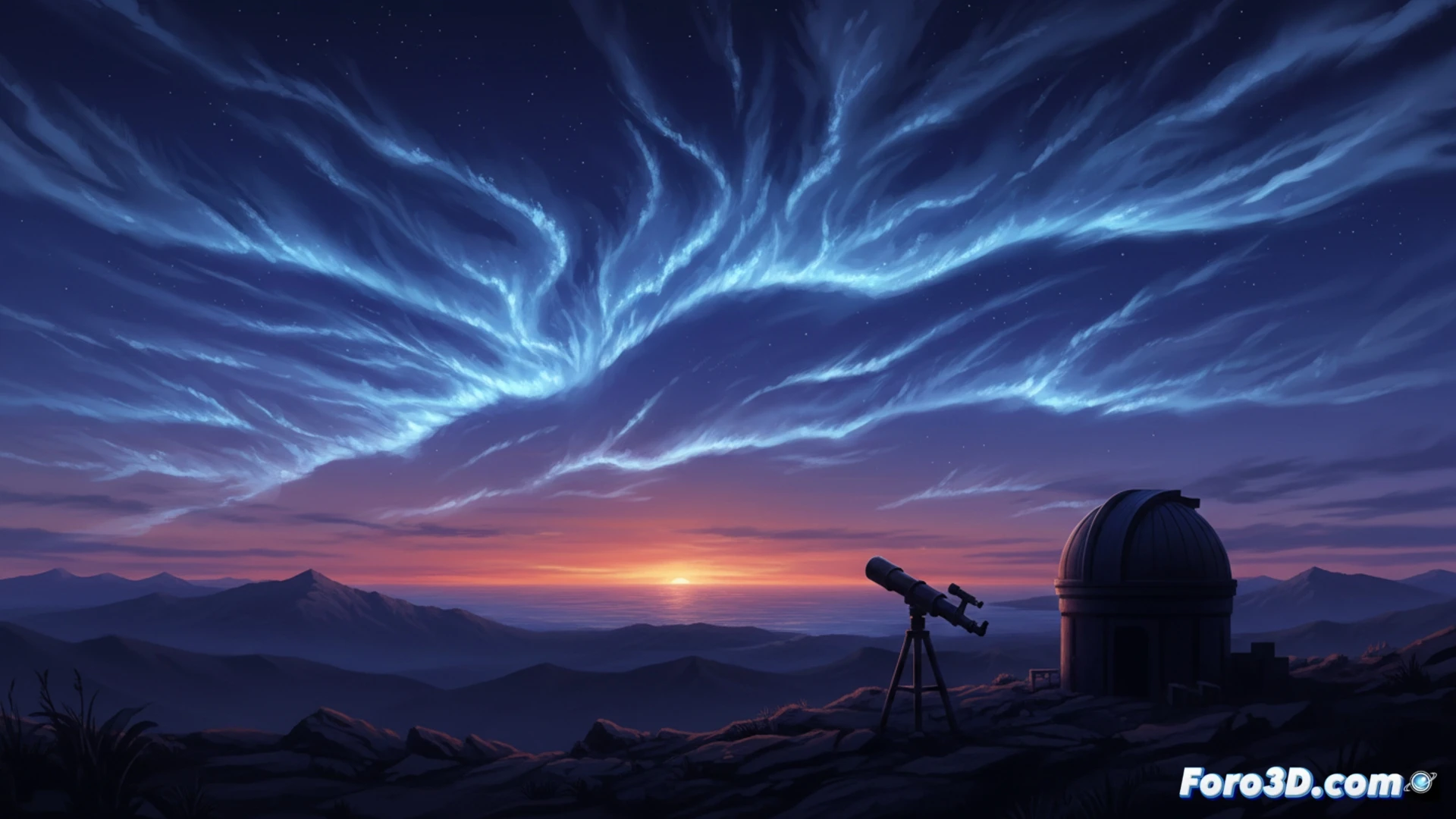
3D Modeling to Break Down an Atmospheric Phenomenon 🌌
A scientific visualization project on this topic could be structured in layers. First, a scale model of Earth's atmosphere, highlighting the mesosphere in context. On top of this, a simulation of ice crystal formation on meteor particles, illuminated by the sun below the horizon, would be integrated. The key would be interactivity: allowing the user to compare the altitude with common clouds or the ISS. A second crucial layer would be an attached data visualization, mapping the increase in sighting frequency against variables like methane concentration or temperatures in the upper atmosphere, making the correlation scientists are investigating tangible.
From Abstract to Tangible 🧩
The true power of this visualization lies in its ability to bridge the gap between raw data and intuitive understanding. A well-built 3D model not only illustrates a remote phenomenon but contextualizes and questions it. By making the increase of these clouds interactive, a statistic is transformed into a visual narrative about the complex interconnection of our planet. It is the ideal tool for disseminating and, perhaps, helping to decipher this mysterious indicator of change in the highest layers of our sky.
How can we use 3D scientific visualization techniques to model and analyze the formation and dynamics of noctilucent clouds in the mesosphere? 🔭
(PS: fluid physics for simulating the ocean is like the sea: unpredictable and you always run out of RAM)