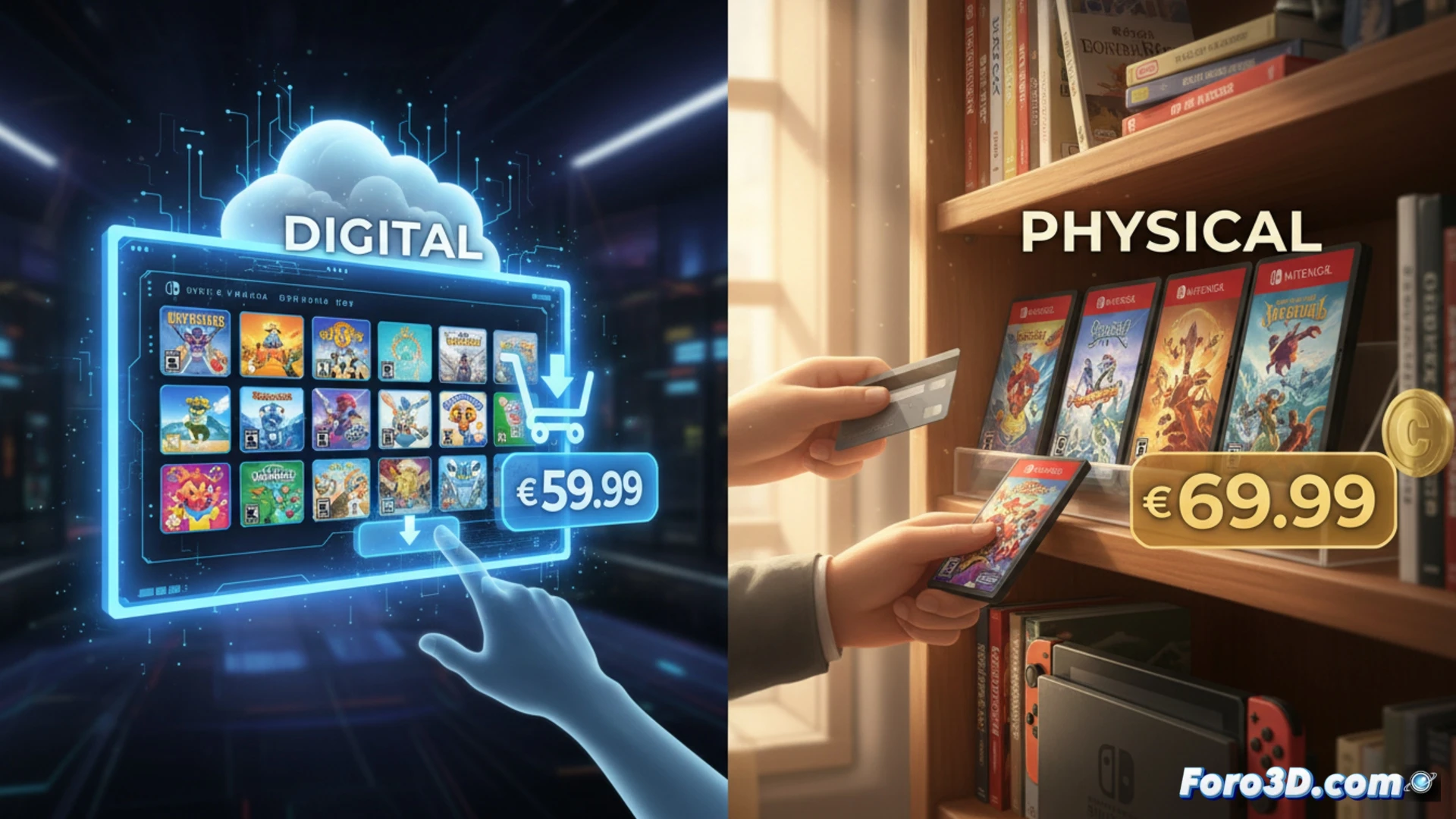
Nintendo has confirmed a differentiated pricing policy for the Switch 2: physical format games will have a higher price than their digital equivalents. The company justifies this measure due to the higher manufacturing, logistics, and storage costs of cartridges. This decision ends a historic price parity in the industry, offering a more economical option to play and a premium product for collectors, but it also raises crucial debates about ownership and preservation.
Technical and Business Implications for Developers and Publishers 🧩
This strategic break forces studios and publishers to rethink their plans. For third-party labels and indie studios, the decision to support the physical format becomes more complex, as the higher final price may affect sales, and they will have to evaluate whether they absorb the extra cost, pass it on to the user, or avoid physical altogether. Furthermore, it redefines marketing campaigns and the perception of value: the digital game is positioned as the base product, while the physical acquires an aura of a collector's item. This can influence budget planning, physical print runs, and distribution agreements.
Ownership, Preservation, and the Future of Consumption 📀
By making the lower cost of digital transparent, Nintendo highlights an economic reality, but also exposes the fragility of digital ownership. A cartridge is a permanent possession, while a digital game depends on continued availability on servers. This policy, although honest, may accelerate a model where tangible ownership is a luxury. For the industry and players, the debate about preserving the gaming heritage becomes more urgent than ever.
How will Nintendo Switch 2's new differentiated pricing policy affect the perception of value, purchasing habits, and the development strategy of studios, especially indie ones? 🎮
(PS: 90% of development time is polishing, the other 90% is fixing bugs)