On the coasts of North Carolina, a phenomenon baffles residents and scientists: the so-called Seneca Guns. These are thunderous sounds similar to heavy artillery fire that rumble without an apparent source, with no seismic or military activity to justify them. This enigma, documented for centuries, finds in 3D scientific visualization a powerful tool to explore and communicate its possible causes, transforming an auditory mystery into an interactive visual experience.
Hypotheses Under the Digital Lens: Simulating Sonic Sources 🔬
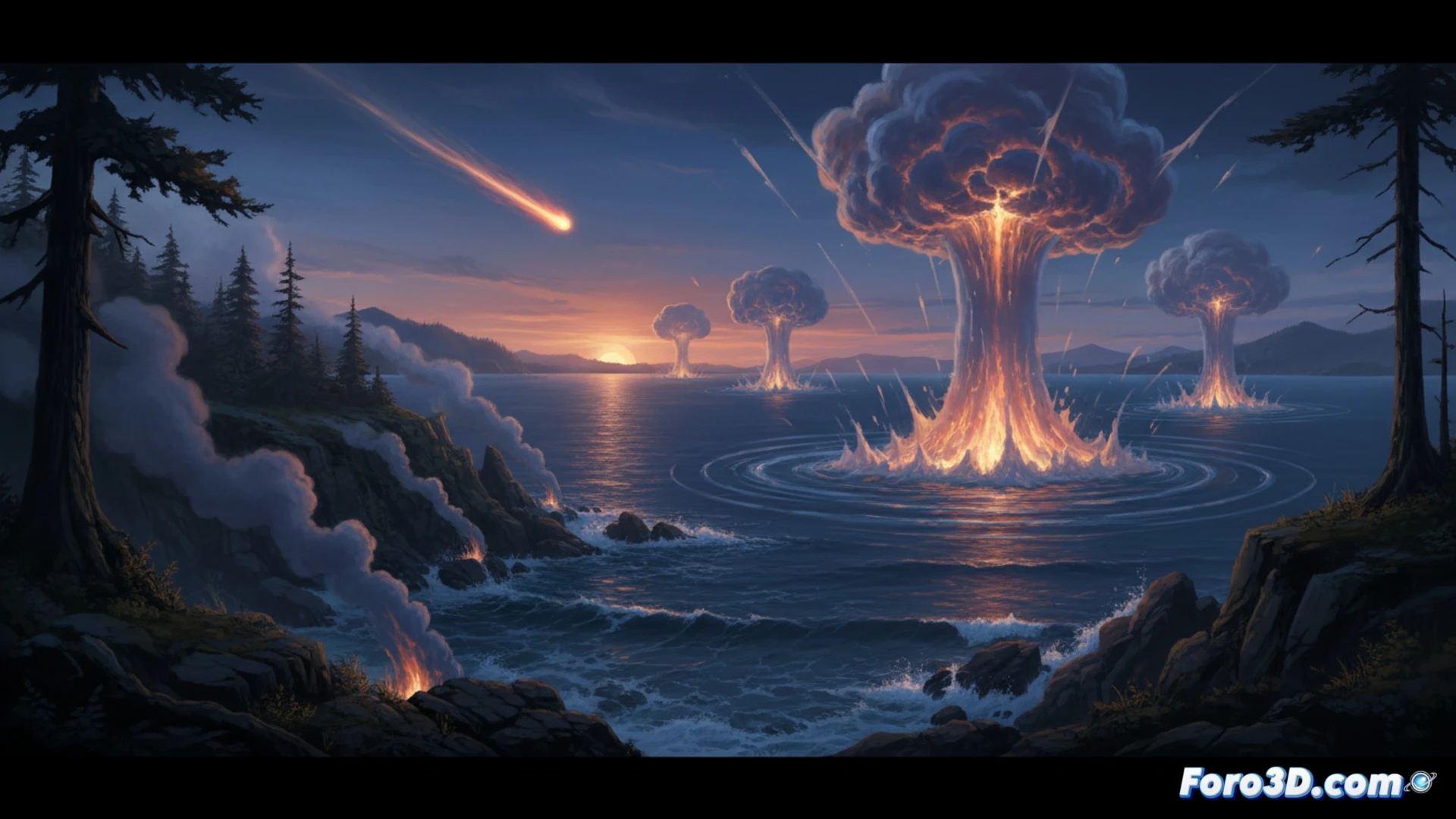
3D visualization allows for the construction of detailed models of the two main hypotheses. On one hand, it can simulate the release and explosion of methane gas pockets from marine sediments, showing the formation of the bubble, its implosion, and the propagation of the shock wave through the water column and the atmosphere. On the other, it is possible to model the trajectory of a bolide or meteor that, upon disintegrating in the upper atmosphere, generates audible pressure waves on land. An interactive model of the coastal shelf would allow for the placement of these virtual sources and observation of how the sound travels and distorts according to topography and atmospheric conditions.
Beyond the Noise: Science as Visual Narrative 🎨
This project transcends mere technical simulation. By creating an accessible and didactic representation, it builds a bridge between specialized research and public curiosity. The 3D visualization does not offer a definitive answer, but it does provide a tangible framework for discussion, inviting exploration of how science approaches the unknown. It transforms a mystery tale into a visual narrative about the hidden processes of our planet.
How can 3D scientific visualization techniques, such as bathymetric mapping and volumetric reconstruction, be used to model and analyze the formation and evolution of the mysterious Seneca Guns in North Carolina?
(PS: if your manta ray animation isn't exciting, you can always add some documentary music from La 2)