The recent Holy Week, with its massive processions, has passed without serious incidents according to official sources. This logistical and security success is no coincidence. Behind it lies meticulous planning where 3D technology and digital simulation are beginning to play a crucial role. These tools allow administrations to anticipate problems and optimize resources, transforming the management of coexistence in crowded public spaces.
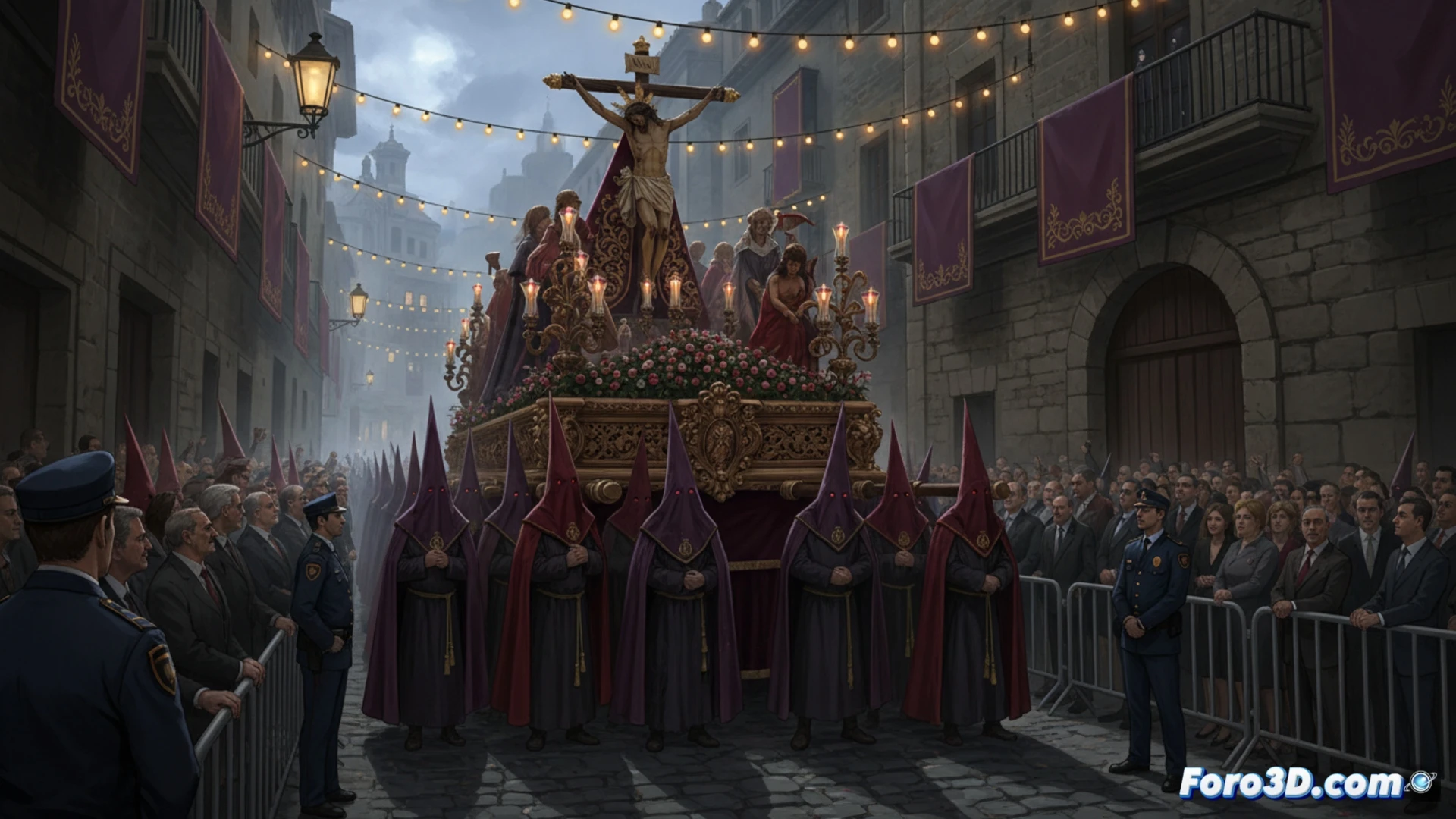
Simulation of people flows and restrictions with 3D software 🧠
Proactive planning for a massive event like a procession requires more than a 2D map. By 3D modeling the route, including buildings, narrow streets, and squares, crowd dynamics simulations can be run. These simulations allow for predicting bottlenecks, critical densities, and evacuation times. Furthermore, the virtual placement of fences, access controls, or first aid points can be modeled, assessing their impact on pedestrian flow before physically implementing them. This ability to test different configurations in a virtual environment is invaluable for optimizing safety and the citizen experience.
Towards informed citizen participation with data visualization 🤝
3D technology can also be a bridge for transparency and participation. Visualizing security plans, restricted access zones, or historical attendance data in an interactive model helps citizens understand logistical decisions. This approach not only informs but can foster a more constructive dialogue between authorities and participants, based on objective data and clear representations, thereby strengthening the democratic management of public space.
How can 3D modeling and digital simulation become a tool for citizen participation to co-design and validate security protocols for mass events, strengthening democratic trust?
(PS: simulating a vote count in 3D is more reliable than the real one, but less exciting)