Third-party risk is today the main gap in corporate security. Attacks no longer focus solely on the internal core, but on suppliers, SaaS tools, and subcontractors that expand the attack surface uncontrollably. Many organizations lack visibility into their partners' security posture, an abstract compliance problem that requires a transformation. 3D visualization and simulation are emerging as key tools to materialize and manage this risk proactively.
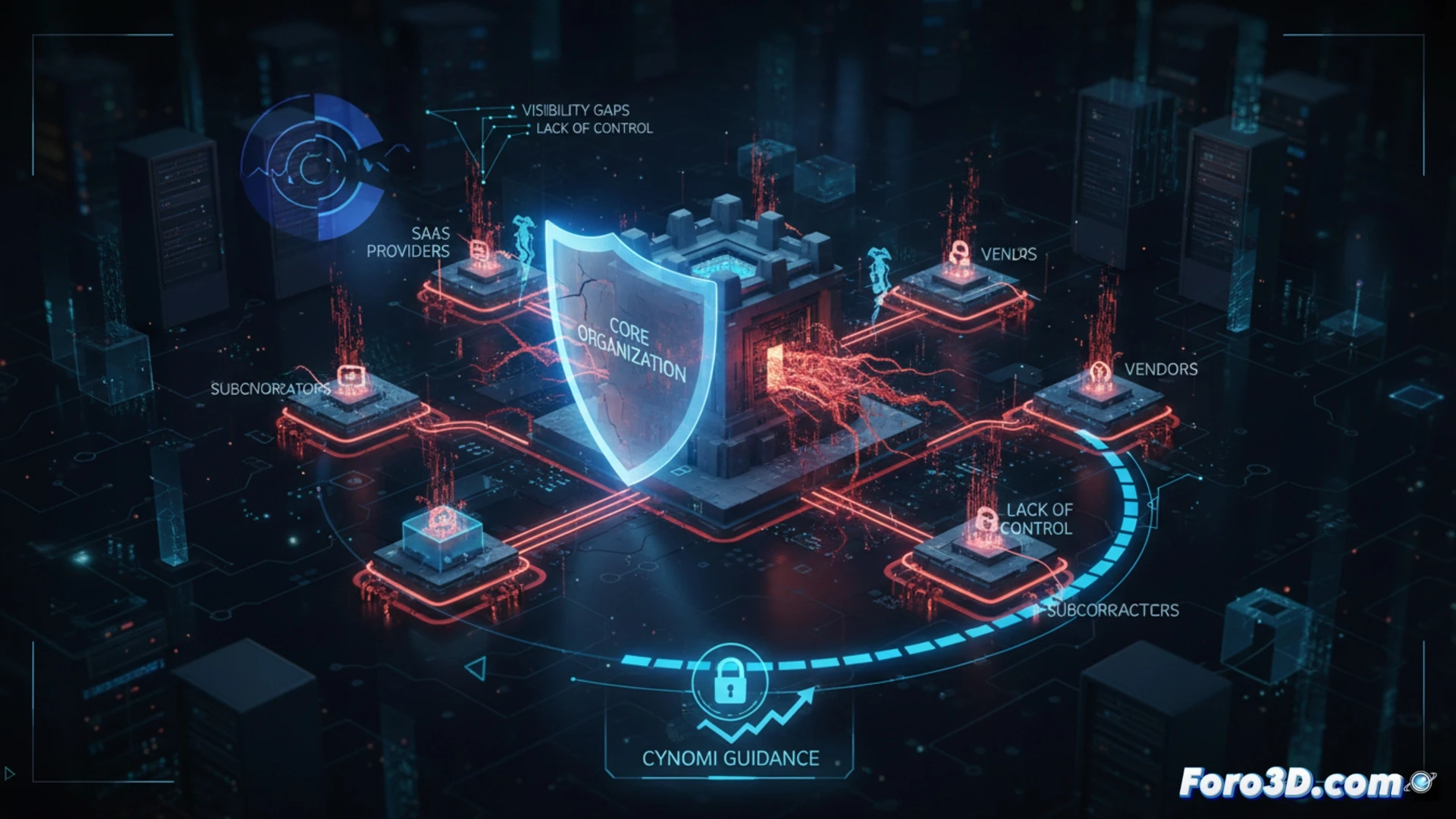
Digital Twins for the Supply Chain: Visualization and Impact Simulation 🧩
Technology allows for the creation of a digital twin of the technological supply chain. This interactive 3D model represents the organization as a central node connected to various third parties. Each supplier is visualized with indicators of its risk level, compliance status, and criticality. The power lies in simulation: the domino effect of a breach in a secondary supplier can be modeled, quantifying data exposure and operational impact in real time. This shifts static reports to a dynamic environment where controls and decisions can be tested.
From Normative Abstraction to Visual Strategic Decision 🎯
This approach transforms third-party risk management. A compliance requirement, often a checklist, becomes an intuitive visual model for senior management. By seeing and simulating scenarios, risk governance becomes tangible. It allows for prioritizing security investments, renegotiating contracts with critical vulnerable suppliers, and designing more robust response plans. 3D visualization not only improves understanding but strategically grounds investment in cybersecurity and digital chain resilience.
How can 3D modeling of a digital twin transform a static supplier list into a dynamic system to predict and visualize compliance risks in real time?
(PS: complying with the law is like 3D modeling: there's always a polygon (or an article) you forget)