The rediscovery of the ring-tailed glider in the highest and most inaccessible areas of Australasia in 2025 has shaken the scientific community. This gliding marsupial, considered a living fossil due to its relict lineage, presents a unique morphology that challenges current classifications. Its dense fur and prehensile tail with distinctive rings are key to its survival at extreme altitudes. For scientific visualization, this finding represents an unparalleled opportunity to digitally reconstruct the creature and its ecosystem.
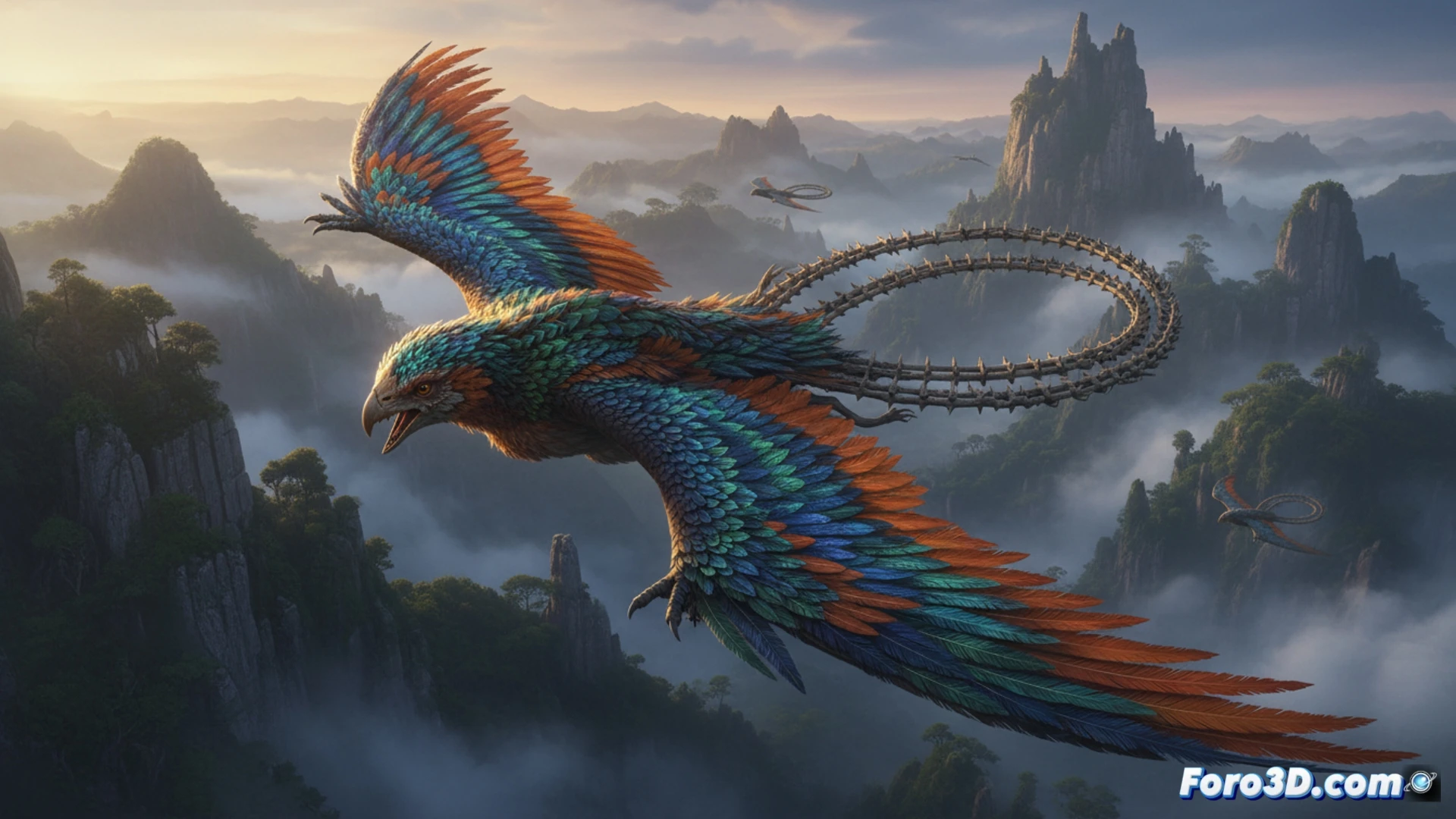
Polygonal reconstruction and texturing based on expedition data 🦎
The 3D modeling process begins with the analysis of high-resolution photographs taken during the expedition. Using photogrammetry, a high-density base mesh is generated that captures the glider's anatomy, from the gliding membrane (patagium) to the opposable digits. Texturing is done by projecting color and displacement maps extracted from the images. Special attention is paid to the ringed tail, modeling each segment as an independent bone system to allow realistic gripping animation. Fur is simulated using particle systems with curved guides that replicate wind direction at the peaks. The habitat is recreated with LIDAR data of the forest canopy, including lichens and rough bark that serve as camouflage.
Evolutionary animation and virtual conservation 🌿
Beyond the static model, the project includes comparative animations showing the glider's evolutionary adaptations compared to other species in the region, such as the sugar glider. Its movement is simulated using a flight physics system that calculates patagium lift and tail counterbalance. These renders and animated sequences are distributed on science communication platforms to educate about the fragility of this high-altitude ecosystem. 3D visualization thus becomes a conservation tool, allowing researchers to study the animal's behavior without disturbing its remote habitat.
How can you translate limited field data and low-resolution images of the ring-tailed glider into a reliable 3D model that helps biologists study its functional anatomy and behavior without disturbing its habitat?
(PS: fluid physics to simulate the ocean is like the sea: unpredictable and you always run out of RAM)