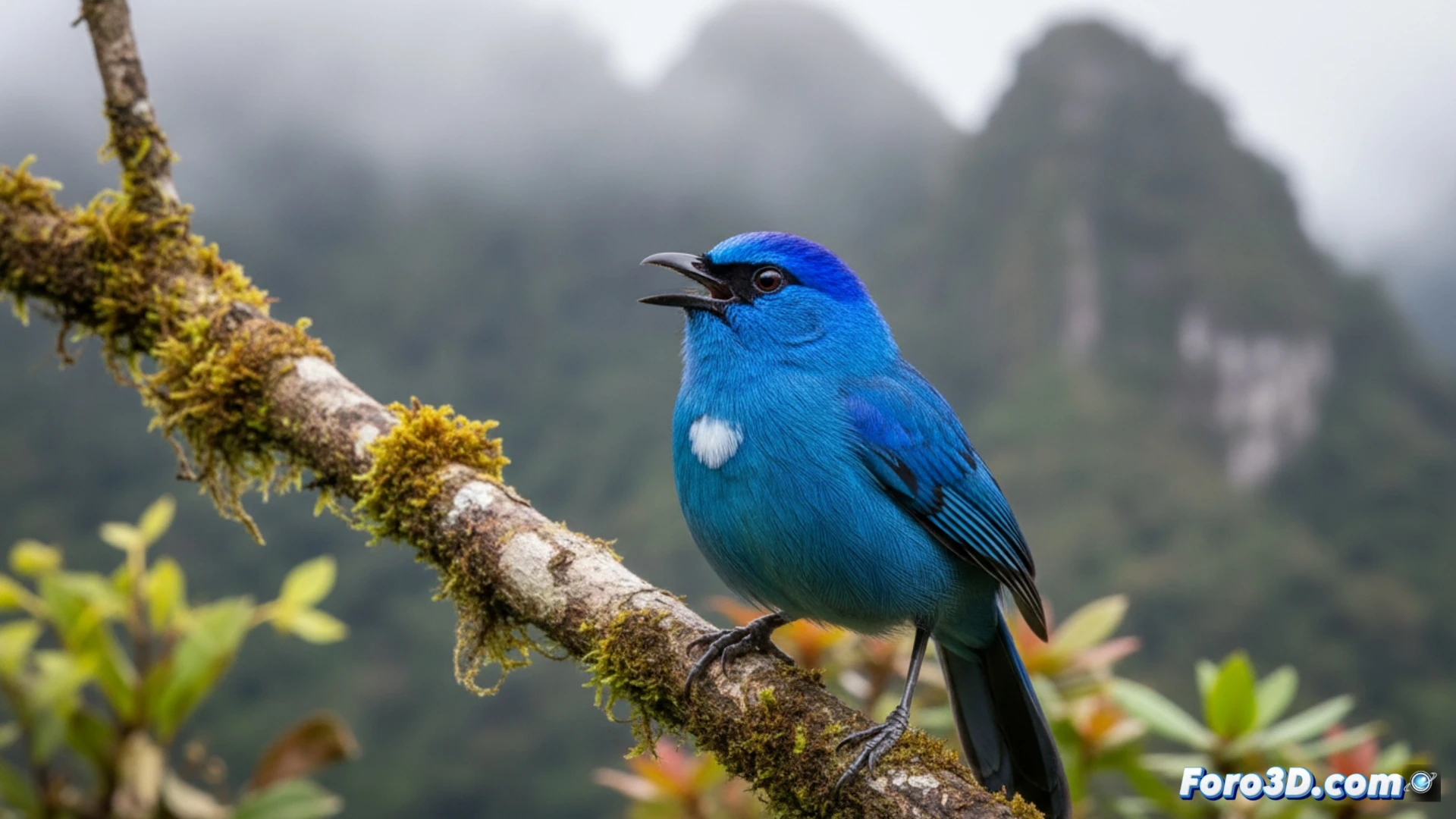
The discovery of the Hooded Jewel Bird (Ptilorrhoa urrissia) on a remote mountain ridge in New Guinea in 2025 represents a milestone for ornithology. Its iridescent blue plumage and distinctive song offer a fascinating technical challenge for 3D visualization. This article explores how to create a photorealistic model of this species, integrating precise biological data for research and educational outreach purposes.
Shading techniques for iridescent plumage and habitat reconstruction 🐦
To capture the bright blue of the plumage, it is essential to implement shading based on interference layers, simulating the structure of the micro-feathers that scatter light. A subsurface scattering model combined with anisotropy maps is recommended to replicate the color shift depending on the viewing angle. Digital habitat reconstruction requires LIDAR data of the mountain ridge topography, integrating endemic New Guinea vegetation (such as palms and tree ferns) through procedural generation. The animation of feeding behavior and song can be synchronized with real spectrograms, using particle systems to visualize sound waves in the 3D environment.
The value of digital simulation in species conservation 🌿
Beyond technical realism, this 3D model allows scientists to study the biomechanics of flight and the bird's interaction with its ecosystem without disturbing its fragile habitat in New Guinea. The visualization of the song, linked to real acoustic data, offers a unique tool for environmental education. By democratizing access to this discovery, the model fosters awareness of remote biodiversity and underscores the urgency of protecting these mountain ridges from the threat of climate change.
What specific technical challenges were encountered when 3D modeling the iridescent feathers of the Hooded Jewel Bird to achieve an accurate scientific visualization of its structural color rather than a pigmented one?
(PS: modeling manta rays is easy, the hard part is making them not look like floating plastic bags)