The scientific community has cataloged a new species of bioluminescent fungus in the Amazon, capable of emitting a constant green light during the night. This discovery opens a fascinating door for scientific visualization, where photorealistic 3D modeling allows reconstructing the anatomy of the basidiocarp and hyphae, simulating the biochemical process of bioluminescence in its nocturnal habitat.
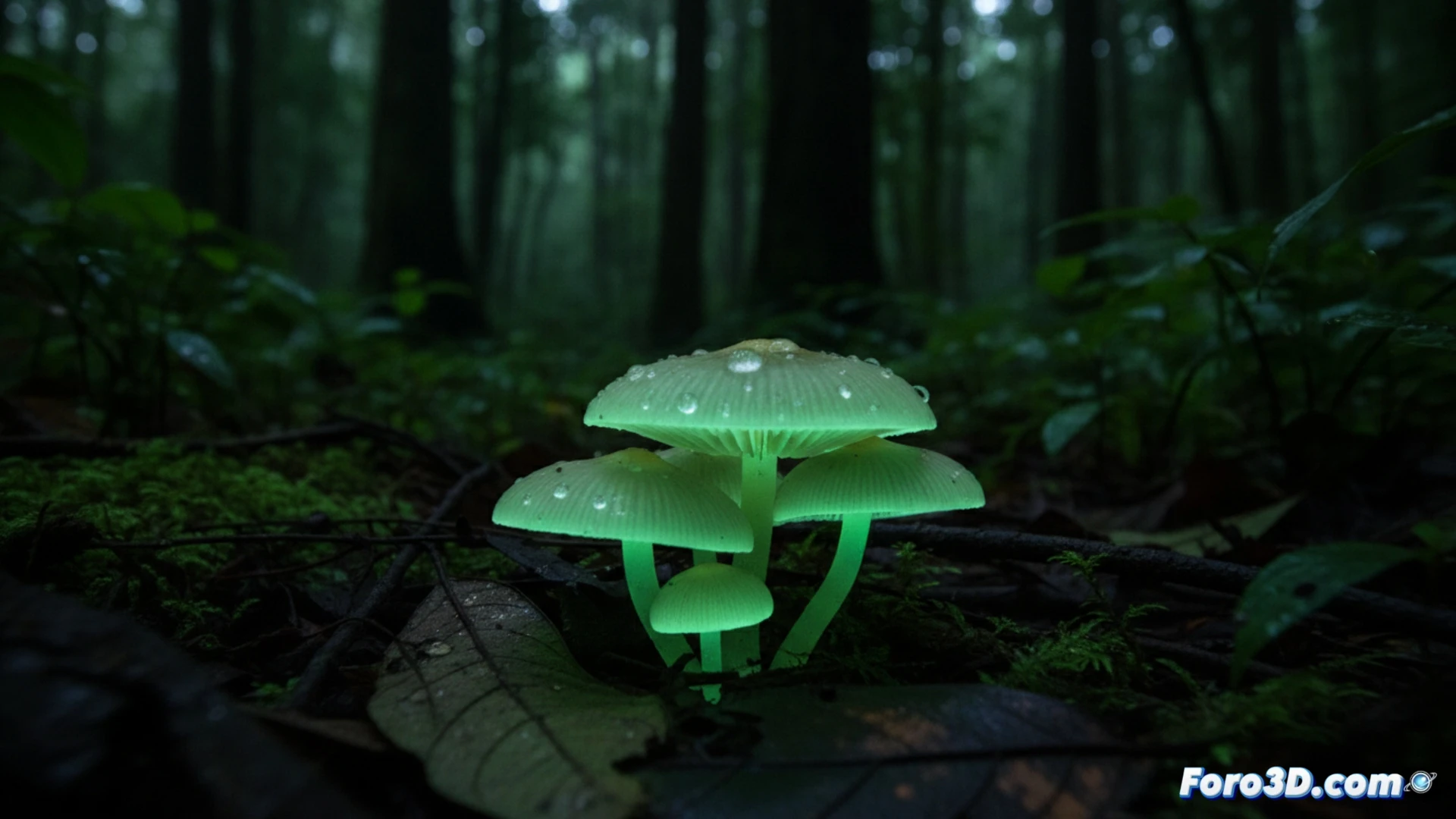
Anatomical reconstruction and biochemical simulation 🧬
To represent this fungus in a virtual environment, it is crucial to apply volumetric lighting techniques that emulate the green light emitted by luciferase. The model must include a detailed mesh of the cap and stem, with textures that capture the humidity of the jungle. Additionally, simulating light particles scattering among the hyphae allows visualizing how the species communicates or attracts insects. This approach not only improves dissemination but also helps biologists catalog newly discovered species without disturbing the ecosystem.
The art of illuminating the invisible 🎨
Comparing this fungus with other bioluminescent species, such as the honey fungus (Armillaria), highlights the uniqueness of its constant emission. 3D visualization becomes a reflective tool for understanding how nature optimizes light in darkness. By modeling these processes, we not only document a discovery but also pay homage to the complexity of Amazonian life, inviting digital artists to explore the frontier between science and art.
What is the greatest technical challenge when recreating the constant green light emission of this bioluminescent fungus in a realistic 3D model for scientific visualization
(PS: modeling manta rays is easy, the hard part is making them not look like floating plastic bags)