The James Webb Space Telescope has detected over a hundred gravitational microlensing events in the Dragon galaxy, within the Abell 370 cluster. This phenomenon, where a cluster's gravity acts as a cosmic magnifying glass, allows individual stars to be observed at extreme distances. The study surpasses previous records and opens a window into the study of early stellar populations, offering direct data on the structure of the universe on small scales. 🔭
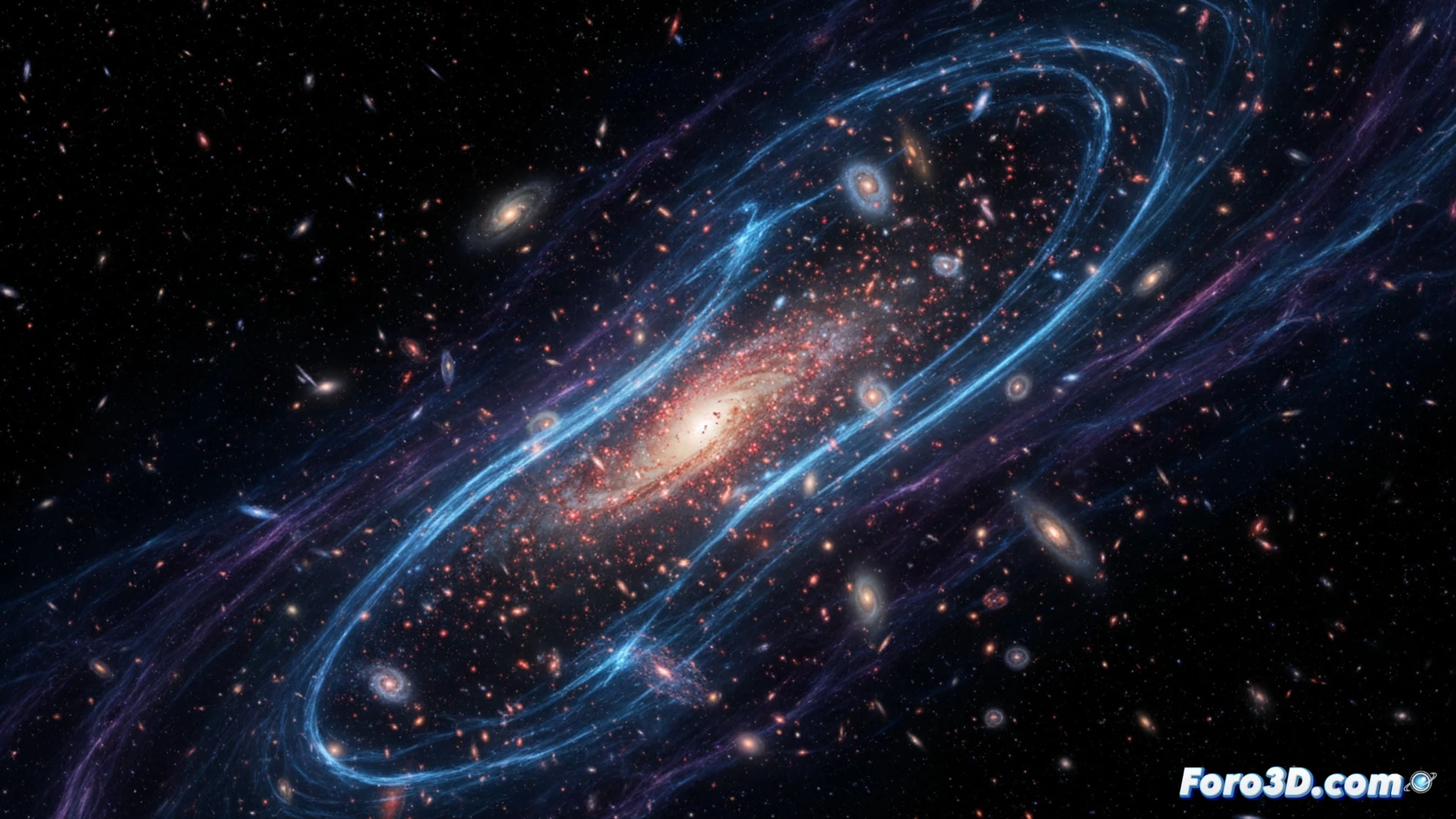
Gravitational Lenses and Dark Matter Models 🌌
Webb's data allows for refining gravitational lens models, essential for mapping the distribution of dark matter in clusters like Abell 370. By analyzing the amplification and timing of stellar events, astronomers can deduce the presence of compact objects and substructures that escape other observations. This improves the accuracy of cosmological simulations and helps distinguish between different hypotheses about the nature of dark matter, a field where every detail counts.
The Astronomer's Nightmare: Rare Events and Complex Data 😅
Of course, the method has its tricks. These events are as scarce as a sunny day during a total eclipse, and depend on gravitational alignments that seem like cosmic ballet choreography. Furthermore, analyzing Webb's data requires the patience of a saint and processing that would make a supercomputer cry. But hey, if you want to see individual stars billions of light-years away, you have to wait for the universe to cooperate and for your filters not to burn out.