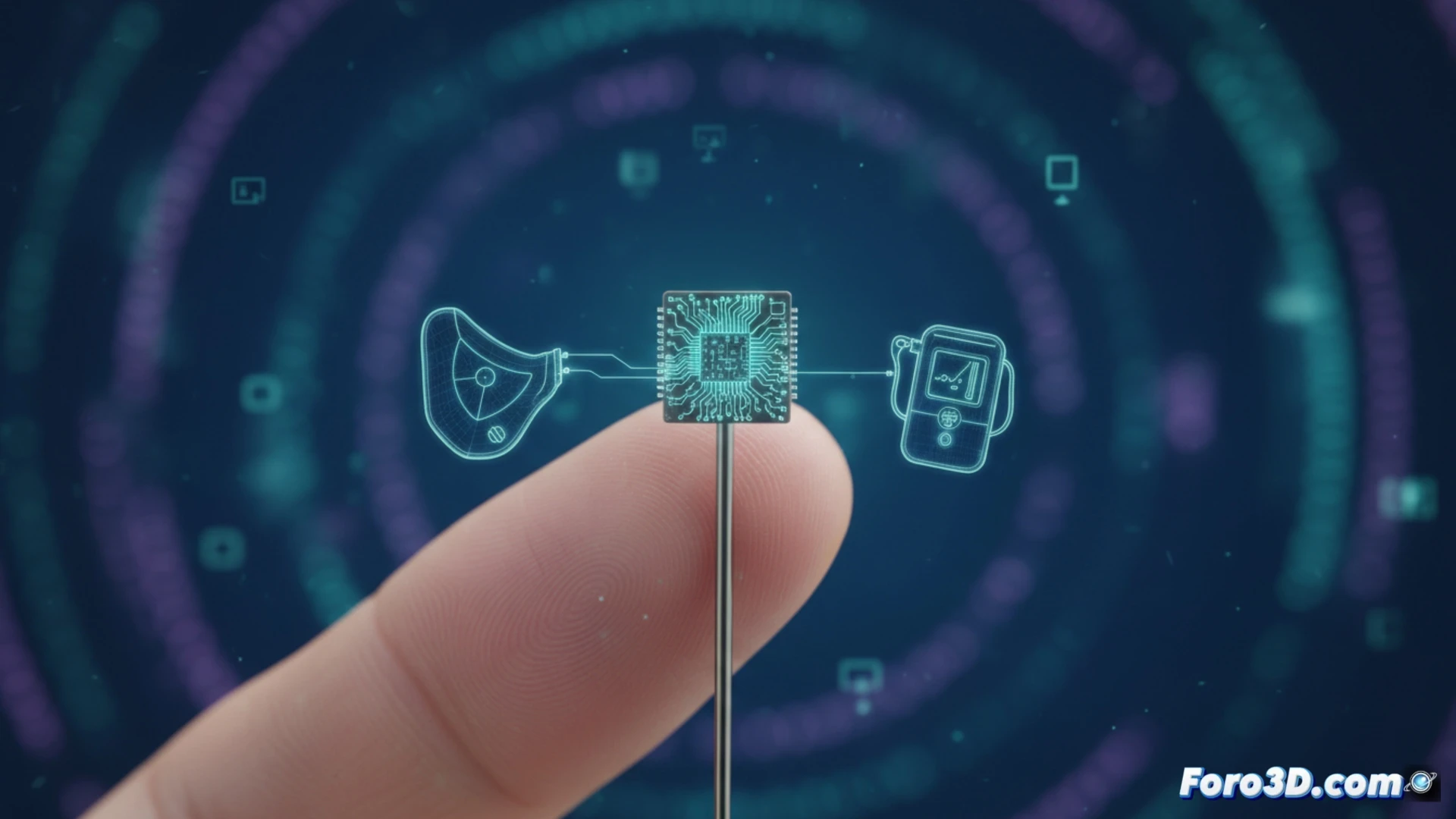
MIT researchers have created a post-quantum cryptography microchip as small as the tip of a needle, designed for wireless biomedical devices such as pacemakers and insulin pumps. This breakthrough, presented at the IEEE Custom Integrated Circuits Conference, resolves the conflict between security and battery life, being ten times more energy-efficient than previous designs.
Quantum security in a minimal space 🔒
The chip implements a key exchange algorithm based on the Kyber protocol, resistant to attacks from quantum computers. Its design reduces energy consumption to levels viable for implantable devices, which operate on small batteries and require years of operation. The MIT team optimized the hardware to execute cryptographic calculations with ten times less energy expenditure than previous solutions, enabling secure communications without sacrificing device autonomy.
The pacemaker that can't be hacked 💓
Because nothing screams dystopian future like the possibility of a hacker deciding to raise your heart rate above the reggaeton you hate. At least now, with this chip, your pacemaker will be harder to breach than your home WiFi. Or so we hope, because if the quantum computer of the moment decides to go haywire, at least your heart will keep beating at a safe rhythm, even if your smart fridge keeps buying milk without your permission.