Three decades later, Metal Slug maintains its status as a masterpiece of 2D arcade gaming. Its visual identity, with clear influences from Miyazaki's book Daydream Note and the style of Studio Ghibli, remains a benchmark in animation and design. For players, this means the preservation of an accessible classic. However, the lack of clear documentation about its creation at Nazca Corporation creates gaps in the understanding of its history.
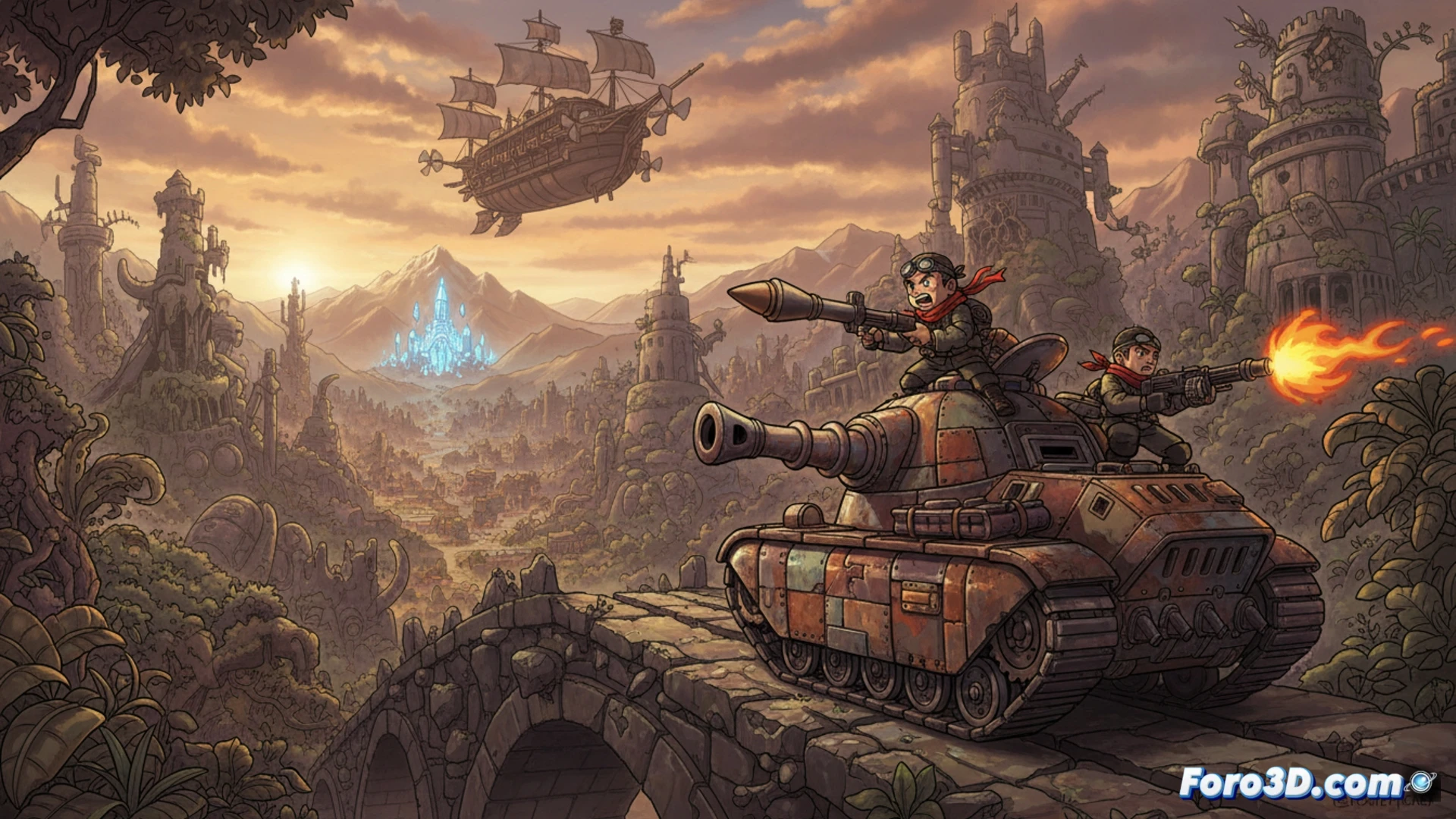
The Neo Geo Hardware and Animation Technique 🕹️
Developed for the powerful Neo Geo hardware, Metal Slug leveraged its capabilities to deliver detailed sprites and smooth, exaggerated animation. This technique, which was very resource-intensive, was based on hand-drawn art with special care given to secondary effects and character expressions. The distinctive visual style was born from that mix between the available technical power and the aforementioned artistic influences, creating a feeling of controlled chaos full of personality.
SNK's Best-Kept Secrets: A Lost Manual 🕵️
It's curious that a game so analyzed still keeps aspects of its development in the shadows. One would think that, after so many years, someone would have found that mythical sketchbook with notes from the creators in a storage room. Instead, we have to piece together clues like amateur detectives, speculating about meetings where they decided a soldier should throw roasted chickens. Perhaps the documentation was lost among so many pixel explosions.