Three decades have passed since the release of Metal Slug, and its visual impact remains remarkable. While the 90s industry rushed into the race for 3D realism, SNK took an opposite path. It bet on a handcrafted 2D production, where pixel detail and lush animation were the priority. This approach resulted in a graphic identity that withstands the passage of time better than many contemporary titles.
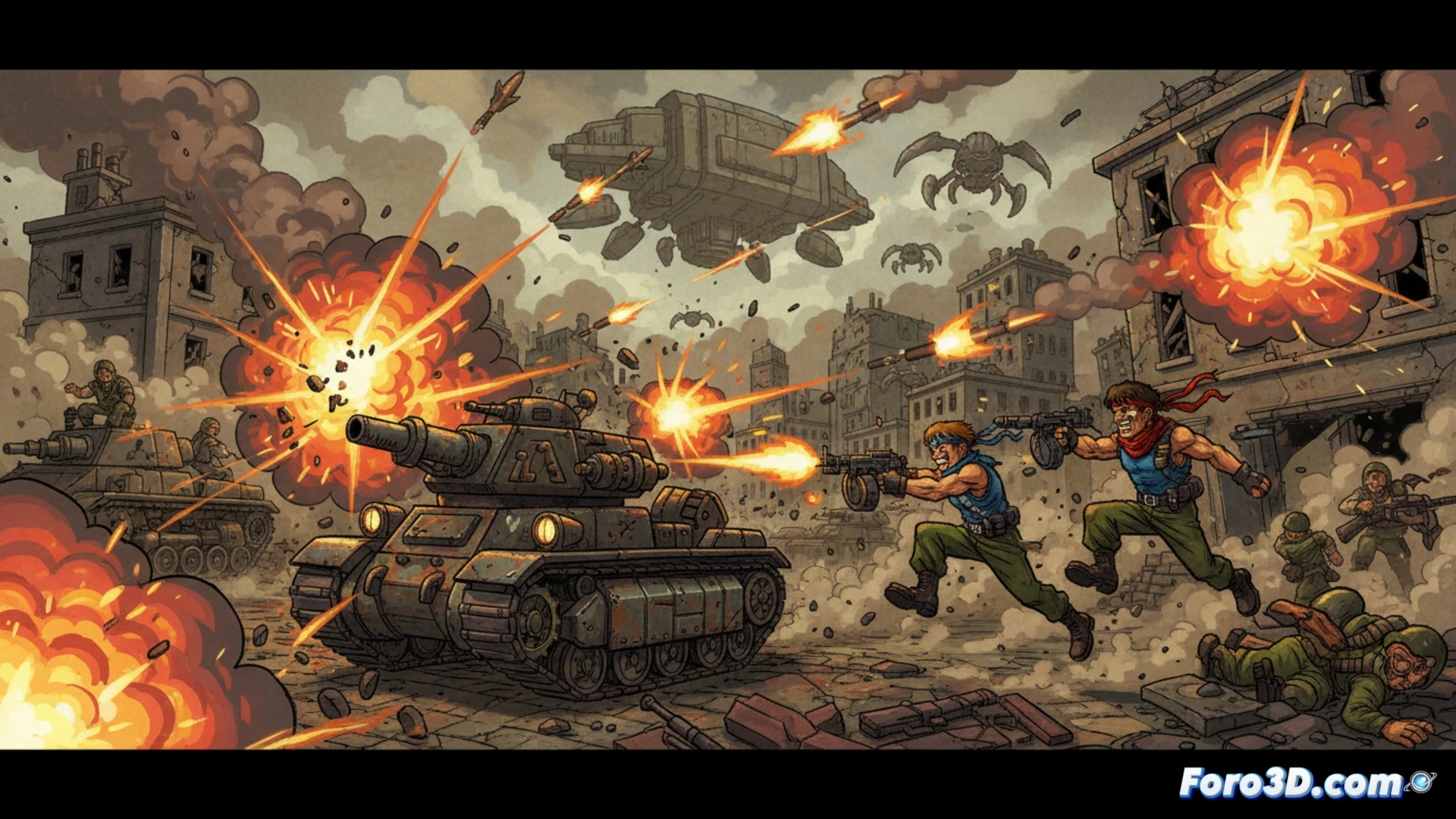
The Technical Obsession Behind Every Hand-Drawn Frame 🎨
The technical merit of Metal Slug lies in its philosophy of excess. Every sprite, from a soldier to a vehicle, possesses an uncommon number of animation frames. The movements are expressive and fluid, and every explosion or destruction effect is a unique sequence drawn by hand. This artisanal dedication required a monumental effort, far from the automated pipelines of 3D graphics. The technology used wasn't the most advanced, but the execution turned every element into a small performance.
A Manual for Ruining Productivity in Modern Studios 😅
Imagine presenting Metal Slug's development pipeline in a production meeting today. Explaining that every enemy will have dozens of sprites for minor actions, that every stray bullet will generate an explosion with exclusive animation, and that the art will consume resources and time disproportionately. They would surely suggest reusing assets, applying shaders, or directly opting for low-poly 3D models. SNK demonstrated that sometimes, the answer lies in doing everything in the least efficient way possible, to the delight of players.