A new study suggests that the relative motion between dark matter and baryons after decoupling could have generated a resonant gravitational instability. Within the framework of cold dark matter, this effect amplifies sound waves in the baryonic gas, helping to understand the formation of structures in the early universe.
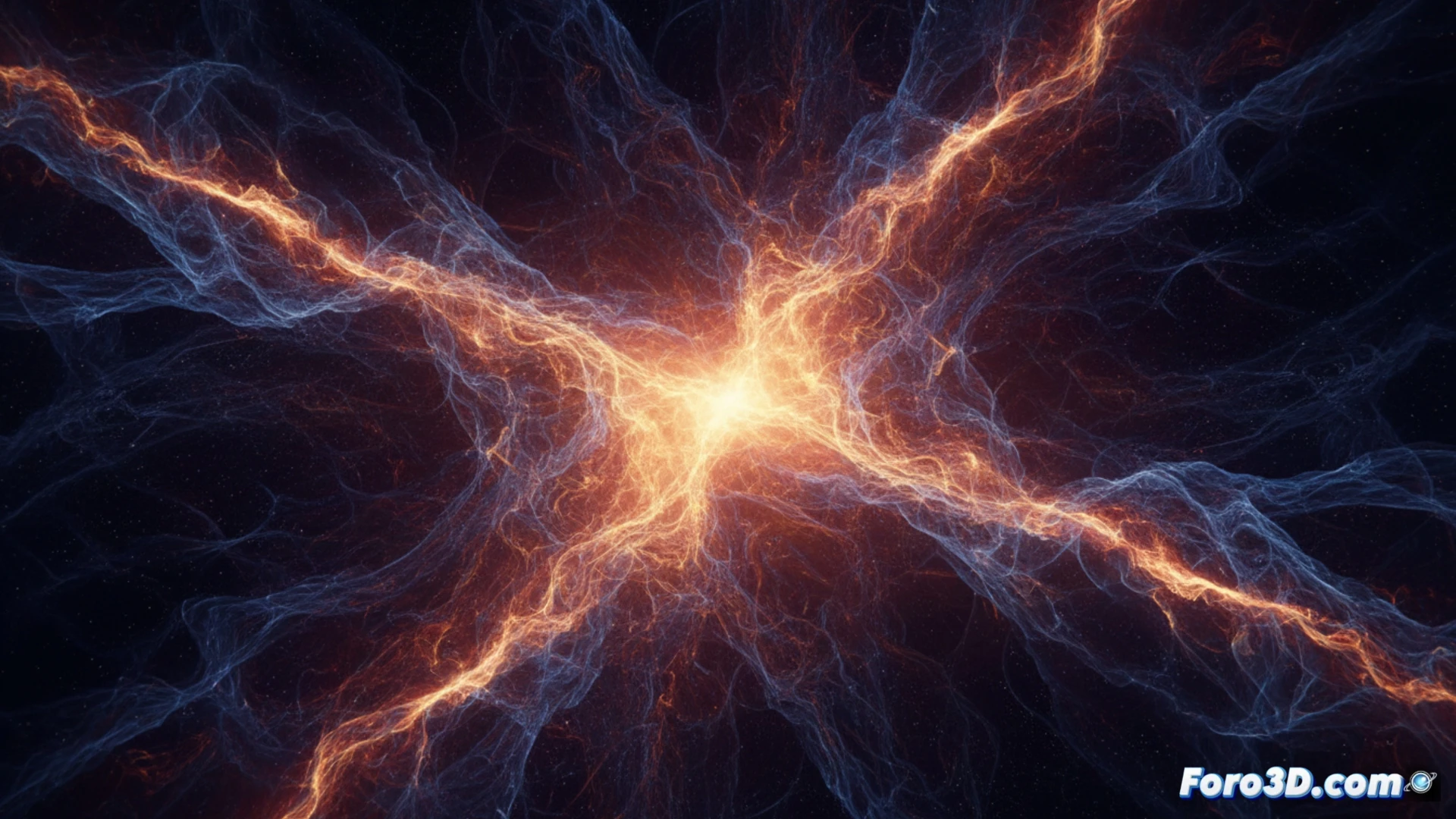
Gravitational resonance: the hidden engine of baryonic waves 🌌
The mechanism is activated when the flow of dark matter interacts with the acoustic oscillations of baryons. Under specific conditions, this interaction causes a resonant growth of perturbations. Numerical models show that the instability can amplify gas density by up to 30% in key regions, offering a new way to connect dark matter physics with observations of the cosmic microwave background.
Dark matter isn't so dark: it has an ear for music 🎵
It turns out that dark matter, that elusive cosmic roommate, doesn't just pull on gravity without warning. Now it also turns out to be a DJ spinning sound waves in the baryonic gas. The next thing will be seeing it organizing raves in galactic clusters. That said, at least we know it's not sitting idly by while baryons do the dirty work of forming stars.