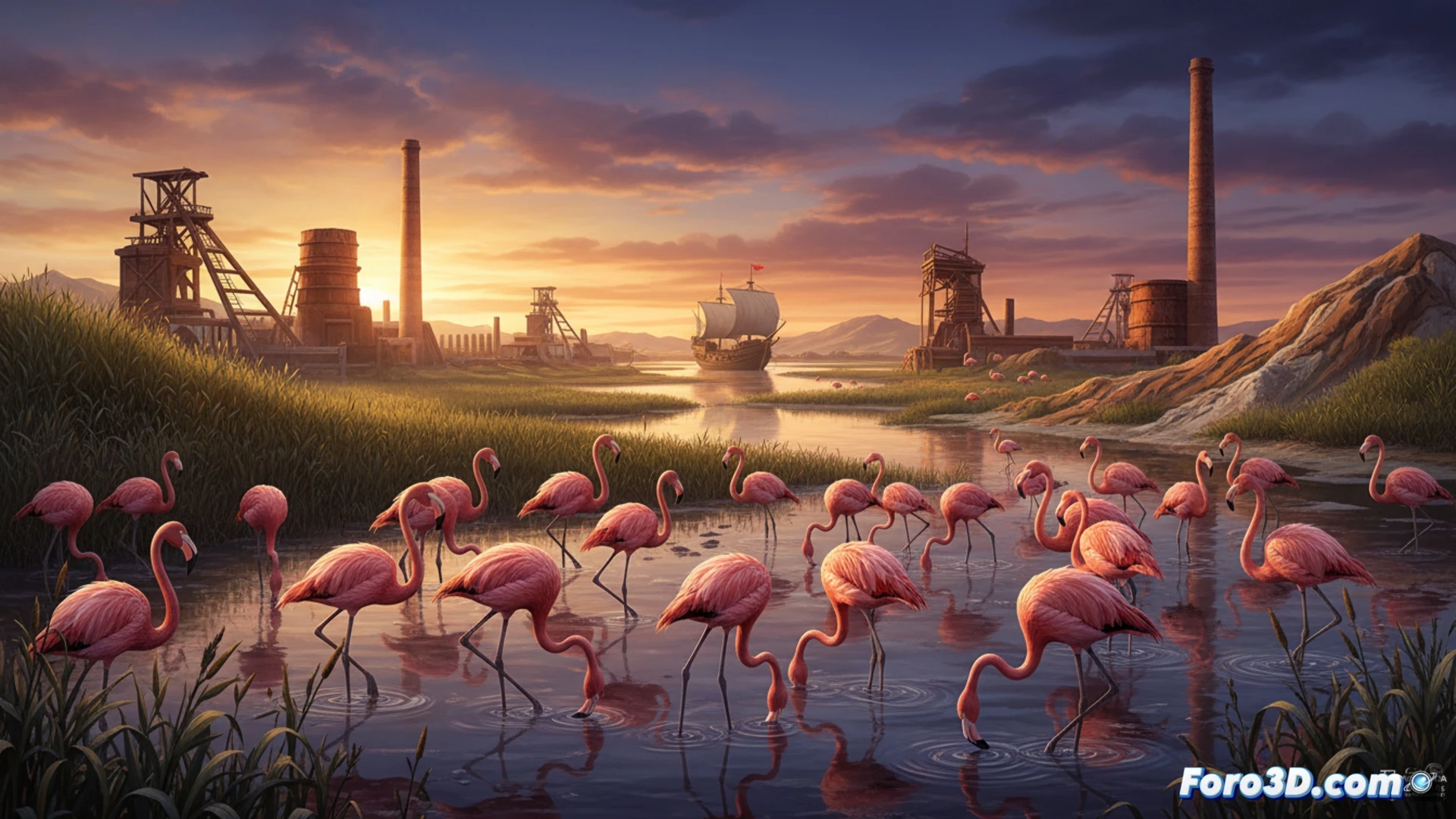
The Marismas del Odiel in Huelva is a space recognized as a Biosphere Reserve. This enclave is vital for aquatic birds, such as flamingos, and holds a deep history. Its value is not only ecological; its legacy spans from ancient mining to being a key setting in the preparations for Columbus's voyage. This article explores that duality between natural heritage and human footprint. 🌿
Historical Cartography and Pre-Columbian Logistics 🗺️
Analyzing the role of the Marismas in 1492 requires a technical approach. The Huelva estuary offered a protected natural harbor, with sufficient draft for the caravels. The proximity to Minas de Riotinto facilitated the supply of metals for ballast and possible repairs. The cartography of the time, although rudimentary, already marked this area as a safe reference point for Atlantic coastal navigation, a logistical node before the great leap.
Pink Flamingos and Gray Caravels: The First Coworking 🦩
Imagine the scene: some flamingos planning their migration to Africa with the calm of someone who has their tickets bought. Next to them, a group of humans frantically discusses maps with sea monsters drawn on them, loading barrels under the sun. It was Huelva's first shared workspace, where the winged neighbors watched with perplexity those noisy primates preparing their own journey without wings. The productivity of the bird colony was, without a doubt, greater.