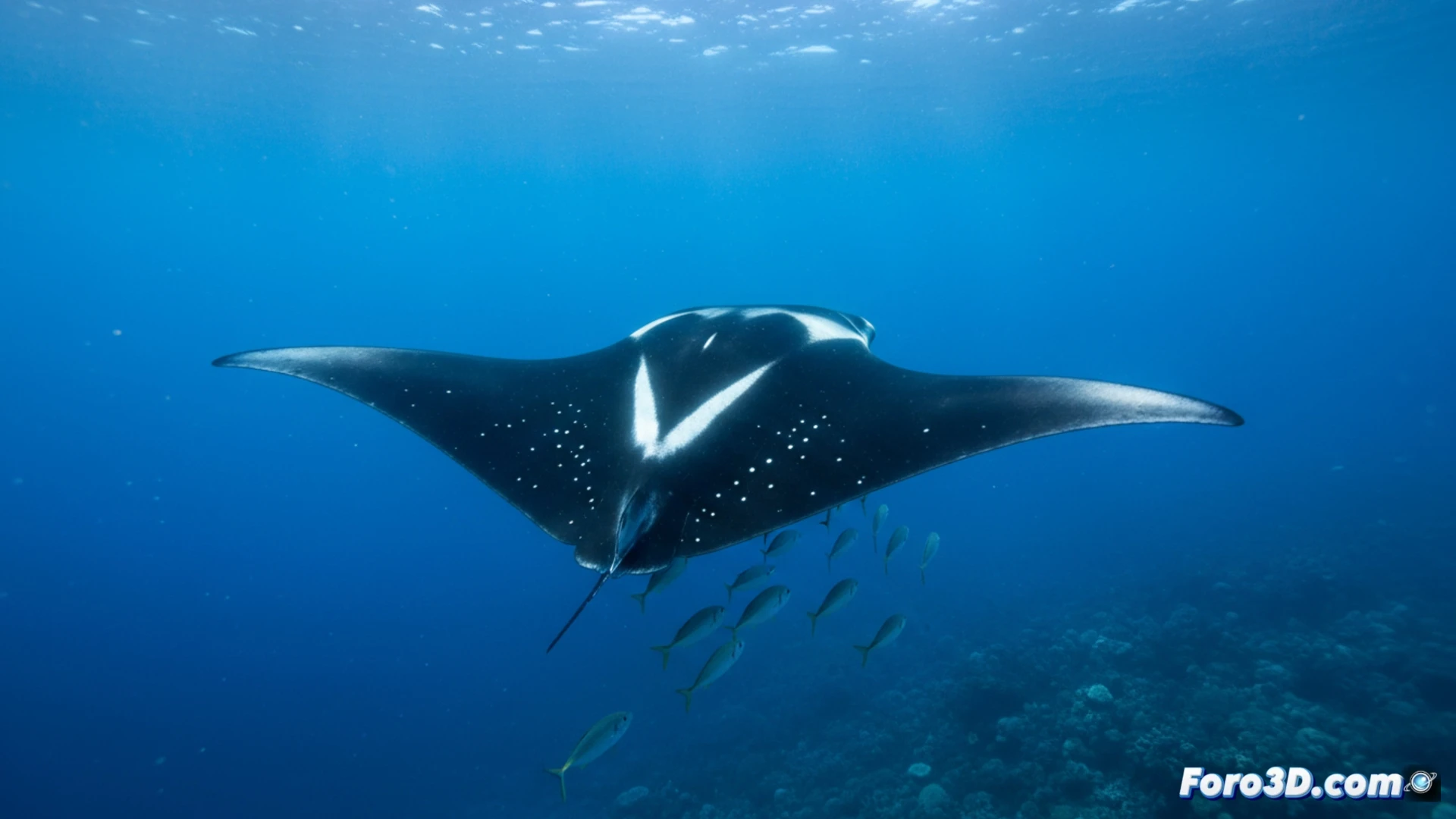
The marine world continues to hold secrets. In 2025, the scientific community confirmed that the Mobula yarae, known as the Atlantic manta ray, is a distinct species. The key to differentiating it from its Pacific cousins lies in white V-shaped marks on its dorsal area. A discovery that redefines what we thought we knew about these oceanic giants.
How genetics and the spot pattern revealed the deception 🧬
Until now, Atlantic mantas were considered a displaced population of the Mobula birostris. But mitochondrial DNA analysis, combined with high-resolution photogrammetry, showed that the white V-shaped mark pattern is an exclusive hereditary trait. It is not simple partial albinism or a scar: it is a stable genetic marker. This forces a review of global censuses and a rethinking of the migratory routes we took for granted.
The manta that had been wearing the wrong disguise for 200 years 🐟
It turns out that Atlantic mantas had been impersonating their Pacific cousins for centuries without anyone asking for their ID. Marine biologists, who previously mistook them for lost tourists, now have to offer formal apologies to every sighted specimen. The worst part is that the mantas probably already knew and were just waiting for someone to notice their elegant V-shaped pattern. A classic: them swimming calmly while we humans argue about whether they are or aren't.