For the 3D professional, the choice of controller is no minor matter. Far from gaming, precise and comfortable control can speed up navigation in viewports, camera manipulation, and tool access. In 2026, the debate centers on two giants: the Xbox controller, with its native Windows integration, and the PS5 DualSense, with its advanced tactile features. This guide analyzes which one better suits your long modeling, sculpting, or animation sessions. 🎮
Technical Analysis: Ergonomics, Battery Life, and Compatibility ⚙️
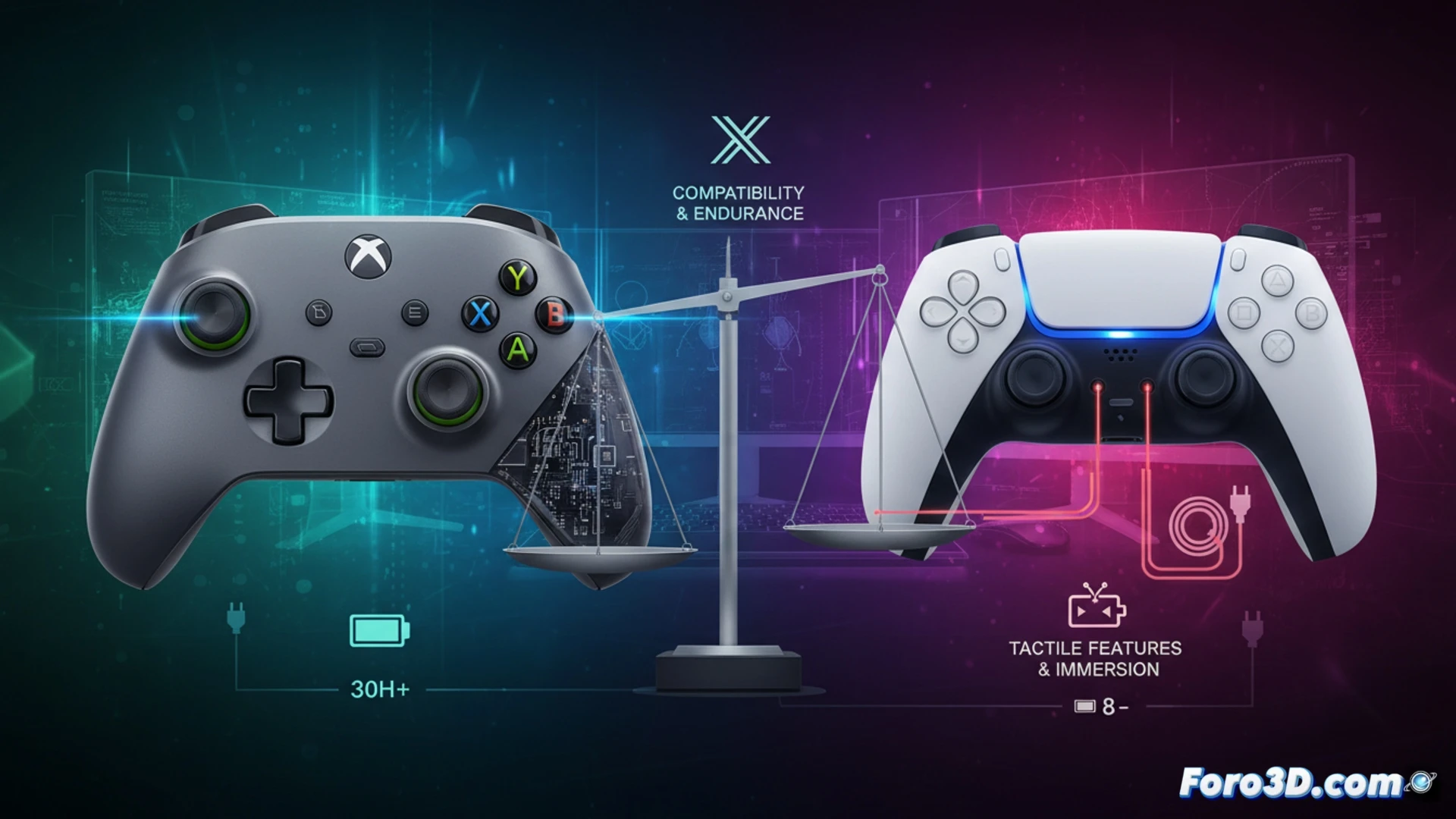
The Xbox controller shines for its plug and play compatibility with Windows, eliminating setup time. Its asymmetrical ergonomics are famous for reducing fatigue in marathon sessions, and its battery life of up to 30 hours is a decisive advantage. However, it uses potentiometers in the sticks, prone to drift after intensive use. The DualSense, on the other hand, offers a unique sensory experience with haptic vibration and adaptive triggers, which could be mapped for sculpting tools. Its Achilles' heel on PC is the battery life, a mere 8 hours, and its advanced features often require a wired connection or external software, adding complexity.
The Final Decision: Productivity versus Tactile Immersion ⚖️
The choice boils down to prioritizing pure efficiency or sensory feedback. If you value a reliable, long-lasting, and hassle-free tool for navigating interfaces and viewports for hours, the Xbox controller is the most robust option. If your workflow can benefit from differentiated tactile feedback for certain actions and you are willing to manage its battery and configuration, the DualSense offers a unique experience. In the professional realm, consistent productivity usually outweighs experimental features.
Can a 2026 Xbox or DualSense controller surpass the mouse and keyboard in productivity for professional 3D modeling and navigation?
(PS: If the computer starts smoking when opening Blender, maybe you need more than a fan and faith)