In today's digital ecosystem, the traditional virus has been relegated. Malware is diversifying into seven main types, and the most common is no longer the one that attaches itself to a file. We are talking about the trojan, which tricks the user into voluntarily installing it, and ransomware, which in 2026 remains the most destructive threat.
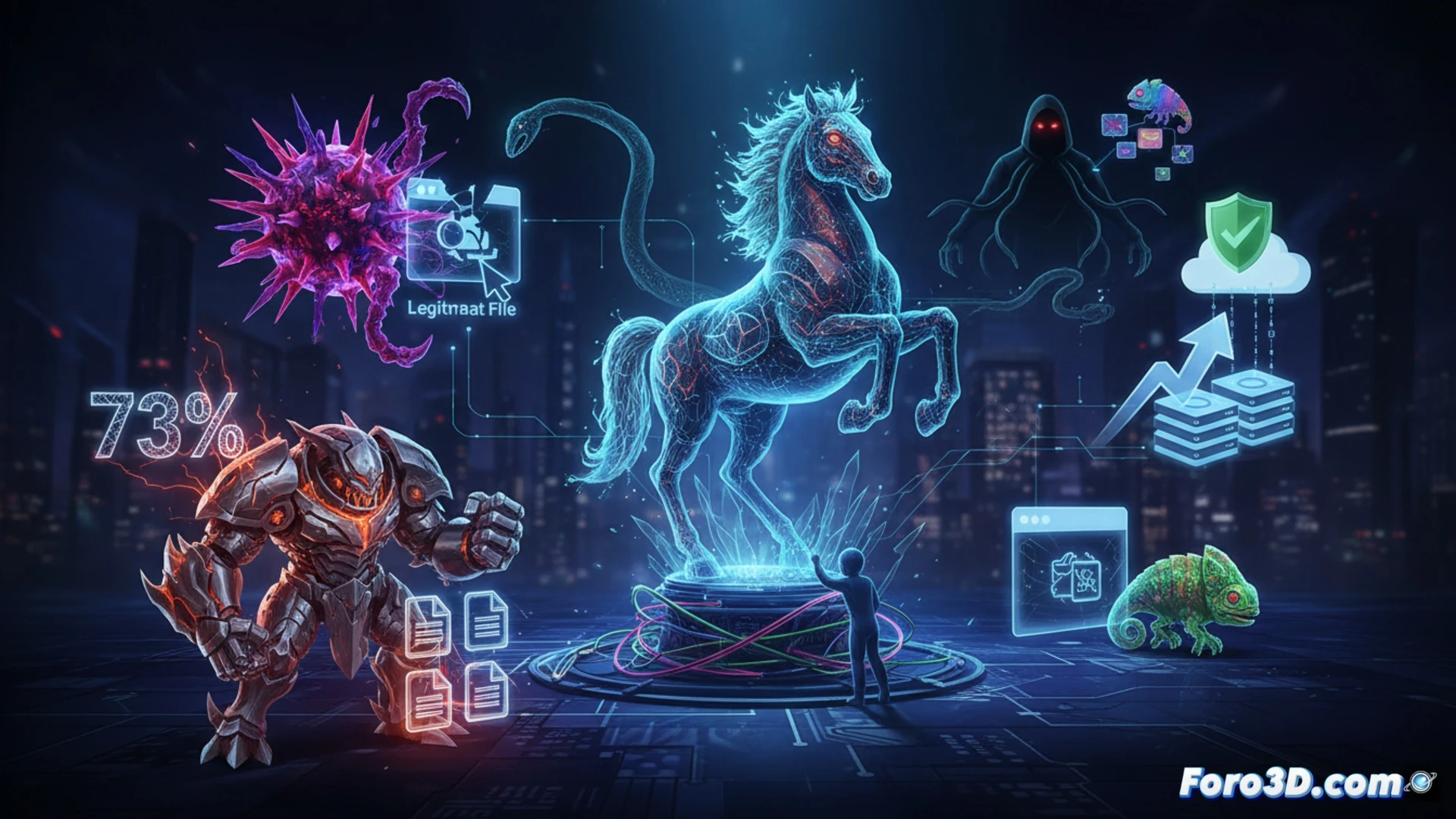
Trojans and ransomware: the evolution of malicious code 🛡️
The trojan exploits user trust by disguising itself as legitimate software, making it the most common type of malware. Meanwhile, ransomware has grown by 73% between 2023 and 2025, encrypting files and demanding ransoms. The most effective defense against the latter is not an antivirus, but maintaining updated and offline backups.
The classic virus: that old guy nobody invites to the party anymore 🦠
The classic virus, the one that needs you to click on an attachment to spread, is now almost a rarity. It's like the relative who shows up unannounced and expects you to open the door. Cybercriminals prefer more direct methods: they trick you into opening the door yourself and inviting them in.