In the 1970s, Sardinia revealed a secret buried for millennia. The chance discovery of sculptural fragments at Mont'e Prama led to the excavation of dozens of colossal limestone statues. These figures, known as the Giants, represent warriors, archers, and boxers. Their discovery rewrote the perception of the Nuragic civilization, showing a cultural and artistic complexity not previously attributed to this stage of the Iron Age.
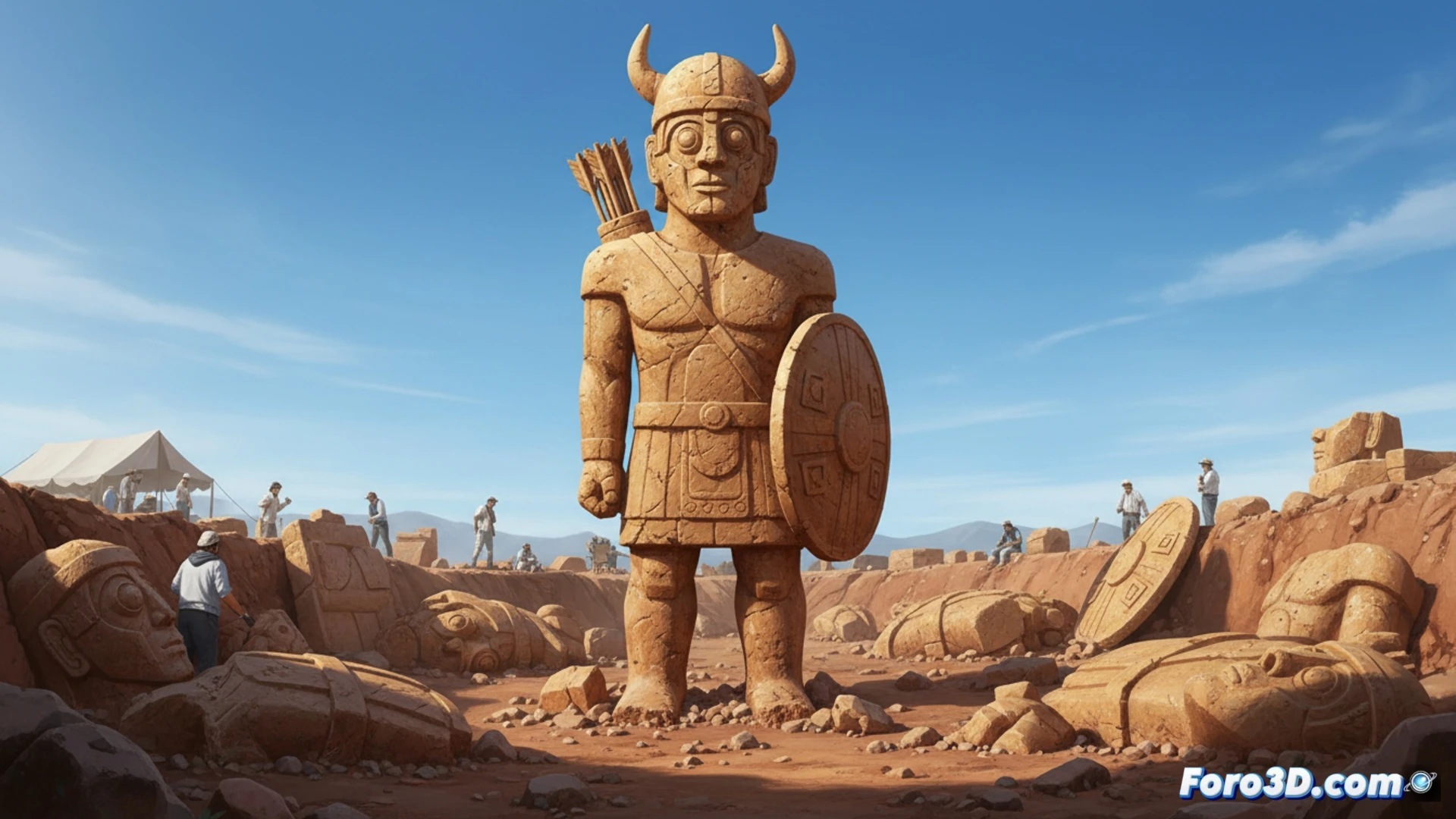
Craftsmanship and Logistics in the Sardinian Iron Age 🗿
The creation of these sculptures, which exceed two meters in height, involved a structured technical process. Blocks of local limestone were quarried, a material relatively soft to carve but fragile. The artisans used bronze tools, possibly with tips of harder stone for details. The assembly using tenons and mortises indicates a premeditated design. The logistics for moving and erecting these monoliths suggest a social organization capable of coordinating resources and specialized labor.
Driver Updates for Millennia-Old Hardware 💾
One thinks of the poor archaeologists who, while assembling the thousands of fragments, must have felt a familiar frustration. It's like facing a kit of parts without an instruction manual, where the manufacturer has been out of business for three thousand years. There's no support forum to ask how exactly the arm of boxer number seven fits. And certainly, the graphics driver to visualize the original ensemble in its splendor is more than outdated. A work of reverse engineering without the possibility of a simple copy and paste.