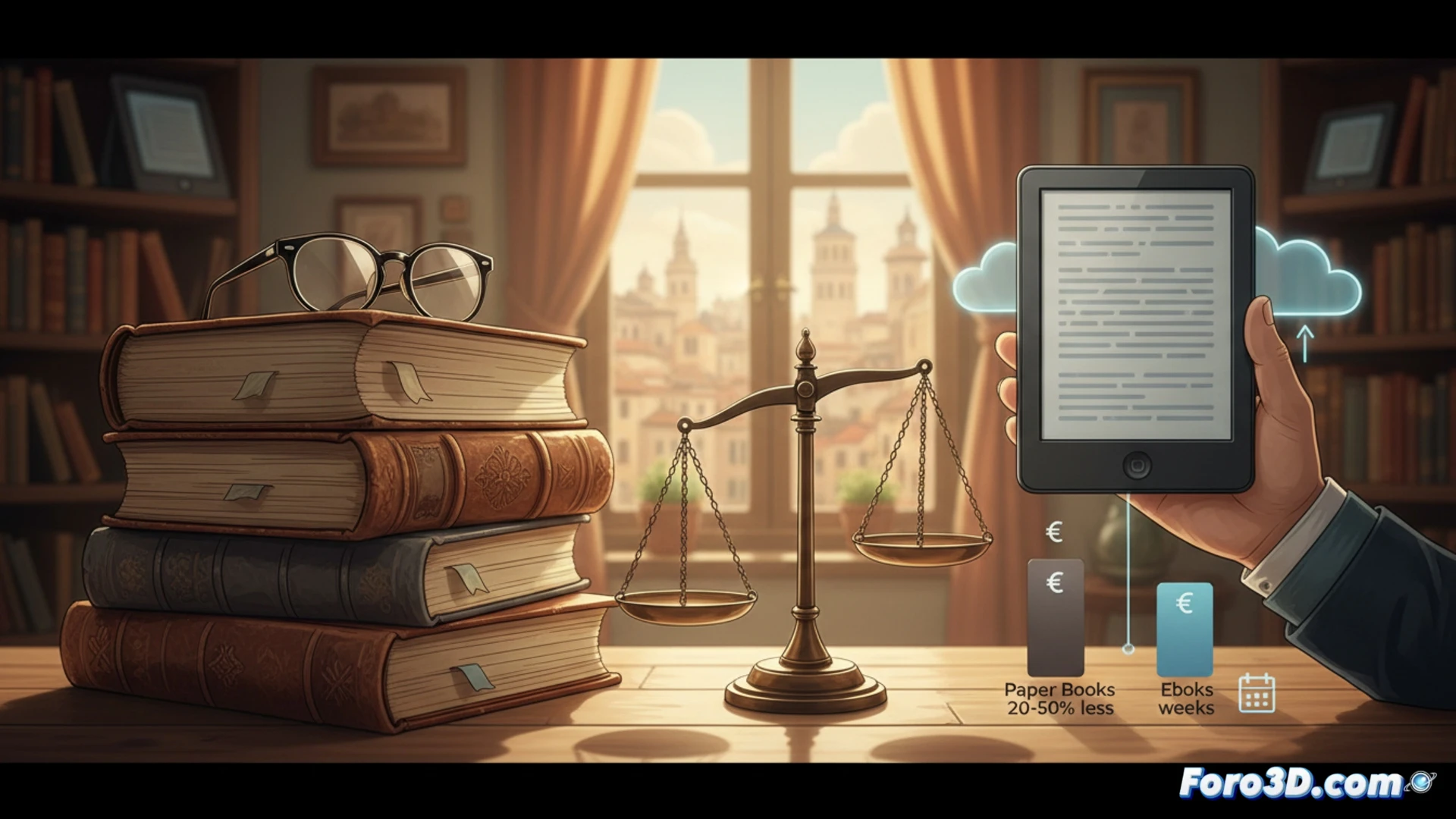
The paper book remains king in Spanish bookstores, but the e-reader has carved out a niche as a travel companion for the most active readers. For around 150 euros, an e-reader offers a portable library with thousands of titles, a battery that lasts for weeks, and an e-ink screen that doesn't tire the eyes. Additionally, ebooks are between 20% and 50% cheaper than physical books, allowing you to recoup the device's cost with just ten reads a year.
The technology behind e-ink: less glare, more reading 📖
The key to the e-reader lies in its E Ink screen, which does not emit its own light but reflects ambient light like real paper. This eliminates the flicker and eye strain typical of tablets or phones. Current models achieve 300 ppi resolution, similar to a printed book, and use lithium-ion batteries that provide up to six weeks of use on a single charge. The internal storage, at least 8 GB, allows you to load around 6,000 titles without taking up space in your backpack.
The paper reader's drama: moving houses and bookshelves begging for mercy 📚
If you're one of those who accumulate books like a dragon hoards gold, you know that every move is a sentence for your spine. Meanwhile, the e-reader owner laughs with their 180 grams of weight while carrying the entire Library of Alexandria in their pocket. Of course, then comes the time to show off your bookshelf on Instagram, and the digital reader is left without a photo. But hey, your back appreciates the change, even if IKEA furniture loses its original purpose.