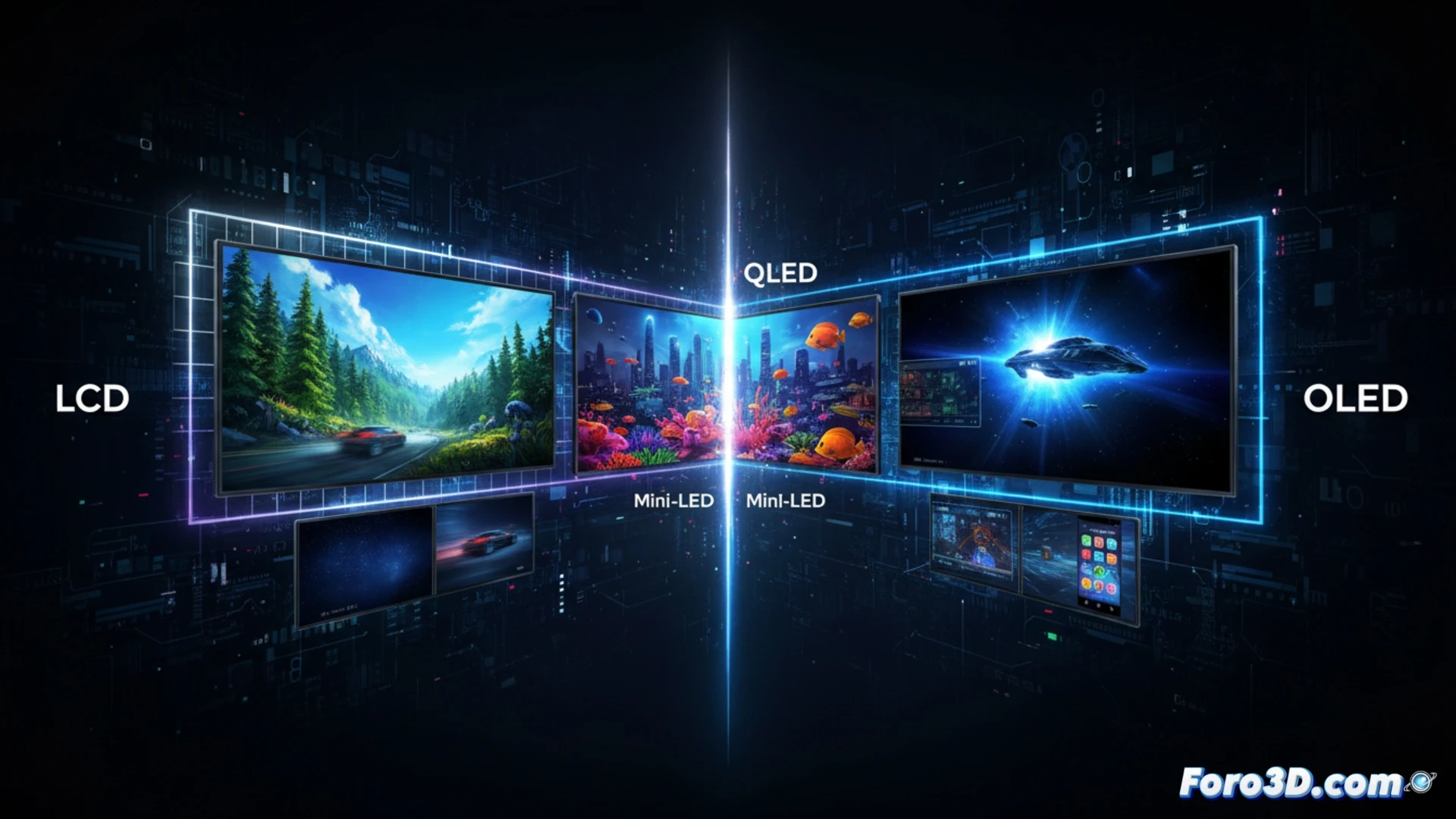
When choosing a monitor or television, we are faced with a sea of acronyms: LCD, OLED, IPS, QLED. Understanding the basic differences is key to making the right choice. The main battle is between LCD technology, mature and versatile, and OLED, with its ability to turn off individual pixels. Each has its strengths and compromises, which go beyond just price.
The Functioning Behind the Acronyms 🔬
An LCD screen needs a backlight, whether LED or the more advanced Mini-LED, to illuminate a liquid crystal matrix. The blacks are actually dark grays. Technologies like IPS improve viewing angles, and VA improves contrast. QLED adds a quantum dot layer for purer color. OLED eliminates the backlight: each pixel is an organic diode that turns on or off by itself, achieving absolute contrast and minimal thickness.
The Buyer's Dilemma: Fear of Black or Fear of the Sun? 🤔
So you have to decide. On one hand, an OLED promises you blacks so deep you could lose the remote control in them, with the small detail that a static logo might decide to live there forever. On the other, a bright LCD for your luminous living room, where the blacks look like a dark suit under the sun, but where there are no ghosts of news channels. It's choosing between the fear of burn-in and the fear of constantly seeing your reflection.