Al-Hariri's Maqamat are a jewel of classical Arabic literature, a collection of tales that distill dazzling linguistic and rhetorical richness. In the niche of digital art and activism, this work is not just a legacy of the past, but an opportunity. Digital tools, especially 3D, offer a bridge to translate its narrative complexity into contemporary sensory experiences, activating its cultural message for new global audiences.
Technical Strategies for Cultural Immersion 🎯
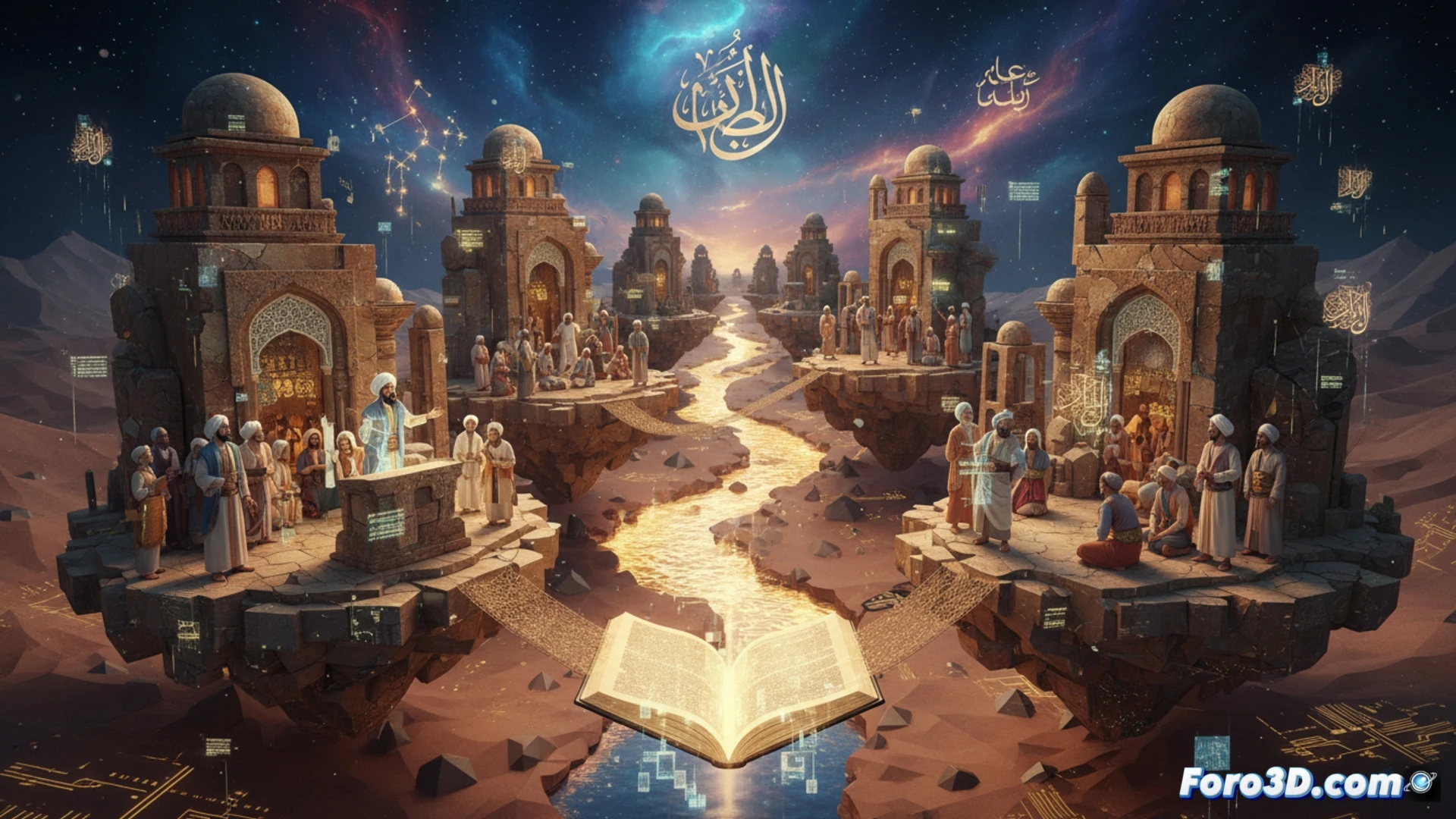
The digital translation of this work can be approached from various 3D disciplines. Modeling and recreating historical environments would allow one to walk through the settings of its tales. Virtual reality could materialize its eloquent metaphors and wordplay into interactive visual installations. Even data visualization could map the lexical density and rhetorical structures of the text, generating digital sculptures that represent its linguistic architecture. The goal is to use the 3D pipeline not to replace the text, but to create a spatial context that enriches its appreciation.
Heritage Activism Through Polygons 🛡️
This process is, in essence, a form of cultural activism. By digitizing and spatializing an intangible heritage like the Maqamat, one fights against its erosion and its exclusive niche. It is endowed with a new universal language, the visual and spatial, which can generate empathy and curiosity. It is an act of proactive preservation, using polygons and render engines to affirm the validity and relevance of ancestral narratives in the digital age, ensuring their continuity.
How can translating the complex narratives and calligraphic aesthetics of Al-Hariri's Maqamat into interactive 3D environments become a powerful form of digital activism to challenge contemporary cultural stereotypes?
(PS: if your virtual reality installation doesn't change the world, at least make sure it doesn't lag)