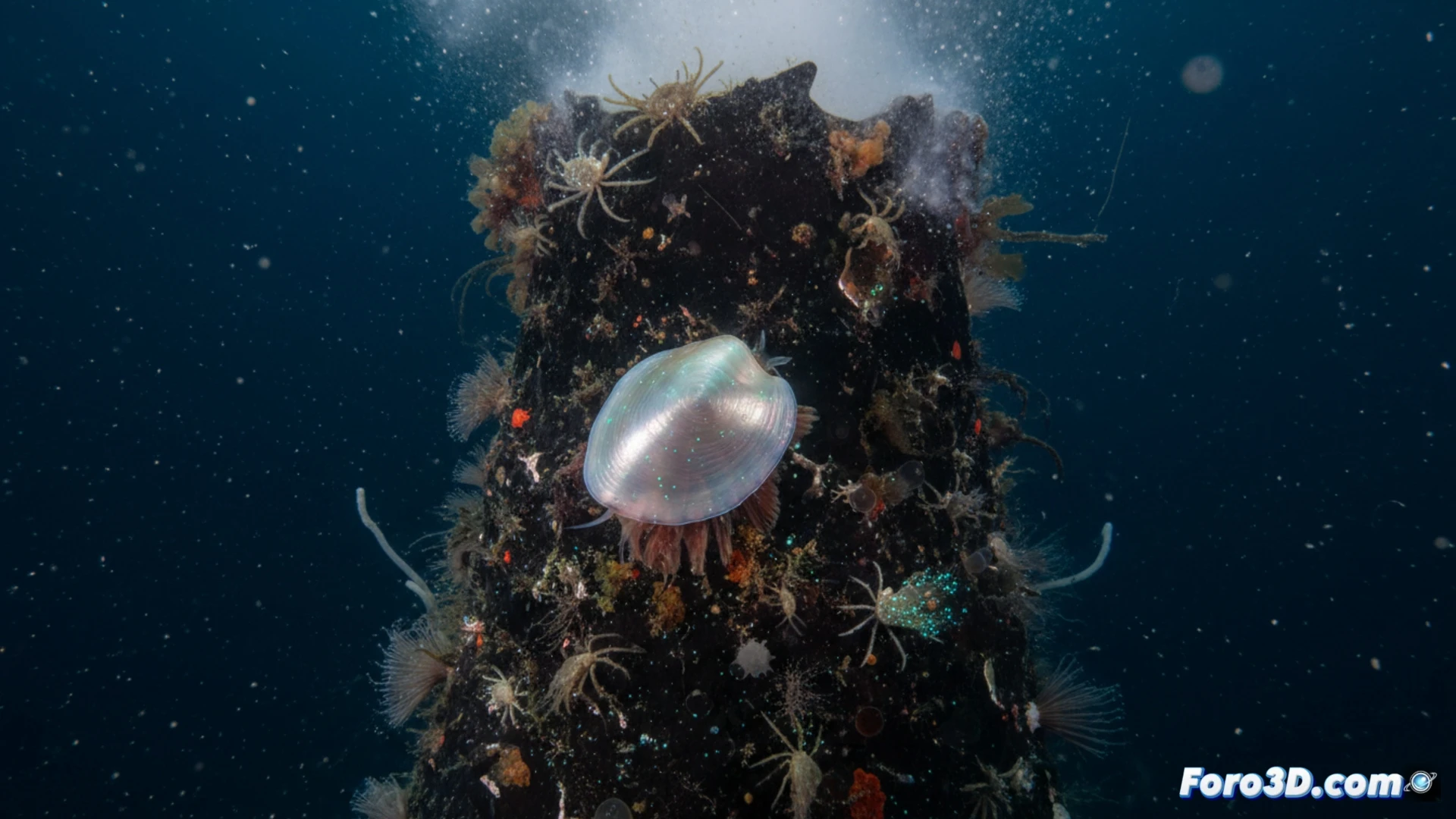
In the depths of the Arctic, more than 3,000 meters beneath the ice, Cocculina sp. inhabits hydrothermal vents. This conical-shelled mollusk withstands crushing pressures and extreme temperatures. Its recent discovery expands the map of life in hostile environments, where water chemistry replaces sunlight as an energy source.
Applied biotechnology: the secret of its shell 🧬
The shell of Cocculina sp. combines layers of calcium carbonate with an organic matrix that resists the chemical corrosion of hydrothermal fluids. Materials engineers study this structure to develop industrial coatings that withstand acids and high pressures. The biomineralization process of this limpet offers a model for creating lighter, more resistant alloys without resorting to polluting processes.
The snail that lives better than you in your office 🐌
While you complain about the cold coffee from the machine, this limpet takes a bath in waters at 350 degrees with a pH that would dissolve your phone in seconds. It doesn't need wifi, doesn't pay rent, and doesn't suffer from electricity prices. It lives in a geothermal hell without work stress. Perhaps we should learn from it: sometimes, surviving extreme conditions is easier than dealing with the boss on a Monday morning.