Adults who grew up in the 80s and 90s in front of an 8-bit screen didn't just accumulate extra lives, but also skills they now apply in parenting. Modern psychology points out that this generation of parents possesses a superior ability to solve problems, adapt to sudden changes, and manage frustration. Raised with games that demanded strategy and persistence, they understand the educational value of technology and guide their children towards a more balanced use, fostering trial-and-error learning.
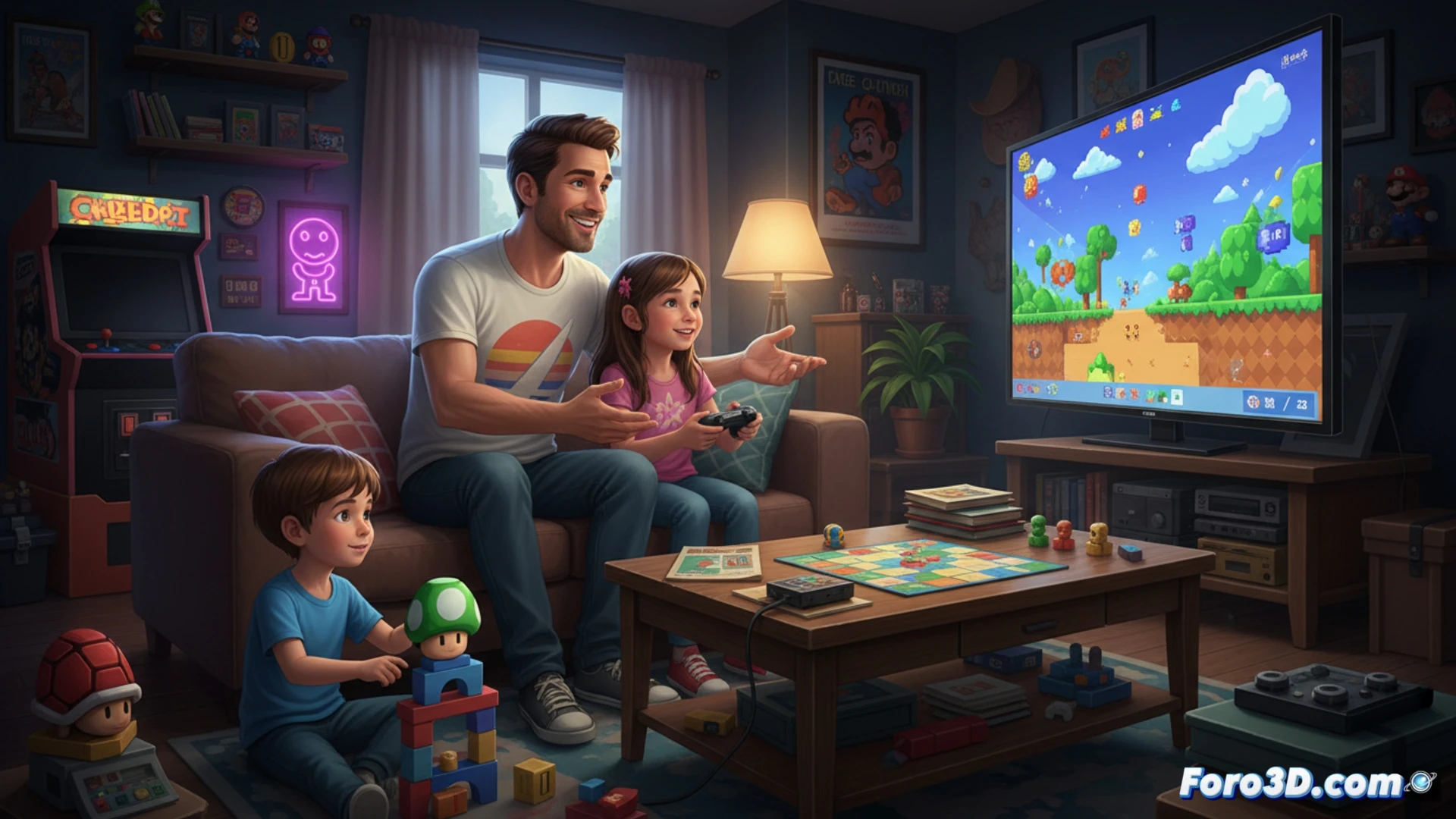
How Gaming Patterns Shape Digital Parenting 🎮
Early exposure to titles like Super Mario or The Legend of Zelda trained these parents in pattern recognition and problem-solving under pressure. Every lost level taught persistence; every final boss, planning. Now, when they see their children playing, they don't panic. They distinguish between a game that demands logic and one that only stimulates reaction. This experience allows them to set limits without demonizing technology, turning the console into a tool for cognitive development instead of a mere distraction.
Raising Kids Without a Game Over (Even Though They Sometimes Try) 🕹️
Of course, being a gamer parent has its pitfalls. You try to explain to your child that in real life there are no extra lives, but he looks at you while you restart the router for the third time. You teach them to manage frustration, but you yourself lose your temper when you can't find the controller. The advantage is real, but not perfect: you still use the trick of pausing the game to pretend you're in control. In the end, both learn that, as in platformers, what matters is getting back up after falling.