A recent archaeological study has revealed the final moments of a victim of the eruption of Mount Vesuvius in 79 AD. The finding, published in a scientific journal, shows a man who, in an act of desperation, placed a metal vessel on his head to protect himself from the rain of ash and lapilli. This everyday object, turned into an improvised helmet, did not save his life, but it offers a unique window into the psychology of a survivor facing the total collapse of his environment.
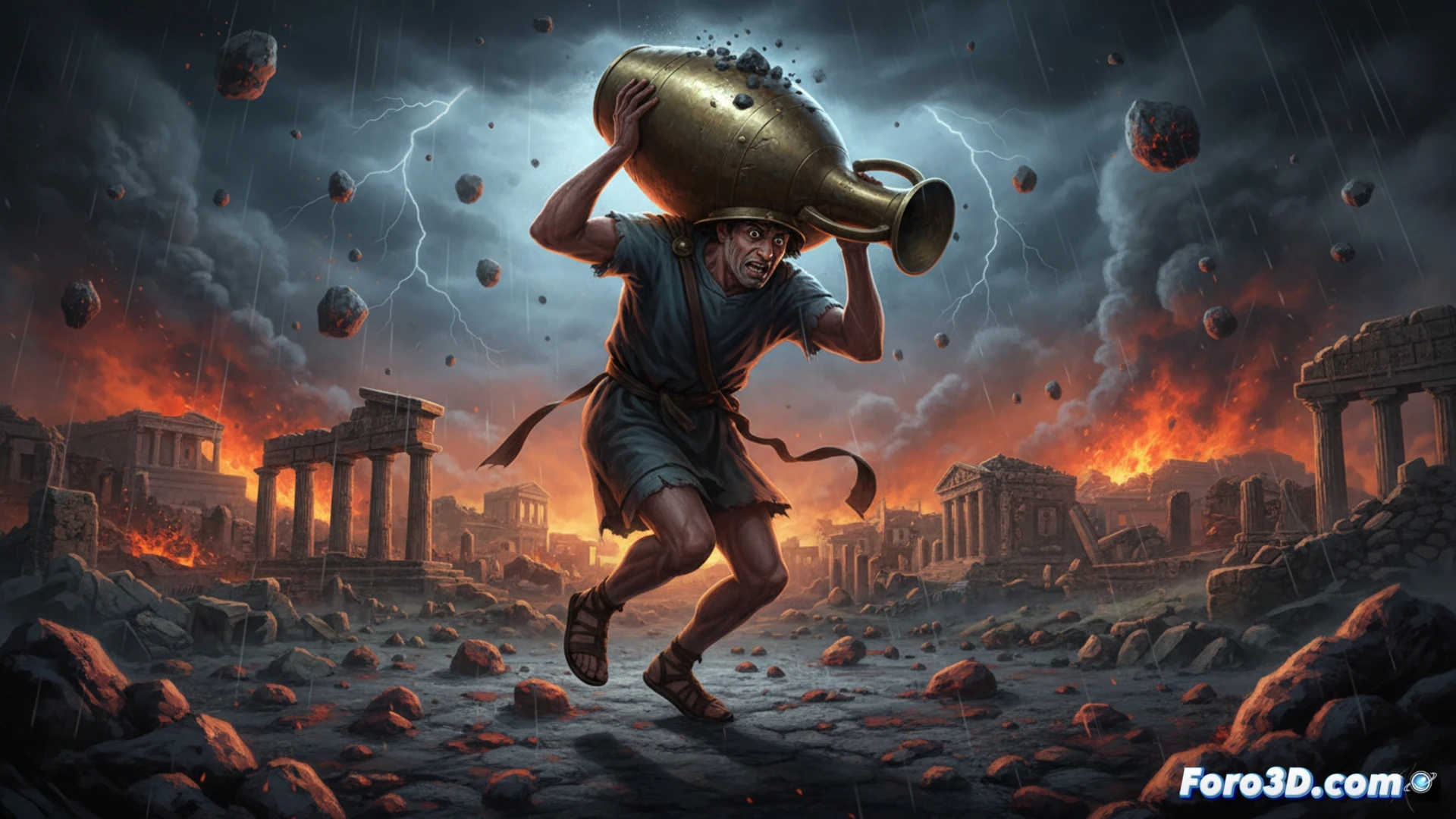
Forensic photogrammetry and simulation of eruptive dynamics 🏛️
Today, 3D modeling technologies allow us to analyze this finding with unprecedented precision. Through photogrammetry of the skeletal remains and the metal object, researchers can recreate the exact posture of the individual and the impact of the volcanic projectiles. Computational simulation of the trajectory of ash and pyroclastic flows, combined with a digital terrain model of Pompeii, helps to understand why the vessel, although effective against direct impacts, proved insufficient against thermal suffocation. This methodology allows for validating hypotheses about the burial speed and wind direction during the catastrophe.
Digital lessons for disaster prevention 🌋
Virtually reconstructing these final moments is not just an exercise in archaeology, but a key educational tool. By visualizing in 3D the improvisation of a shield with a household object, one better understands the scarcity of time and resources during a real emergency. These recreations, accessible on virtual reality platforms, can be used in evacuation drills and in disseminating information about volcanic risks, demonstrating that current technology not only honors the memory of the victims but also prepares us for the future.
What variables would you consider to model this disaster?