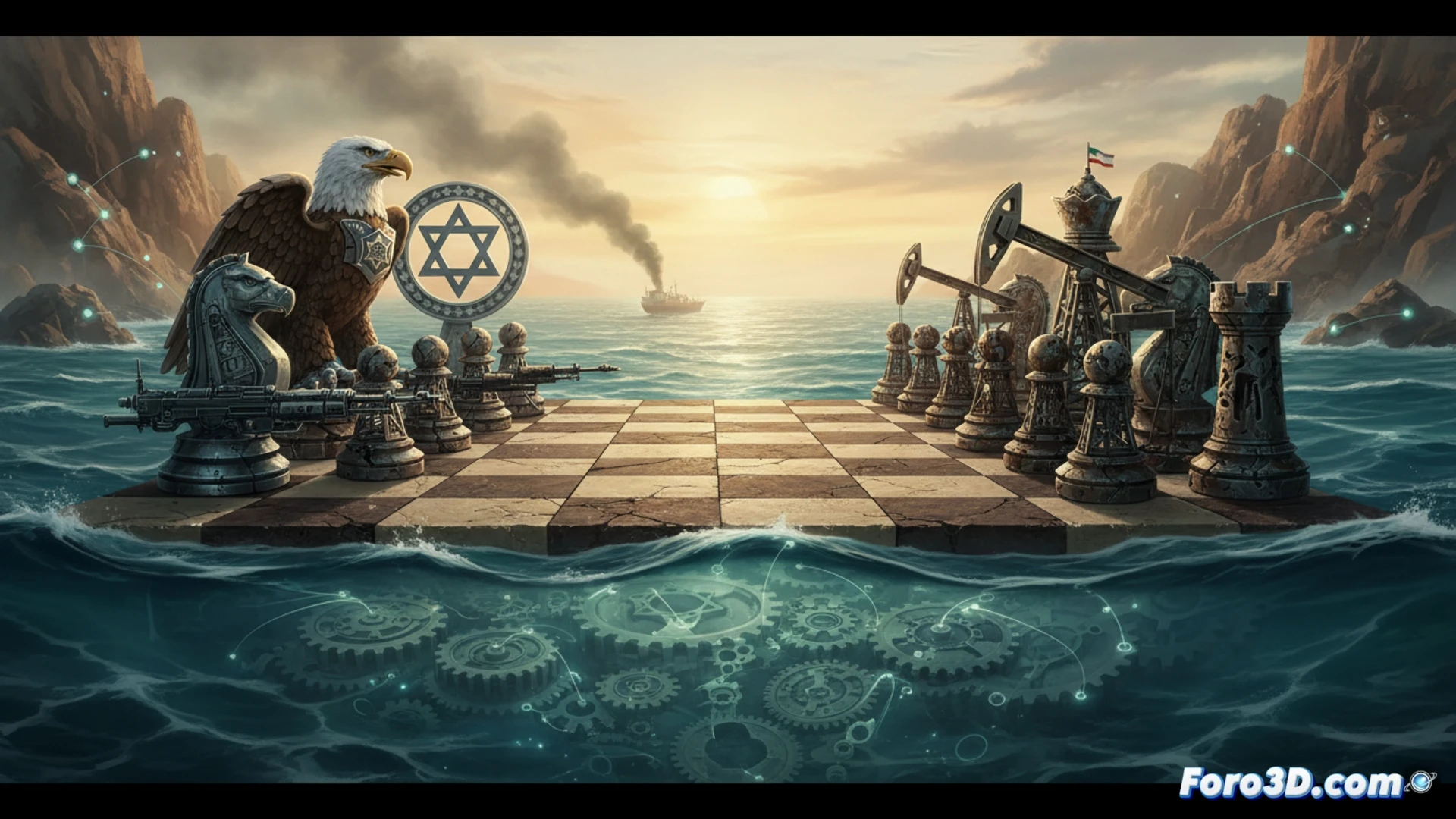
The confrontation between the United States and Iran in a critical route like the Strait of Hormuz presents a strategic paradox. Despite the overwhelming conventional superiority of the U.S.-Israeli alliance, the conflict has mutated into a war of attrition. In this scenario, victory is not decided by who has more strength, but by which side can absorb losses for a longer period. Game theory helps to understand this inconsistency in objectives.
Technological Asymmetry and System Resilience 🛡️
From a technical point of view, the confrontation is based on asymmetric systems. On one hand, there is a high-tech defense network with ships, AEGIS systems, and fifth-generation aircraft. On the other, a low-cost strategy with swarms of drones, anti-ship missiles, and saturation tactics. The key is not in individual sophistication, but in the resilience of the logistical network and the capacity for replacement. A cheap drone being shot down is a minor event; a damaged destroyer is a considerable strategic and financial blow.
Playing 'Who Can Endure More' with Superpowers 💪
The situation is reminiscent of those childhood games where two people hit each other's arm until one gives up. Here, one contender uses a titanium hand with cutting-edge technology, while the other uses a low-cost rubber hammer. The first one hurts more, but the second can strike a thousand times without tiring. The irony is that the superpower, with all its budget, is trapped in an endurance contest where its advantage is diluted. It's as if a Ferrari and a Lada challenged each other to see which one can last longer in a repair shop. The stakes are clear.